The Optimised Health Show
All Things Healthy Living - From What You Eat and Drink to How You Live and Think. Healthy living with the Laws hosts Ben and Sarah Law have both worked in the health and wellness profession for over 12yrs and have a huge passion for helping others live healthy, happy and with purpose. They absolutely love inspiring other 40 somethings through their journey and knowledge in nutrition, health and entrepreneurship along with a side serving of banter and giggles to brighten your day Sarah Law is an IFBB pro bikini athlete, qualified Naturopathic Nutritional Therapist and has built a successful online health and beauty business that has led her to being an international speaker, delivering motivational and nutrition talks to crowds as large as 18,000! Her mission is to empower women to love the skin they are in both from the inside and out. Ben Law is the founder and director of a global supplement brand, Lovelife supplements, that started from a dream to leave the corporate world. His passion for health and fitness led him to train as a Primal Blueprint certified expert and his mission is to to help people live a long, healthy, happy life. This podcast is for information purposes only and is not intended to diagnose, treat or cure any health conditions. If you have any health concerns please seek advice from a professional for guidance
The Optimised Health Show
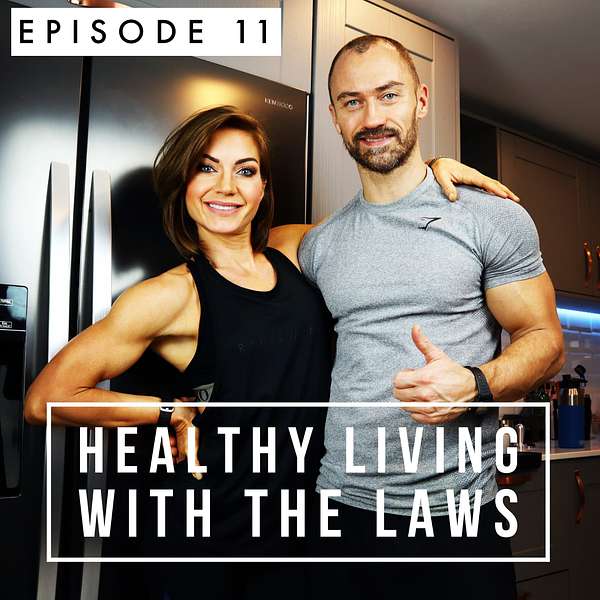
Ep. 11 | What We Used To Eat and Why Our Diets Have Changed
In this episode we talk about the foods we used to eat growing up and into our 20's and how/why our diets have now changed since learning more and more about health and fitness. This was a fun one!
Please don't forget to leave a review or comment if you have any questions!
BEN INSTAGRAM : https://www.instagram.com/benlawprimal
SARAH INSTAGRAM: https://www.instagram.com/sarahlawuk
Ben & Sarah x
Thanks to Our Sponsor:
Want supplements that *actually* work? Check out Love Life Supplements and use code BEN10 for 10% off your order.
Book a Consultation with Sarah: Free Wellness Discovery Call
Let’s Stay Connected:
- Ben: @benlawprimal
- Sarah: @sarahlawuk
Thanks for Tuning In!
Enjoyed this episode? Drop us a 5-star review and share it with your health-loving crew. Stay tuned for our next episode — we promise we won’t ghost you again!
This is Healthy Living with the Laws. Top tips on how to optimise your health from what you eat and drink to how you live and think. With your host, then several laws. We are all very different, like as as much as we're all the same, genetically, we are all different. So it's like what works for one person could actually be really detrimental for another person, depending on your genetic makeup. Like, you know, if you're not very good at processing facts or it makes your cholesterol up too high or something, it could be really detrimental to a keto diner or vice versa with far too many cards or whatever it is. It's really important to kind of know those things yourself. We're back. We are sticking to our 2022 resolutions, aren't we?
Ben:Well, yeah. It's only week two. So we'll get too carried away.
Sarah:Doing well, we're doing well. Two out of two ain't bad. So welcome back, everybody, for another week of Healthy Living with the Laws. Um, we hope you've all had a fabulous week full of fun and joy and dryness. You're doing dry January, aren't you? Did we talk about that?
Ben:Yeah, we did.
Sarah:Yeah. So you're having a lot of fun.
Ben:No.
Sarah:Weekends are Yeah.
Ben:It's just the weekend. It's not like I'm a massive drinker or anything, but I do like a glass of red at the weekend.
Sarah:And now you can't have it. You do it. I'm just I've just done a reel. Yeah. And I'm I'm waiting for it to go viral. You're the real to a real guy. I'm waiting for it to go wild.
Ben:So uh I don't want to get drunk all the time. I just like a glass of wine. I like the taste.
Sarah:Yeah, yeah.
Ben:But you know, December was heavy for me anyway. Very heavy. The Christmas and shenanigans.
Sarah:Yeah, you were crying by the end of it. You were like, I need time out.
Ben:Yeah.
Sarah:It was really upsetting you.
Ben:So good. Great.
Sarah:And it's helping you be more focused.
Ben:Honestly thinks alcohol helps me sometimes, but well, be more focused. Less de-stresses. True.
Sarah:There is, yeah, there is an element of that.
Ben:That is true. And has reported health benefits, uh, low doses.
Sarah:Well, it's like lots of things, isn't it? It's the it's the dose that's the poison. You can it's with everything in life, I think. Like people say everything in moderation.
Ben:No, I hate that.
Sarah:Um, that's not true. There's certain things that I'd be like, no, don't have that. No.
Ben:Heroin.
Sarah:Oh, yeah, true, true. Certain things in life that I wouldn't recommend in moderation, but there are a lot of things that having a small dose can help and be beneficial.
Ben:And alcohol is one of those. Yeah. And and specific alcohols as well. Like it goes a plane.
Sarah:Hey, someone's coming on their holidays. Um what ones would you what one would you like to do?
Ben:You know, if you buy organic sulfide-free wines, so it has the least amount of chemicals and bad stuff in there.
Sarah:And it's got resveratrol. But you'd have to drink a lot to get enough resveratrol for it to actually beneficial. But that's an antioxidant, so we're we're saying that's good. Anyway, this is not what the podcast was about. What we wanted to talk about today, because we thought it was quite funny, we've been talking about it a few times, haven't we? Was how we used to eat. And you might be able to relate to this. Some of you may still eat like it, we we don't know. Um, hopefully not. But when you're growing up, the the kinds of things you eat and how things have changed and why they've changed. Obviously, we want to give you some help, not just be like, well, this is why we I mean, this is what we ate. We want to tell you why we decided to change the way we eat.
Ben:Yeah, because believe it or not, we haven't always been perfect. And now we're so perfect in so many ways. No, but we always say, you know, a lot of people don't really change the way they eat from when they're younger and still eat like they were 12 years old.
Sarah:Yeah, but that's also because a lot of people haven't had the chance to be educated on it. And for me, it definitely, you know, was when I went to college and trained in nutrition, it made a massive difference in the way I ate because I think when you understand why, yeah, why you're doing something, you're more likely to do it. And when you understand the implications long-term, and that's the problem, isn't it? Like when you put something in your body, it's very rare that you get a sudden, like massive signal. You might get a bit of bloating or gas or whatever, but it's not like you know your leg falls off or something drastic happens. No, it's the prolonged doing of that action.
Ben:It's the chronic effect, isn't it, over years and years.
Sarah:Yeah. And also because you can't see what's going on in your body. So I think that that's the problem, isn't it? If people could see what was going on in their body every time they ate certain foods, I think they'd choose very differently. But because we can't see that, it's just like it all happens automatically. We kind of ignore it and forget the fact that every single cell in our bodies is made from what we're putting in our mouths.
Ben:Yeah. But even you know some people might even understand, but they just don't want to change.
Sarah:Yeah, change is hard.
Ben:They just want to carry on eating the stuff they like to eat and they just just deny.
Sarah:True. Denial is a big thing. Denial is a big thing. But I think that's the thing, isn't it? It's like you got to that's why I love finding ways of making what would seemingly be a not very what well not deemed particularly great for your body food, and finding a better way of making it with healthier alternatives, healthier ingredients. Um, that's what I love to do. I mean, there's been some disasters, isn't there? I mean, I made a birthday cake for your sister or attempted to, and it was you were like, I mean, she's got a big sweet tooth, hasn't she? And you were you dried it and you were like, that is never gonna sway her. It was like dry. There's a lot of coconut flour in it.
Ben:It was a baked goods are challenging. Quite hard, but you've got to hence my new reel.
Sarah:Check out my new reel and you'll see. I've definitely got better. A lot of my things are good.
Ben:Right. My muff cakes are just epic.
Sarah:Your muffins were good as well. We make great chocolates.
Ben:Yeah.
Sarah:We've nailed it, I think, in many ways. There's a few things we still need to nail, but I think we've definitely nailed it in many ways. And that I think if you're listening to this and you are one of those people who really struggles because you're like, oh, but I find it so hard to give up the things I love. You still want to eat chocolate and stuff like that. Yeah, you can, but it's doing it in a different way. You've got to find the right ingredients and the right recipes. And we can always help you with that. So if you want some help, don't suffer in silence because it kills me when I see people go on a healthy eating regime and I look at their meals and I'm like, what is that? Like a plate with some dry iceberg, a little tomato, a bit of dry chicken, and that's about it. And I'm like, Of course it's you're gonna fall off the bandwagon, of course it's gonna be dire because that is bland as shit.
Ben:Yeah. You see it a lot. That's the thing, isn't it? People don't know how to make things taste easy, make things taste good, and that's what we're there for.
Sarah:That's what I'm there for. That's one of my fortees. Hence the reason I produced a recipe book.
Ben:I know.
Sarah:Uh you ask other people, they think I'm great.
Ben:I've seen your meals.
Sarah:Well, they're a little bit more, you know, stripped back right now.
Ben:No, they're generally quite good. You just you just like to burn things.
Sarah:Oh, it's because I forget that they're in the oven quite regularly. Yeah. I'll go, I get sidetracked. I'm like a goldfish. I'll put something in the oven and then I'll go off and do something else, and then all of a sudden I'm like, oh crap, that's in the oven. Do you remember? I remember once making granola. I've got a really good granola recipe, and I, this was years ago, put it in the oven, went into town. I can't remember why I went into town, and then was in town and suddenly like, oh my god, the granola is in the oven. So came home and it was like literally black, made a whole new batch and did the same thing. Like literally. No.
Ben:And you tried a brown chicken in a glass pile like stitch before, didn't you? And it literally exploded.
Sarah:Exploded on the oven.
Ben:Put it on a hob.
Sarah:I put it on a hobby. I didn't put it in the oven. I put it on the hob and it shattered. I'm surprised it didn't end up in hospital. That was fun. You know, you have to try this. Don't try that. Yeah, I think I should start a YouTube channel of my kitchen disasters because there has been some great ones. So, so what we used to eat. What year are we going to here? Uh-huh. Because there's many phases, I think.
Ben:I think we go back to not infants because I can't remember. You can.
Sarah:Your mum used to give you cake.
Ben:Early teens.
Sarah:Early teens, okay. When you were in control of your food or when someone else was in control of your food. Probably like when you started a bit of control, but not like full.
Ben:You know, you're not in control of your food when you're 12, are you? You're not cooking your dinners.
Sarah:No, but you kind of no, I think. I think it needs No, I definitely didn't. I didn't learn to cook for years. I didn't even know how to make a cup of coffee until I was on work experience.
Ben:Breakfasts. Cereal. Yeah, cereal, obviously the staple in many people's lives.
Sarah:I loved a bowl of cereal.
Ben:We were talking about cereals earlier today.
Sarah:We were, and we were like, oh, nice bowl of Wheatabix.
Ben:Yeah, we Wheatabics was definitely a big factor in my life.
Sarah:It was me, but you didn't do what we did as children with the Wheatabix.
Ben:Dry Wheatabics, right? Yeah, but you were flipping weird.
Sarah:So I think everyone should try this as the as the Wheatabix challenge. As children, what we used to do, and this was we actually really liked it. We really enjoyed it as a meal, as a breakfast. Dry Wheatabics with peanut butter on.
Ben:The driest thing in the world.
Sarah:Literally would clag your throat, I'd be like, it was a challenge to get down, but it was I don't know what it was. There was something about it that was really good. I do like a bit of stodge, yeah.
Ben:You might put in coconut flour in your mouth, and your mouth as dries in like half a second.
Sarah:I've nearly, I've nearly choked on that before. Because it goes down your throat and it swells, and yeah, it's don't try it, kids. Don't try it, it's really dangerous. So cereal.
Ben:Toast, jam on toast.
Sarah:Jam on toast. I didn't really have a huge amount of toast as a child. I'd always pick cereal over toast. What cereals did you have?
Ben:Wheatabic's with sugar on, obviously.
Sarah:Yeah.
Ben:Rice Krispies stayed on. With sugar on, probably. Probably. Uh big on cornflakes. I like cornflakes in the case.
Sarah:The brown flakes were a winner in my house. I loved a bran flake.
Ben:Yeah. Shredded wheat came later and again.
Sarah:I liked a raisin wheat with a little raisin in the middle.
Ben:Crunchy nut cornflakes.
Sarah:See, we never got we never got those.
Ben:What?
Sarah:They were probably too expensive. But we did have Weitos. Loved a Weito.
Ben:Never had a never bought We Toes.
Sarah:Why not? Start, I don't know if any I mean that showed my age star. I don't think that exists anymore. But Star was good. Really good. Don't know what I can't even describe it. It tasted kind of like honey. Don't know what it was.
Ben:Um but yeah, cereal was a that was about it for me, I think, cereal-wise. Nothing too elaborate.
Sarah:No. When I got older, I then swapped to uh having. Well, I went through a phase of having croissants and chocolate spread. I remember that.
Ben:How do you think? Do you had hang on going back to the cereal? What is it a cereal? Grape. Yeah. I love it. But nobody's ever heard of these. I never heard of these before. Grape nuts. Grape nuts. They sound like grapes and nuts. No, they're not even. No.
Sarah:They're just little bits of wheat in a circular form. Even circular. I quite like bits. And they've not got sugar or anything. I don't I can't even describe them, but there was something about grape. They're still in the supermarket. Go and check them out, please. No one buys them. I used to mix them in with a mullah light toffee yogurt, and I used to wait for them to go soggy. And that would be my breakfast. But that was when I was older. That was when I was on the train going to dance college. That was I loved it. I honestly I could have eaten that for every single meal. I was the queen of carbs. Hello. Well, let's talk about why we why we swap. What did you swap it to? No. Oh okay. Should we go for sorry, go for the meals and then we'll tell you why we swapped and what we swapped to.
Ben:And then I still had toast and jam a lot of mornings.
Sarah:Did you ever have both? Cereal? Yeah, sometimes.
Ben:And then the weekends it was always a sausage sandwich.
Sarah:Oh, a sausage sandwich.
Ben:Or a bacon sandwich. Dad used to whip them up.
Sarah:Bacon sandwich, yeah. I can't remember what. I think beans on toast featured quite a lot in my house at the weekends. And cheese and bean toasties as well for breakfast. Also, I custard cream. I remember a custard cream for breakfast. A custard cream for breakfast. That was a weekend treat. Okay. Not a custard cream biscuit. Do you mean like a what's a custard cream?
Ben:Is it is it a custard cream?
Sarah:That's a biscuit, isn't it?
Ben:Am I thinking of a custard cream? Egg custard tart. Egg custard. Egg custard tart.
Sarah:Oh, like the the mate. The nutmeg on the top. You don't like nutmeg though, do you?
Ben:No. I don't really like them.
Sarah:You used that one for breakfast every weekend. I had locked toasted cheese sandwiches, but I also, school holidays, remember having super noodles for breakfast quite regularly. Or pot noodles. No. We had a lot of pot noodles in our house.
Ben:Never have any of that crap.
Sarah:But you'd have a bowl of cereal, a custard cream, and jam on toast.
Ben:Packaged stuff like that. What a what?
Sarah:A custard cream, well not put whatever it was called, is not packaged.
Ben:Okay.
Sarah:Um lunches.
Ben:Were we talking to school though? Still in school days.
Sarah:You know, school, I only got to have school dinners once a week, and that was my treat. I loved it. A school dinner once a week was like, yes, I get to have school dinner today. Do you know what I used to pick?
Ben:I think what you told me baked potato and chips and everything.
Sarah:Baked potato and chips. Nothing else. Just carbs, baked potato and chips.
Ben:Why? Just potato in different forms.
Sarah:Yeah. How many forms of potato can I have on a plate? That was a good one.
Ben:Well, we used to have pieces of plastic garlic bread, didn't you? Yeah, that was a staple in the house.
Sarah:Yeah, it was all like I think we're just a carb-heavy family.
Ben:I think most are.
Sarah:Yeah. Yeah.
Ben:But what I I never had school dinners. Never back up. Never ever.
Sarah:But you were really fussy. I know what you had.
Ben:Cheese and tomato ketchup rolls. Letterby brown rolls. And red Leicester cheese.
Sarah:Oh, it's like plastic with a bit of tomato sauce on it.
Ben:Two of those.
Sarah:Two.
Ben:What a treat. Two bananas.
Sarah:Two bananas.
Ben:Two like or a chocolate bar and a club. An orange club. And then a cherry baked quail. Oh my, like any any green. Pack of crisps, nope. None at all. Pack of crisps. Pack of crisps. And I'd have I'd have half of it on the way to school.
Sarah:Yeah, I used to do that. Like half my food would be gone by lunchtime. I used to have sandwiches for school. I used to have cheese and salad cream because I was addicted to salad cream. In fact, when I lived in Germany as a fully grown adult, I couldn't get salad cream, so every time someone came to visit, they had to bring me salad cream in their suitcase. I've uh cut the addiction with salad cream now. What did you have for lunch? Uh I did have sandwiches, and I always remember as well having two water biscuits with cheese and butter. Because I used to eat that when I got to school before. And then I'd have uh like a fake kit cat.
Ben:A fit cat.
Sarah:A fit cat. Yeah. And then maybe a bit of fruit. I mean, push it out there. I might have I might have had some fruit. Because I did, believe it or not, enjoy salad and fruit. So I might have had some fruit in there. And uh yeah, I don't know what else really.
Ben:Mine was pretty stable throughout school. Didn't your mum get it confused once and she gave you the wrong because my brother had cheese and Branston pickle pickle and she swapped got him the wrong box one day. I was disgusted. I would not eat them.
Sarah:I love a bit of Branston pickle. Can't go wrong with a Branston pickle cheese sandwich. And then dinners. Well, before dinner. Oh, oh yeah, you now I didn't get this privilege.
Ben:My mum was an avid baker.
Sarah:Mine was not. My mum's a great cook, but not with baking.
Ben:We had a three-tiered thing of cake that was all every layer was a different treat.
Sarah:And she would bake them every day.
Ben:Well probably not every day, but quite so I'd get home at like four o'clock and have a big big plate of cakes. Wow. I was like skinny as a break.
Sarah:How does this happen? It's not fair. As children, we just seem to inhale it and it just goes.
Ben:It's a very slab of homemade like chocolate cake. Why? And then a flapjack with it in something.
Sarah:Loved flapjack.
Ben:My nan made great flapjack. My mum made great flapjacks.
Sarah:So what did I have when I used to get home from school? If it was a Tesco day, so when my mum had done the big big Tesco shop on a Monday, she'd get a big fresh crusty loaf, white loaf, and I would slob slob, lob the end off, the crust. I loved the crust, get loads of butter and eat that. And then also as a little treat on a Monday, I'd get a big chocolate clair. So I'd eat a chocolate clair. Or on the way home from school, I'd be given some money and I'd go to the shop and I'd get 50 P's worth of uh red laces and I would tie them all together and shove them in my mouth in one go.
Ben:See, I was never big on sweets.
Sarah:No, my brother is a sweet fiend. It still is. Yeah.
Ben:Still is. Sweets were quite big in our house. Yeah, sweets never did it for me. It was more like chocolate. Chocolate and cakes.
Sarah:Yeah. And then dinner time. What what then went on?
Ben:Dinner time. I mean, it was always around 5:36. Imagine eating that now. Yeah. A week like half eight.
Sarah:Yeah, we're silly.
Ben:It was always for half five, six. I mean, after I just had a plate of cakes at four.
Sarah:Carving up, just carving up.
Ben:Get my energy up for dinner. And then very unadventurous for me. It was like chips, beans, turkey burgers. Wow. Finders crispy pancakes.
Sarah:Oh, they used to make me feel sick. I wasn't a fan of that.
Ben:Sausages, bean, everything with beans and homemade chips though. My mum made the chips every day. That's good.
Sarah:That's good. Well done. Again, any kind of greenery. No greenery. No. At all. At all.
Ben:Never. Beige. Lots of beige. Lots of beige, beans, you know, beans, chips, waffles.
Sarah:Did you never waffles?
Ben:Fish fingers.
Sarah:Well, there you go, you've got a bit of fish in there. I mean, that's something. I I we believe it or not, I did use to like vegetables and salad. If if you went, I've got this little thing called my secret file, which was from when I was like 12, and you had to describe like your parents in it and all the things you like. It is brilliant, honestly. Like you read it and it is hilarious. But it says, What is your favourite food? And number one was salad. Number two was pizza, but number one was salad. I must have been like 11.
Ben:I mean, that's weird, isn't it?
Sarah:Yeah, slightly. Maybe my mum just made really good salads.
Ben:I guess Meg is a bit like that.
Sarah:My cousin. Your cousin? Well, my cousin's daughter. Yeah, well, she's a bit older than me. She definitely acts older than I did at that age.
Ben:Yeah, I had nothing green.
Sarah:No. No, I definitely had some green, but also I used to love a packet meal. I mean, I don't know why, but again, Monday treat day, my mum would go to Tesco and I would get a packet lasagna, and that was like heaven. A packet lasagna. Microwave packet lasagna was like the best thing in life. I loved it.
Ben:Or a cannelone. But we never had we literally had didn't have pasta. I never had pasta, didn't uh eat pasta until I went to uni. But your mum and dad still don't really they're very traditional, they don't eat pasta or not I can't really remember having rice. It's like potato man. Just potatoes in every book.
Sarah:I think I did have rice. I did have rice, but I can't um and I remember when I was a bit older and my mum used to work, she she went to work packing McDonald's knives and forks for years at like 4 pm. So she would leave our dinner, she'd make it all in the day, leave it on the side, and then we'd have to reheat it. And I always remember I hated Mondays because it was sausage and mash day. Just was like, not today, no.
Ben:You had this yeah, you had the same thing on the same.
Sarah:She had a rotor, yeah. She was organised, but my mum is like a machine when it comes to catering, doesn't she?
Ben:Yeah, and she likes organization.
Sarah:She is oh my goodness, yeah, she is on it. But yeah, what we did have some veg. My brother didn't. One of my brothers was literally like, oh, wow, we've got a bit of Baywatch going on. Where did that come from? I don't know. Um, yeah, one of my brothers would not eat anything like nutritious. He lived on Frey Bentos pies that are like a throwing under the bus, yeah. Pie out of a can, um, tinned sausages, waffles and beans. That was it. Whereas me and my other brother were much more adventurous, like we'd go on holiday to France and we'd sit and eat all the different cheeses and salads and things like that. But no, he would not. To the point where we used to go to the beach, my mum used to have to take a can of sausages and a baguette for him.
Ben:Yeah. What is that? Yeah, so Sunday, like Sunday roasts. Yeah. But I hardly touched the veg. And my my if we had beef, it had to be minced. Minced up. We had a mincer. Wow. So I I couldn't eat it apparently. Unless it was minced up.
Sarah:Oh, how times have changed. Minced up roast beef. Roast beef. So your mum would roast it and then you would mince it up afterwards.
Ben:Yeah.
Sarah:Wow.
Ben:But I'm I'm remembering like it wasn't what we buy now, like grass-fed, hot, you know, really tender, juicy beef. It was quite I think it was quite dry.
Sarah:Well, and then it got minced up, and I'm sure it didn't get any better.
Ben:I think that peas was about the adventurous I got with veg.
Sarah:That is, yeah. No, I definitely did have some greenery, I liked a bit of veg. But I obviously had a lot of carbs too. And then evenings would be another bowl of cereal, probably.
Ben:Well, it was a we had a homemade dessert every day. Something different.
Sarah:Why did I not live with you?
Ben:My mum was like a bake queen.
Sarah:She should have been on the Great Bish bread bowl.
Ben:British bake off. Different dessert every night, and they're all really good.
Sarah:Wow, we definitely didn't get that. It was we got a Jamaica ginger cake, which was a packet one. McVitti's Jamaica ginger cake. I like that though. Or a bit of saurine. Sorine with butter on. Sorine. You've never had saurine.
Ben:I did have some at uni. Just weird, isn't it? Malt. Yeah, kind of weird, but kind of nice.
Sarah:But then when you got a bit older, I still had a bowl of cereal before I went together. Yeah, me too, like with ice cold milk on. But then when you get a bit older, so obviously the diet changed. Well, mine did change, but it was still very carb heavy.
Ben:Yeah, I remember you spoke about bread, but bread was a big factor. And beans beans on toast were a staple. Yeah. At least three times a week.
Sarah:And toasted cheese sandwiches were a big thing in. I loved a toasted cheese sandwich.
Ben:So that I kind of ate that away up until it was like at least embarrassingly.
Sarah:Wow.
Ben:Well, I remember I had we have um Chinese takeaway and I'd only have rice.
Sarah:Just rice.
Ben:The egg-fried rice by itself. Just nothing on it. Nothing on it. And then I progressed to Tweet and Sour chicken balls and egg-fried rice with no sauce. And then I had put the sauce on. The gloopy orange MSG filled.
Sarah:Filled. That was probably the majority of my Chinese takeaway. It was the sauce. I loved the sauce. It was always incredible. Yeah. But you didn't have now, I probably vom.
Ben:Yeah.
Sarah:But then obviously, when you get a bit older and you start cooking for yourself and well, uni, literally went to uni.
Ben:Taught you what well how I had no idea how to cook. I just realized shit.
Sarah:I've got to cook for myself and there's no one making me cakes every night.
Ben:First time I ever cooked pasta, I didn't know what to do, put it in a pan with some water. I put the sauce in the water with the pasta. Wow. Like a you know, like a Dolmio sauce pasta.
Sarah:Yeah, in the water.
Ben:Totally balls it out.
Sarah:Yeah, that's bad times.
Ben:So I just had to figure it out quickly, and then lots of jack of potatoes, still like carb heavy pasta mackerel became a thing though, didn't really? Pasta became a big staple in my life. And then so every type of pasta dish, well, not every type, mainly pasta mackerel, can of mackerel in pasta, loads of cheese on sweet corn, really good.
Sarah:Any veg at that point? Did you start venturing into the veg world?
Ben:Yeah.
Sarah:What made you do that?
Ben:Just I don't know. I was, you know, I always kind of had a health conscious head on water. Whilst you were eating a plate of cake. It got it well, as I get into like I was getting older, I started to think about health more. And then the sweet corn crept in. Stir fries. That was a big thing that came in.
Sarah:Yeah, I lived on when I was a dancer. I think I my evening meal was always a stir fry. Just a massive packet of veg. Soy. I mean, I used to drink soy sauce, like it was going out of fashion. Gluten and soy. Really great for the thyroid. Yeah, no wonder the thyroid is a screwed. Um and then chicken in it, and no, absolutely no fat whatsoever. My diet as a dancer.
Ben:Anti-fat.
Sarah:Oh my god, like no fat whatsoever. Would you like to touch C3 cheese? C three fake cheese.
Ben:It's like, is that cheese? You can see through it. Like one gram of fat or something.
Sarah:It's called Hut Kazer or something, and it's interesting, but I used to have it on a rice cake with some quark, fat-free quark. And salad cream, of course, as my evening treat after the show.
Ben:You must have had about 10 grams of fat a day.
Sarah:Yeah. I did.
Ben:If you try and do that, people it's not easy.
Sarah:Impossible. I had porridge for breakfast, and I'd have maybe one Brazil nut chopped up in it. Lunch, I'd have an apple. That was it. Then I'd have my dinner before the show, so that would probably be a stir fry with chicken and no fat and soy sauce. And then I'd have an apple during the show. And then I'd get home from the show and have two massive rice cakes with quark, fat-free quark, and see through fat-free cheese on. So yeah.
Ben:Low protein, quite low protein as well.
Sarah:Yeah, not a huge amount of protein, but lots of carbs. Loved a carb.
Ben:I was still on the breakfast, the cereals from even at uni. Well, when we lived together, you were as well. Yeah. On the porridge came quite a granola came.
Sarah:Then you swapped to a smoothie that you used to make with a bag of a whole nearly a whole bag of nuts, yogurt, berries.
Ben:This is we're moving on now, aren't we?
Sarah:We're doing but you talk about your blood sugar issues.
Ben:When we first lived together in City Road.
Sarah:Yeah.
Ben:We've moved on a few years.
Sarah:Yeah, we've moved on a few years.
Ben:I I used to eat a lot fruit.
Sarah:I was still I could have been a fruitarian.
Ben:Yeah, I was still very carb heavy, but definitely eating a lot more veg at that point. Yeah, you were every meal had to have either rice, pasta, bread, bread or potatoes. It has to have like I was just didn't couldn't imagine a meal without carbs.
Sarah:But talk about your blood sugar issues, because that's where things I think massively changed for you. Was for me, my diet. I was slightly different, I guess, because I did always like salads and veg and stuff, so I would eat things like that, but I wouldn't eat fat. And I think when I went to college and learned all about nutrition, I was suddenly like, oh, got this really wrong. Like really wrong, not having any fats, and my hormones were probably absolutely buggered because I wasn't having any fats, and your hormones are made from cholesterol. That's the starting point. And I was like, no cholesterol diet.
Ben:You're quite healthy at the time.
Sarah:Well, yeah, I didn't seem to have the health issues, that's true. Um, yeah, so that's for me when things changed massively was going to college and actually learning. For you, you used to have horrific blood sugar issues, didn't you? Well, you say everything. Well, they weren't good.
Ben:But I didn't even I kind of didn't even realise it at the time. No. I thought it was just normal life. Like, and it probably happens for thousands of people who just think it's normal to like get up and immediately be really hungry and have to have a big bowl of cereal or a bowl of porridge like I did. Um and then literally screaming hungry again an hour or two later um and feel you know, get hry and feel weak if um if I didn't eat immediately.
Sarah:Well, I remember when we went on holiday to this was This is a Punta Carna. It was Pontacana. Punta Carna, yeah, Dominican Republic. Yeah, so we went on an incentive trip that I earned with my business and we went to the gym in the morning, I remember.
Ben:Did we? I forget we even went to the gym. I think we must have.
Sarah:Maybe we just but it was late by the time we ate, and I used to be able to go for I mean, I could go all day without eating and be absolutely fine, which is weird being carb-wise, I was a carb monster, and if I look at my genetics, it actually says that I'm prone to type 2 diabetes and obesity, which loads of carbs, is not great for, really, interestingly. Um, so I don't know why how I managed that, but I remember we were going down to the beach and we hadn't had breakfast and I was fine and you literally nearly blacked out.
Ben:But it was literally only like probably 10 o'clock still. Yeah, it was late, 10 or 11, maybe at the latest.
Sarah:Yeah, you had to grab a banana and a bread roll, like nearly dying.
Ben:I started to feel really faint, didn't I? Like I was gonna pass out. Yeah. And I literally had to grab a banana off it on the table. Give me the banana, give me the carbs now, and then I was fine soon as I had that.
Sarah:Yeah.
Ben:Yeah.
Sarah:Um do you think that was a moment where things changed?
Ben:No, well, I don't think it was that point exactly. Because again, I just thought it was I thought everyone was like it. And like I remember like being really faint, really hungry, and I'd eat a big carb heavy meal again, and then a half an hour later, I'd have a massive dip in energy. I remember like having like beans and toast for lunch one day in Wapping, where we lived another place in London, then walk into the gym and feeling so dizzy and faint, and it would happen every day. And then I realised later it was like something called rebound hyperglycemia, or it has other names as well, but where your your blood sugar shoots up and then come crashes crashes down where your body's trying to clear all the sugar.
Sarah:Yeah, it's super damaging, isn't it? Like that too much sugar in your blood dream is super damaging. So your body wants you to survive, so it will clear it out, but then it often clears too much out, and then you get it's too low, yeah, and then I'll get really tired and faint.
Ben:That's you know, a lot of time you know, people have a big meal if you're really tired afterwards, yeah. That is what's happening. Yeah, you have to lie down and have a nap. It's the same kind of thing, but people just take it as normal. Yeah, that's not normal.
Sarah:It's not normal people, and like hangry as well.
Ben:Yes. I haven't eaten, I'm getting the rage.
Sarah:Yeah, that's like it's not normal, it's not, it shouldn't be that way. It's not normal. No, that's your that's your blood sugar doing a massive roller coaster ride, which you just do not want it doing. It needs to be balanced for your hormones to be healthy, for your for everything to be healthy, like your skin, everything relies on your hormones to be super balanced.
Ben:I was definitely eating better, I was definitely eating a lot more veg. Um like I said, I probably like a lot less bread, a lot less sandwiches, but I was still very carb-heavy. So I was having breakfast, then having to eat again at 11, and then my lunch, and I have to eat another afternoon snack, then my dinner, and then you were very rare. I never trapped at the time, but you've got it's got to be in probably three to four hundred grams of carbs.
Sarah:Yeah, which a lot of people probably do without even realising it, because a lot of people don't realize how many they're eating, and it's not we're not saying that carbs are the devil and you should not touch carbs, but it's about balancing them, isn't it? You really need some people can handle them better.
Ben:Some people can handle them better.
Sarah:Yeah, totally. Depends on you as a person, but they need to be balanced. You shouldn't just well, what I would recommend is not just eating loads of carbs on their own. It's like balance them with some fibre, some protein or some fat, because that's going to stop the blood sugar spikes and and dips. But also, if you if you have a meal, if you eat the veg first, then the protein, then the carbs, it has a very different blood sugar response than if you eat the carbs first. It's very interesting.
Ben:Or if you're eating with fat.
Sarah:Yeah, yeah, it slows down the blood sugar response, yeah. Which is super important.
Ben:I see it in people all the time, and they don't realise like you know, people I'm close to. Yeah. I can see them like, oh my god, I'm so hungry right now, and then they'll eat a banana, and then they'll be really tired. But you know, they just I want to I want to like tell them what's going on, and I do sometimes when they don't really listen to you or want to take the advice. It's hard when it's people close to you, isn't it? Yeah, when it's people close to you because they don't want to give up certain foods, and it's weird, it's a weird thing, isn't it? They don't really believe you when they or don't take it in.
Sarah:Well, it's a bit like when your mum tells you to do something, you kind of like, yeah, whatever. But if a teacher told you or a doctor told you in the newspaper, yeah, then you listen, but it's when it's someone close a lot of the time, you're like, whatever. So it's a hard situation, really. So then what did you do? Tell everyone what you did to change all of this because you did you I mean you changed a lot.
Ben:So fast forward again to in pitching, let me probably close moved out of London. It was definitely kick-started by reading The Four Hour Body Yeah, Tim Ferris. If you've got this before in my primer story, yeah. If you haven't read it, the Four Hour Body Body Tim Ferriss, where he introduced meat to the slow carb diet. Yeah. Where you swap all your starchy carbs, so rice bread, pasta potatoes for legumes. You ate a lot of lentils, so beans, pulses, like kidney beans and lentils and stuff like that, which have a lot less carbs basically. And slower release and a lot of fibre. Hence the slow carb diet.
Sarah:How was your digestion?
Ben:It wasn't too bad.
Sarah:Not too frony.
Ben:Yeah, because they're all you know, they're all soaked.
Sarah:I think that they can still be quite hard to digest for a lot of people.
Ben:They have to be soaked, you won't be able to eat them. So it like breaks down lectins.
Sarah:Um they just don't have a huge amount of nutrition, do they?
Ben:So yeah, my that's where it That was a big shift in my diet. Obviously, I'd have like more whole foods for breakfast, so it would be lent. Remember I did lentils, just lentils, eggs, and spinach. Yeah. I'd do them in the microwave. Yeah, tasty. But you didn't probably did make them tasty, yeah. Um I quite I quite enjoyed it, and then I'd have like a beanie beanie salad thing for lunch. Yeah. And then just a lot of beans. Beanie. What does that have for dinner? Well you'd always have like meat or fish, wouldn't you? And then I'd do um like butter bean mash.
Sarah:Oh yeah, that was actually good because butter beans are quite good.
Ben:Buttery. You just mash them, it's similar to kind of to potato. Yeah.
Sarah:Yeah.
Ben:But I didn't I didn't mind the diet at all. But I did it for about two months, maybe. One or two months. Um I got I saw some results, but like it wasn't it wasn't drastic, I wouldn't say. It definitely started to change my physique. But the more I got into it, the more I started reading about it, like getting into like low-carb diets and keto diets, and started following different people. I decided to embrace the keto life. Go go the whole hog and remove legumes as well. So removing most of the starchy carbs, all carbs completely.
Sarah:You did, and you went full, full in to it.
Ben:Yeah, and then then it all you know I started to see big results. Uh your energy as well.
Sarah:Everything changed, and like your energy changed, you didn't have blood sugar swings. Didn't have blood sugar swings. Your physique. I mean, you lost how many kilos? And you weren't big in the first place. To the point where my mum was slightly worried because you did look very gaunt in the face.
Ben:I thought it was like 14 kilos, I think, 15 kilos. Yeah, it would you would remember getting back from Punta Carna and I weighed myself, it was about 83, 84 kilos.
Sarah:Yeah.
Ben:And it wasn't I think it was long after that when I switched. And then in a matter of six to eight months, I dropped about 10, 12 kilos. Yeah. It was a crazy switch. And then yeah, and the blood sugar issues completely went. Didn't they? It felt great. Completely loads of energy all day, didn't and my appetite.
Sarah:You used to eat like twice a day, and that was it.
Ben:Uh that's where the wonder shake started.
Sarah:Yeah, the wonder shake began. I think there's a video on YouTube actually of the wonder shake, it's an it's hilarious.
Ben:Go and watch it in my completely unprepared. Like brilliant, didn't know where anything was in the house. There's about 50 ingredients in that thing. So painful. It's brilliant. Wow. Go and watch it.
Sarah:You'll love it.
Ben:Um, yeah, I never trapped at the time, but that thing was a it's quite a beast. It was a beast. 12, 1300 calories. Yeah, and it's but very low carb, high fat.
Sarah:Yeah.
Ben:So I'd have that in the morning and then maybe a small snack in the afternoon and then my evening meal, and that was it.
Sarah:That was it.
Ben:If I was to guess, it was probably two thousand, two to the half thousand calories, maybe.
Sarah:No, I bet you're having more than that. It's just because you had a lot of fat and it's probably but at all.
Ben:So we don't know. This is before or like keto was big at all. People hadn't really heard of it. I I hadn't really heard of it. I didn't really I started to get into it. But I didn't I didn't almost know I was in ketosis, but I definitely was like, Yeah. Because my carbs are so low.
Sarah:I mean, you were so anti-carb at that point. You were literally like, Yeah, because it don't touch any carbs, anyone, they're the devil.
Ben:There's like lots of people, isn't it? And they get into something and they see massive results. Yeah, you want to share it with other people, you become very passionate about it. The best thing in the world, everyone should do this, everyone should eat like this way, this is it. I've cracked the code, blah blah blah blah. Because I just saw amazing results.
Sarah:Yeah, what what obviously now you're not you're not like that. Like you do, you're still high fat and you're very moderate carb and you don't eat crappy carbs. But what what has changed with regards to your views on keto and your own diet as well?
Ben:Um well for one I did get very skinny, didn't I? Yeah, your face was like hollow. I still felt great, but looking back, I was like, I got under 70 kilos. Yeah, that's and I I'm quite lean now and I'm 81 kilos.
Sarah:So you can imagine Yeah, you were my mum was very worried. She was like, Ben doesn't look well.
Ben:Um and I guess my because I got into CrossFit, didn't I? And then my sleep started to suffer a little bit. Yeah. Because I was had so few carbs on my system and I was doing high intensity. If like it's not a good combo.
Sarah:No, and I think that's what I did at one point. I I think I was inspired by you doing a keto diet. So I kind of half did a keto diet, but probably didn't put my fats up high enough either because I was still scared of fat. No. So I was a bit like half arse, and then was doing HIIT training and completely buggered myself over, really, didn't I? I mean, I yeah, wasn't good. Wasn't good. No. And this is the thing to remember as well, like we are all very different, like as much as we're all the same, genetically, we are all different. So it's like what works for one person could actually be really detrimental for another person, depending on your genetic makeup. Like, you know, if you're not very good at processing fats or it makes your cholesterol go up too high or something, it could be really detrimental to do a keto diet, or vice versa, with far too many carbs or whatever it is. It's it's really important to kind of know those things yourself. And that's why it really is. That's why I'm much more of a fan of like balance. Start people with a balanced diet of knowing what the right kinds of carbs to eat are moderate, you know, carb not ridiculously high, but not so low that it takes them into ketosis, eating you know, good quality, complex carbs that slower release, coupling it with the right, you know, fats and proteins and veggies, but and using that as a starting gate, and then from there adapting.
Ben:Yeah.
Sarah:Do you agree?
Ben:And I guess it was only because I was doing that high-intensity training that it really got me thinking about adding carbs back in. If you didn't, if you weren't doing such a high-intensity training, I don't know.
Sarah:You you can stay in ketosis for a longer but you should always come out of it at points as well, though, shouldn't you? Because it's like to re to regulate your hormones again. Especially start things and yeah, like your to convert your T4, which is basically you have your thyroid hormones, you have T4 and T3, which are the two kind of main active thyroid hormones. And well, T3 is the active thyroid hormone, but we produce more T4 and then it has to get converted into T3. And sometimes on low-carb diets or keto diets, it kind of halts the conversion of the T4 to the T3. So that can be quite detrimental. And if you have got thyroid issues already, then you're basically just making them worse because you're not then able to convert any of the thyroid hormones that you are making into the active form which you need to make your body run. I mean, your thyroid rules everything, every single cell in your body has receptors for thyroid hormones. It rules everything.
Ben:So, yeah. I start to add carbs. Some carbs back in. Not I didn't go crazy, but around more around training and stuff. Yeah. Um and it definitely helped. And I definitely started putting weight back on. But in a good way as well, like helped with muscle building and carb back loading as well by Don Kiefer. Where you eat a load of carbs post-training. Yeah. Um I I like to experiment as well. And I just got, you know, sort of thought I'd start adding stuff back in. Yeah. Yeah, but still the principles of like mainly whole foods, like good quality meats, because I don't really spoke about how there's types of food.
Sarah:We'll talk about macros, but yeah, it's always about the quality of the food that you're eating, isn't it?
Ben:The types of food you're eating changed, didn't they? Oh, yeah, dramatically. Started buying organic veg from Riverford.
Sarah:Yeah, and I never bought anything organic. I mean, I used to, when I lived in Germany, it was like a game I played with myself to see how little I could spend on food every week. I think I spent like 40 euros a week. Now I spend like we spend more than that a day. It's ridiculous. Ridiculous amount. But it is our priority, isn't it? Food is a massive priority in our lives.
Ben:And high quality meats as well. Because yeah, it's really important. When you remove all the starchy carbs, you are really left with meat and veg. Yeah. Only so that as well. Yeah. Our diets consisted of a lot of veg. Loads of veg, like a massive plate of veg.
Sarah:But again, for some people, depending on what's going on with your gut and your genetics, too much veg can be detrimental to too much fibre.
Ben:And that's that's that's kind of how it shifted again more more recently.
Sarah:Yeah.
Ben:Well, for me anyway. Yeah. I'm experimenting more even cutting out veg completely and doing more of a carnival just seeing how it goes. Approach. Because I hear so obviously carnival diet's so popular now. I hear so much about actually the bad stuff in veg.
Sarah:Yeah, but then it's again, it's so it's so it's hard, isn't it? Because there's people that we follow and really respect, and they'll say one thing, and you're like, yep, that makes so much sense. Then there's other people that we follow that we really respect, and they'll say the opposite, and you're like, yep, that makes so much sense, and then you're like, uh and that's why it's so confusing.
Ben:I always, yeah, but it's always comes down to personal experimentation. That's why I that's why I just try everything. You've got to, you know, you've got to go off and make what makes you feel the best.
Sarah:You've got to but long term, I think that's the key as well. What long term makes you feel the best? Because sometimes things can make you feel great for a short period of time, but long term you might end up with nutrient deficiencies and things going on.
Ben:Absolutely. But I've even though I do eat a lot more carbs now, that is still a big you know, principle I stick to is mainly low carb and more carbs around training.
Sarah:Yeah, yeah, you don't have masses, but the carbs that you do have as well are more again, like sweet potato complex carbs.
Ben:I always have zero carbs in my breakfast. Like I always feel you should start your day very low carb, high fat, high protein, it keeps you associated throughout the day, stabilises the blood sugar. So I'll have like a big plate of eggs and sardines and some veg.
Sarah:Yeah. Um and then you'll train and have your carbs around the training and then a bit of garbage in the evening.
Ben:So the big shift from obviously when we're younger is getting rid of crappy carbs. Processed processed food, processed carbs, isn't it? That's the big shift.
Sarah:And bread.
Ben:Well, it's processed food.
Sarah:Yeah, yeah, true.
Ben:Um not hardly anything packaged.
Sarah:Um but what I was gonna say quickly, what's interesting as well now though is if you do have carbs, you don't have anywhere near the same blood sugar response that you used to have.
Ben:That is that is interesting, isn't it? Yeah. That is a big shift, you that shows a big shift in my physiology.
Sarah:Yeah, because you've got underlying when you started doing bodybuilding and you were doing like a high carb day once a week, weren't you? Like a carb refeed once a week, and you'd have loads of rice, you'd have some, you might have like a muffin or something, so it wasn't all completely like clean carbs, but you would not have any of the issues.
Ben:The blood sugars roller coaster. No, and uh I did initially remember when I went extremely low carb keto. Remember, I had that blowout on a Saturday.
Sarah:Oh yeah, but that was like such a shock to your system, and also you would eat like you would go wild because it was like you were following it was that was still slow carb.
Ben:Was it? And it was like one of the blowout day on Saturday, yeah.
Sarah:But you would eat like a massive thingy of fish and chips, three muffins, a jacket potato, and then you'd just be in agony on the floor, like not in a good place at all. Decided that probably wasn't ideal.
Ben:I can yeah, I can have quite a high carb day, even like 500 grams of carbs on a Saturday sometimes, but it is mainly rice, whole foods, clean carbs, isn't it? Potatoes, rice. Yeah, I still don't really touch bread. No, occasionally custard occasionally, maybe a muffin or a brownie or something.
Sarah:But it's interesting, and I think that's a a a really key takeaway is how your body has now adapted. And I think that the goal is to be metabolically flexible, isn't it? Like what we all need to be is metabolically flexible, which means you can burn fat and carbs.
Ben:Yeah, fat and carbs. People do do get too dogmatic with keto.
Sarah:Yeah.
Ben:Like I was. Yeah, totally. You were like, touch carbs, you you're gonna die and get fat. Yeah. So then you can only burn, your body can only burn fat. Yeah. And then you have a big blowout of carbs and you you just lose.
Sarah:Your body just can't do it.
Ben:So yeah, it's about having metabolic metabolic flexibility.
Sarah:Which you can learn to have when you know how to do it, which is kind of what you did. Um, now your body is very adapted to being able to burn both very well, and life is sweet. So, where if someone wanted to develop metabolic flexibility, what would the best thing for them to do be?
Ben:Eat fat and carbs.
Sarah:Brilliant advice.
Ben:Go and eat your cake. I would go kind of what I did. Yeah. Have a quite a long period. If you've come from that higher carb place like we were, yeah. Cut out all the processed carbs carbs and replacing and then go low carb for a long period. So your body adapts to being a fat burner. And then slowly introduce. And I I still think if you're not training that hard, you're still not that necessary, I don't think. Yeah. I agree. I think I trained six days a week. Yeah. Sometimes twice a day.
Sarah:Depending on what your body is doing at that point in time. So, for example, if you've had a very stressful period or you've been ill, sometimes having more carbs can be helpful because it helps to lower the adrenaline response and things like that can be quite beneficial. But again, coupling them in the right way with the proteins and the fats. Um, but like you said, if you're not training much, then a more moderate or lower carb style diet would probably be more beneficial with better quality carbs as well. My starting point, I think, for everyone would always be like get your protein right. I think that's the key. Yeah, people just do not eat enough protein a lot of the time, especially when it's that's how we've changed massively growing up.
Ben:Yeah, protein is very low. Yeah. If I think back, like most meals are based around the carb.
Sarah:Well, beige, yeah.
Ben:And protein was just a side thing.
Sarah:Yeah, exactly. So if you if you make, you know, make sure you have a good amount of protein. Like I always say for women, like 100 grams of protein should be your depends on your weight. Well, yeah, obviously, if you're four foot two, it's gonna be slightly different.
Ben:But my suggestion is two grams per kilo of body weight.
Sarah:Two grams per eighty. Yeah. So I have 1.5 to 2 grams, I would say.
Ben:I'd say two grams at minimum, because I have more, I have like two and a half grams.
Sarah:I was having bloom in probably nearly four grams at one point. I mean, it was ridiculous.
Ben:Well, that was ridiculous.
Sarah:That was hi.
Ben:Um but I'm I'm I'm I'm pretty much guarantee a lot of people are not even hitting 80 grams, 70 grams.
Sarah:No, absolutely, and then with your carbs and your fats, pick one that's more preferential to you, or you feel is going to be more preferential, choose the right kinds of foods in that macro group and start from there, and then you can tweak, can't you? So if you're going like 30% carbs and 30% fat, and then I can't add 40% protein, or you could go like 40, 40, 20. It's just you know, it's figuring out those ratios that work best for you.
Ben:Yeah. You maintain energy, you don't get in the crashes, the crashes, you but start always start with protein. Putting on weight.
Sarah:My thing I would say to people is half a plate of veg, quarter of the plate is protein, and the other bit is split between your fats and your carbs. Like that's a good starting point. You disagree.
Ben:Yeah. Well, like we said, people uh obsess with veg, aren't they? And it might not be the best.
Sarah:Depending on the state of your gut bacteria. But we can't deny that it is loaded with antioxidants and polyphenols and things like that. So there's so many arguments for and against. It's hard, it's a hard one.
Ben:But protein should be the focus and make sure you hit enough. And the best kinds, because yeah, I mean, we're going off on tangents here.
Sarah:Well, we've done a podcast on the best kinds anyway, so people can just listen to that again.
Ben:I know everyone demonises red meat, but it is the most nutrient-dense meat there is.
Sarah:100%.
Ben:And there people apart from organ meat. Yeah, apart from organ meat. So you there's a big difference of having 200 grams of chicken a day and 200 grams of protein worth of chicken and 200 grams of protein worth of red meat.
Sarah:Yeah. Make sure you're getting variation, I would say. It was like have nutrition, quality, organic, grass-fed beef, have some organic chicken, have some fish, cycle it around. Like, and again, it makes life more interesting, doesn't it? Like, I will always cycle my protein sources during a day, um, so that I'm getting a bit of everything. I think that's that's key. And then yeah, get a variety of colours in your veggies, a variety of different types, so you're getting all the different types of antioxidants, and with your carbs, always think slow release is always going to be better. So, not like you know, really well. What's he gonna say?
Ben:Depending on if it's you know, if you're doing it for training purposes, like I literally have dextros before training, which is pretty much sugar, yeah.
Sarah:But that is because you are then fueling the muscles and the glycogen because you're lifting heavy. I would say if you're not lifting heavy, that is not necessary.
Ben:But if you are, then it can fuel your workout and help with uh but that as I almost use it as a as a performance aid, a very highly targeted performance aid, like in that moment.
Sarah:That's why I want quick release as quick as possible to the system, and also in and out, exactly, and you want something that is not gonna um take a lot to digest because then all your energy is going to your digestion and not actually to fueling your muscles. So before training, like having something that is quite simple, a simple carb, can be great because, like you said, it's straight into the muscles, it doesn't take a lot to digest. Whereas if you're gonna sit and have like really complex carbohydrates, you're all the fibre and things your body has to digest it, and that's a lot harder on the system, um, which you'll probably end up feeling really sick and bloated doing a training session, which isn't ideal.
Ben:No.
Sarah:I think that's pretty much everything. I hope that's been I mean we've probably confused you more than anything.
Ben:I mean, I don't think we've really given you a I think the big takeaway we just made a massive switch to whole foods, unprocessed.
Sarah:Yeah, as close to nature as possible. Um without no packet stuff, no apart from the occasional powder is the main thing, powders like protein powders, protein powders, quality ones, though. Other than that, yeah, unprocessed. If you're gonna start anywhere, that would be always our number one piece of advice, wouldn't it? Un as close to nature as possible. Unprocessed whole, real food that's been grossed from the ground or come from an animal. And I think again, a lot of people struggle because they think unprocessed whole foods are wholemeal bread or you know, anything that's wholemeal, and it's like, no, that's still a processed food. So you want to minimise that as much as possible, get as much unprocessed whole real food in your diet, and then just the little, you know, the little fun bits, the 20% can be the processed things. But again, you don't need loads of processed stuff.
Ben:Even now, like, you know, on a cheap meal or a high carb day, I'll have a bowl of cereal. Yeah, but not the kind of cereal I used to have. Maybe you'd quite like it. Cleaner.
Sarah:You know, muesley.
Ben:Like a muesley bowl of porridge. And I will have like a a brownie now and again and I'll mushroom and I or even some bread, believe it or not.
Sarah:Yeah, occasionally. But again, it's like what you do most matters, and you don't do that very often. Is balance, isn't it? That's being able to enjoy life, not be so um obsessive, because again, orthorexia is a massive thing where you become so and I definitely had that, so obsessed with eating clean that then you're petrified of going out and having something that's been cooked in a vegetable oil or having something that might have a gram of sugar in, that it's actually more harmful than good because the stress that puts on your body when you're in that place is not good.
Ben:I definitely relax more when it's come when it comes to eating nowadays, but still stick to the principles. Stick to the principles. 89% of the time.
Sarah:Yes. That's what our advice is. As much as possible, 80% of the time, unprocessed whole foods, 20% can be the fun.
Ben:But it's quite a big percentage, isn't it, Tony?
Sarah:I wouldn't say. 90-10. 95%, in fact. I think though, sometimes it's really good to just do a complete refresh.
Ben:When you eat this way, you find ways to make it enjoyable. You but you really enjoy it, it is enjoyable anyway. Not even ways to make it enjoyable. Like I have really high fatty steaks and butter and eggs and cheese. Like hello. Yeah. And then even my desserts, you know, I'll have natural yogurt berries, protein powder, cacao nibs. Yeah. I'll often say when I have a a naughty dessert, like a break.
Sarah:We had a Snickers last night, and then you were like, eh.
Ben:Didn't really enjoy that. I'd rather have my Wonder Bowl.
Sarah:The Wonder Bowl, the Wonder Shake. But that is it, isn't it? It's like you find things that you'd like, and I was the same. Like with bodybuilding, I loved I I've always loved what I've eaten. I loved a bowl of porridge, but I'd make you know protein porridge and then have really nice dinners, and then again, I'd always have like a nice bowl in the evening with protein powder and nuts and things that just taste great, but when you know how to put them together properly.
Ben:I'm literally about to eat a massive steak with a fried egg and cheese on.
Sarah:I mean it's not to like life is sweet. I do think it's good for everyone though to do a good period, like a month or so, of just getting back to basics. Because for a lot of people, starting with an 80-20 principle is really hard because they open the floodgates for the 20%, and before they know it, that's become the 80%. Yeah, and that's why I run like a 30-day program to get people back into healthy habits so they can establish an 80-20 rule because otherwise it's like people don't know how to clean the slate essentially, and also for your gut health, just to kind of give it a bit of like a cleanse. A cleanse. Yeah.
Ben:Well, yeah.
Sarah:So that's that.
Ben:So my yeah, my recent post was the four changes I made. I just well, there you go.
Sarah:Go and follow Ben Law Primal, see the four changes he made. I'll tell you. Oh.
Ben:Number one, to cut carbs that we talked about.
Sarah:Yeah.
Ben:Number two, increase healthy fats.
Sarah:Yeah.
Ben:Number three, mainly whole foods.
Sarah:Yeah.
Ben:Number four, focus on nutrient-dense high-quality foods.
Sarah:Wonderful. And then if you'd like to see my new reel, it will show you the baking disasters. How they may turn out if you don't know how to do it properly. And if you need help, message me because I can help. I've got a full recipe book of wonder treats. Uh, the final thing I'm gonna say is about my Fit Skin Challenge. Absolutely gonna plug it. So, for anyone that would love to learn how to eat properly for their skin health, um, whether you're suffering with breakouts or angry skin, or whether you just want to eat better so that you age slower, age more beautifully, I'd like to say, then join me on the Fit Skin Challenge. I'm actually um doing a test pilot of it at the moment. So I'm giving 10 women, I've actually only got nine spaces left now, 10 women the chance to do the 30-day fit skin challenge at a massive discount so that I can really tweak it and make sure that everything that I want it to deliver, it does deliver. I can get testimonials and yeah, just make sure that it's um it lives up to its name. So if you would like to be one of the women who does the fit skin challenge at a discounted price, then um contact me. Probably best to contact me on uh Instagram at Sarah Law UK, and I will then send you a discount code to be able to do the Fit Skin Challenge at a fabulous, fabulous discount. So learn to feed your skin from within, peeps. That's my plug done. Plug, plug, plug. And we're done. That's us over and out. We're gonna go and eat dinner now, Sunday night, fun. Um, and probably watch some trash. What was it we were watching yesterday? That cheer programme? That cheerleaders. Crazy. Crazy, but wonderful. Um, so we hope you've enjoyed everyone. Cheers, guys. Um we'll see you again for another episode next week. There's anything Oh oh, there's anything I was just gonna say, if there's anything you would like us to talk about rather than eat what we ate as 12-year-olds, um, then again, contact us on social media at Ben Law Primal or at Sarah Law UK with any topics that you would find fascinating, and we'll try and include them in a potty. So, yeah, we'll see you next week, guys. Cheers.
Ben:Bye.