PhD Lounge
Late-night podcast where I speak with PhDs about their research subjects, their decision on studying it and its importance throughout academic life. A podcast of entertainment and education, whose aim is to approach students and graduates who want to go through their future careers inside or outside of academia with a PhD and for those who are on a moment of uncertainty in continuing their studies further, as if we are having a drink and talk about PhD culture at a lounge on a late-night summer.
https://www.phdlounge.co.uk
@phdlmf
luismaia@phdlounge.co.uk
Thank you for tuning in, it's been a pleasure!
PhD Lounge
Solo Session: The Rule of Three in PhD
Use Left/Right to seek, Home/End to jump to start or end. Hold shift to jump forward or backward.
A doctorate can feel like juggling knives in a windstorm—until you simplify your approach. We break down a practical rule of three that keeps your research clear, effective, and memorable: strategy, management, and communication. Rather than drowning in to‑dos, you’ll learn how to design a flexible plan, turn that plan into steady weekly progress, and share your work so real people understand why it matters.
We start with strategy as the anchor for your PhD. You’ll hear how to focus your question, align aims with your supervisor’s interests, and set milestones that adapt to new data and unexpected detours. Then we move to management, where we prioritise high‑impact tasks, schedule deep work when energy is highest, and build simple systems—weekly sprints, daily next steps, and realistic buffers around supervision meetings—that reduce stress and create momentum. Finally, we explore communication beyond conferences: using plain language, relatable examples, and honest stories about setbacks to connect with undergraduates, colleagues outside your field, and the wider public.
Across the conversation, we highlight small habits with outsized returns: treating research as a pipeline, tracking lead indicators you control, and pressure‑testing ideas by explaining them over coffee. You’ll leave with a lean toolkit for navigating uncertainty, focusing on what matters, and turning complex ideas into messages that stick. If you’re a current PhD, a prospective applicant, or a supervisor looking to guide your students, this is a clear, human framework you can use right away.
Enjoyed the episode? Follow the show, leave a quick review, and share it with a friend who needs a simpler way to steer their PhD.
Website: https://www.phdlounge.co.uk
Email: luismaia@phdlounge.co.uk
Buzzsprout subscription - https://www.buzzsprout.com/1808542/support
Instagram: @phdlmf
LinkedIn: https://www.linkedin.com/in/luismaia94/
Linktree: https://linktr.ee/phdloungepodcast
Hello students and graduates. Welcome to PhD Launch, the podcast of late-night talks in which PhDs have a drink and talk about their research topics. When we research, write and speak our dissertations to our supervisors, the rule of three is the magical element to deliver what we know about. It helps researchers to write and say things that are clear, effective, and memorable. No wonder why we rely so much on this rule to express ourselves, whether in casual conversations, meetings with our supervisors, or in business conferences. As PhDs, we structure our dissertation into three parts Introduction, Main Body, and Conclusion. However, we are aware of and use this traditional structure to present our work to anyone. Therefore, what other characteristics in the rule of three for PhDs can be clear, effective, and memorable. Number one is strategy. While it is an obvious rule for PhDs, it is still important to talk about it because this is the starting point to begin your research. Having a strategy of how you plan, manage, and deliver your topic from your first year of your doctoral studies and keep it consistent will help you to survive the next years of your dissertation project. It is also recommended that your strategy must be adaptable and balanced, as you will have challenges and uncertainties throughout your PhD journey, as well as identical to the research interests of your supervisor. Number two is management. Even though it applies to diverse contexts within the academic regulations of universities in general, it is rather personal to every candidate. Realistically, you will have to prioritize what aspects of your research can be done first, dealing with the hardest tasks, including case studies, lab tests, or conference attendance, to the easiest ones, such as administration, and plan your schedule for the next day. These and other tasks take time, require attention, and have setbacks when you meet your supervisors. And three is communication. I don't mean this third characteristic in the context of speaking at a conference or a supervision meeting, even though this is what you do as a PhD. Rather, it is sharing your research to a wider audience. From my personal experience, I've had conversations with undergraduates and masters asking me about what it's like to do a PhD dissertation or advice to make an application for this degree. If you're having these types of conversations, try to treat them as if you are chatting with them at a coffee shop, using plain and simple language to describe your research and your experience. Students enjoy hearing about your doctoral journey if you use a clear language to share your struggles and how you overcame them, and what first steps you advise in case those undergraduates or masters would apply for a PhD. So, the rule of free is applied to anything and we subconsciously live with it. For PhDs, we draw our own journeys with our rules of free, but these ones are universal
Welcome To PhD Launch
SPEAKER_00and can work when you have a strategy that is clear, effective management, and memorable communication. Thank you all for
The Power Of The Rule Of Three
SPEAKER_00tuning in. It has been a pleasure.

Podcasts we love
Check out these other fine podcasts recommended by us, not an algorithm.
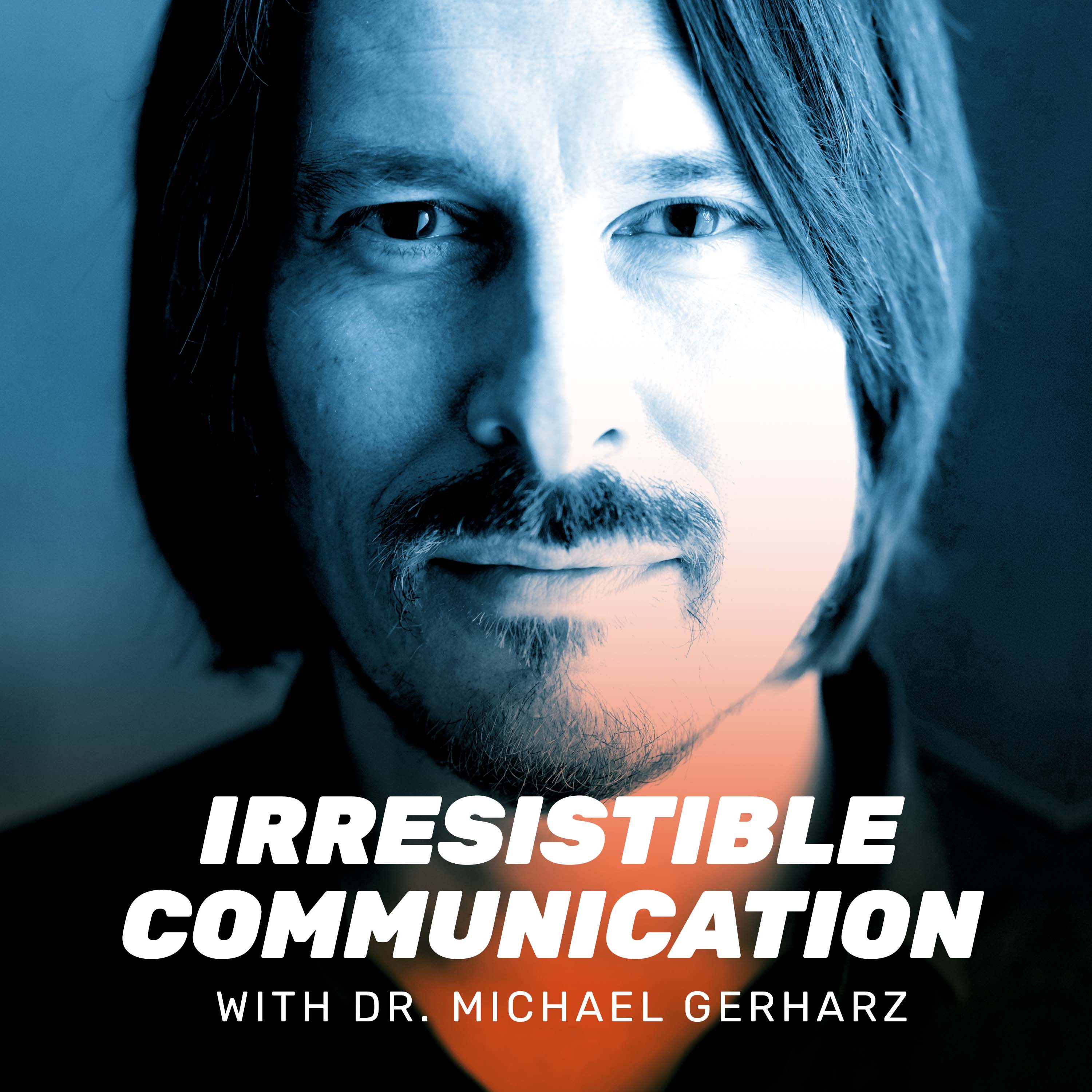
Irresistible Communication
Dr. Michael Gerharz

Beyond the Thesis With Papa PhD
David Mendes, PhD