
MindForce: Mental Fitness, Leadership & Life Stories
Welcome to MindForce: Mental Fitness, Leadership, and Life Stories.
Hosted by Nate Scheer.
MindForce explores the power of faith, resilience, and personal growth through real conversations and lived experience.
Each episode dives into stories of leadership, healing, and navigating adversity with purpose. Through honest dialogue and biblical perspective, Nate connects with guests who have overcome challenges, built mental strength, and found meaning in the mess.
Whether you serve in the military, work in ministry, or are simply trying to lead yourself and others well, MindForce encourages you to lead with heart, live with hope, and grow through every season.
The views and opinions expressed in this podcast are solely those of the individual participants and do not reflect the official policy or position of the United States Air Force, the Department of Defense, or any other agency of the United States Government.
Intro and outro music by Jason Gilzene, GillyThaGoat.
Apple Music
https://music.apple.com/us/artist/gillythagoat/1679853063
Spotify
https://open.spotify.com/artist/60LWLaRPIWLUG2agvpKEH7
MindForce: Mental Fitness, Leadership & Life Stories
If Your Nervous System Had A To-Do List, “Breathe” Would Be First w/ Sharon D. Brown
Use Left/Right to seek, Home/End to jump to start or end. Hold shift to jump forward or backward.
I would love to hear from you!
What if strength isn’t pushing harder, but knowing when to slow down? We sit with Sharon, a mental health professional and yoga teacher, to explore how heartbreak became a doorway to self-love, sustainable rituals, and the radical choice to prioritize our nervous systems. Instead of chasing resilience as a badge of honor, we unpack a gentler, smarter approach: pause on purpose, build tiny habits that actually stick, and create space for better decisions in the moments that matter.
Sharon shares the practice she calls seven layers deep—asking a grounded question again and again until the surface story gives way to the real truth. That process turned months of racing thoughts into clarity and calm, revealing wounds that needed attention and boundaries that needed honoring. We connect the dots between psychology and physiology, showing how micro-practices like three slow breaths at a doorway, a minute of movement between meetings, or laying out your gym clothes the night before can break survival mode and recondition the brain for safety.
We also tackle why caregivers and leaders struggle to receive care. Systems reward output and speed, yet bodies require maintenance and rhythm. Sharon’s Take Five To Thrive framework offers practical boosters—breath, movement, authenticity—to integrate through the day without derailing schedules. We talk about connection as medicine, the cost of never pausing, and the freedom that comes from choosing yourself without guilt. Expect candid stories, simple tools, and a new way to think about mental wellness that’s consistent, humane, and doable.
If this conversation gives you permission to pause, don’t waste it. Subscribe, share with a friend who needs a breath, and leave a review with the one ritual you’ll start this week.
Setting The Pillars And Intent
SPEAKER_01Welcome back, everyone. Glad you're back with us on Mind Force. I'm your host, Nate Shear. The three main pillars of today are pause on purpose, the power of rituals, from heartbreak to breakthrough, seven layers deep to master self-love, and caring for caregivers. Today's conversation slows things down on purpose. We talk a lot about pushing through, about resilience, and about strength, but sometimes we just need to slow down. Sharon brings a different lens once rooted in pausing, in rituals, in self-love built through heartbreak, and in caring for people who spend their lives caring for everyone else. This one is about sustainability, about learning when to stop, and about choosing yourself without guilt. Sharon, I'd love for you to start us off. First question: who are you in this season of life beyond titles and accomplishments?
SPEAKER_02Yeah, pretty much who I am at this season in my life, I would say I am the explorer more so than anything else. I believe that, you know, with the work that I do professionally and then being a daughter where my parents were living, it's not intentional, but sometimes, you know, I
Sharon’s Aha: Breakup To Self-Care
SPEAKER_02tended to leave myself behind. And so at this stage of my life, it is definitely more about exploring and in being visible, those two things.
SPEAKER_01Absolutely. So where did you, what was your aha? Did you have an epiphany moment? What was the thing that got you to start taking care of yourself?
SPEAKER_02Yeah, like I said before, I didn't realize that I wasn't doing it completely, you know? But what pretty much started it all is a breakup. And so that kind of leads into one of the, you know, pillars. But the breakup was the one that really led me to really embrace self-care. Because with the breakup, I was crying for 40 days or 40 nights, and my heart rate just wouldn't go down. I was exercising. You know, I went to therapy, but I feel like, you know, this is it, you know, gonna work with therapy. I'm a therapist myself, and sometimes talk therapy is not always the best. And so what I ended up doing, I ended up enrolling into a yoga class. And from there, I wanted to learn more. So I ended up, you know, enrolling into yoga teacher training. And I got extensive training, and it allowed me to really see myself different. So it really did help with what I was going through at the time, but it also allowed me to have a different perspective when it comes to not just mental health itself, but mental wellness. And then the other thing I want to say too is that with the breakup, because like I said, I was crying for 40 days and 40 nights, I was sick and tired of me crying for 40 days and 40 nights. And that this was when one night I literally just fell on the floor and said, Hey, I am tired. And that's when I really went deep. So it was more of a meditative space within me, and that's where I saw this is where I am. You know, I was able to, you know, ask myself some questions and to really go deep. So that's kind of where these seven layers deep come to self-love. Because sometimes we can, especially by me being in a given profession, and there's being a daughter with parents who have medical issues, medical mayhem, and all of that, and that we're always given and not always realizing that we're not even, you know, I wasn't even given to myself.
SPEAKER_01Hmm. Yeah, ain't that the truth? I'm a hospital administrator, so in the medical field, more on the admin side, but it is very interesting how first responders, medical fire cops, I mean a long list would run towards the danger and things like that. Sometimes they don't pause and take care of themselves. I had another episode where I had a fire guy on and he started a new meditation thing, and he puts out some free stuff on his website and whatnot. But it was very interesting how little the people that take care of people take care of themselves. We're supposed to be stronger or, you know, take care of ourselves or whatever. And we we don't do a very good job of that. I'm curious, uh, Sharon, what do you do and where are you calling from?
SPEAKER_02Yeah, pretty much what I do is I do still work in mental health. I see patients privately in that arena. But then also the other part of what I do too, I'm transitioning into, I want to say, in educating others, especially entrepreneurs. And my vision and goal is for executives as well, because one thing I've seen is for individuals who are in leadership role or any type of authority, kind of to your point, and a lot of times they're not always taking care of themselves. And right now I am located in Charlotte, North Carolina.
SPEAKER_01Nice, awesome. Well, welcome to the show. We'll do a quick warm-up. What's one small daily ritual you rely on more than people
Caring For Caregivers’ Hidden Costs
SPEAKER_01would expect?
SPEAKER_02Yeah, the one that I really rely on the most is taking the pause. And my pause usually goes into just taking a deep breath. I'm always telling people to be breathing anyway. And what I would say is that people really don't understand of how the mind, the body, the spirit, and the soul just really connected. And when we take that breath, just a pause, you know. It's somebody could be rushing and you say, just give me a moment. You know, they don't have to know what you're doing, but you know, internally you take that deep breath pause. Because if not, we'd be in that survival mode and all kinds of stuff be happening, you know, in our brain and in our thoughts. If we feel rushed. So the main thing I do is I do take that pause just so that I won't be all over the place.
SPEAKER_01That's awesome. Yeah. I'd been on the show for a while and been working through it, and my wife, you know, politely confronted me, and she's like, Do you take the advice that you hear on the show? And I was like, uh, not as much as I probably should. And so it was interesting. It's been, I don't know how long it's been now, six months, maybe longer. I've rolled my clock back
Daily Rituals And The Power Of A Pause
SPEAKER_01an hour. I start at 5 30 instead of 6 30 to get to the gym. And I have daily devotion and quiet time and things like that in the morning. And it's just so powerful. Like I've always said I'm not a morning person, but you know, maybe morning, night, I don't think it really matters when, but to your point, there has to be a time of slowing down. As soon as I walk in the office, my phone rings, my calendar needs something, someone's at my desk asking for something. And so it's just like you're on alert, on stress all day. And so if I don't do it before the kids get up and need something, before I get to work and someone is requesting something, you just never get it. So I would say be intentional, block the time, roll the alarm clock, even it's 30 minutes, and get a little quiet and do whatever that thing is for you. Make the coffee, make it by hand, grind it, but have like that time where it's a little slow. It's interesting to me. Like, we've come so far with fast food and the internet, and like you can do everything so fast now, but sometimes like don't go a little slower. Like you used to have to go to an encyclopedia and like look something up. Now you can get an answer in in seconds, milliseconds. But maybe there was value in searching and looking for things and making things a little bit more difficult and more drawn out. Well, Sharon, before we get too much deeper, I'd like to flip the mic and see if you have a question for me.
SPEAKER_02Yeah. One question that I have for you, since you've had the show, what has been, I guess you say, a unmemorable moment or advice or something that someone has given you.
SPEAKER_01Ooh, oh, there's been so many. It's hard to narrow it down, but I think that the theme that I've seen reoccurring, which is so nice, because I normally answer this question with journaling and quiet time and meditation, but I think I'd go a different route because I'm on 80 or so shows now. And one thing I think is super powerful is the connection with others. I think that's just so interesting. The people that come on take their time, the most precious c commodity, you know, to help others, to pour into others, free resources, websites, things like that. And so I think that's what I would say. You will get something and feel better by helping others. You can't, you can't go to a food bank and like help someone get a free meal and like not leave feeling a little bit better. It just, you can't. Like, that's how we were built. We're social creatures. And so I think the best piece of advice is to help someone in some form or fashion. Don't do something you don't like to do. Don't go to the dog shelter if you don't like dogs, but find the thing where it aligns with you and you're able to pour out. I think we need it. It's not even a one. It's we were designed that way to come together and eat at the end of the day and hunt together back to old times and whatnot. We were designed that way. So I think above the slowing down, which are all super important, I think the journaling, slowing down, meditating, deep breaths are all super important. But I think there was one, it would be connection with others.
SPEAKER_02I agree with that.
SPEAKER_01Yeah, you you can't really help someone. If you help the older lady across the street, you just feel better. You hold the door open, doesn't cost you anything, doesn't do anything, and you feel better. So I would say get out there and help someone. Well, we'll transition into your first pillar, which is pause on purpose, the power of rituals. So when did you first realize pausing was not weakness, which is often seen, but actually wisdom?
SPEAKER_02Pretty much it goes to, I want to say it goes back to when I was saying when I cried for 40 days and 40 nights, and I ended up on the floor and really went seven layers deep. Because like even though I was practicing yoga and I was doing some meditation, but there was something that was just different in that particular moment. In that, and so that was
Connection As A Wellness Practice
SPEAKER_02the most pivoting moment that I realized of like you can be still, but are you truly still? And I even still have to check myself on that, you know, because you know, in our society it's go, go, go, move, move, move. And then especially if you're working on different projects and doing different things, you know, you can be going from one task to another. And that's one of the reasons why I teach the take five to thrive wellness boosters so that you can, you know, you can breathe, you can move, you can do pretty much concentrate on one of the aspects at least, just so that you can help your mind to transition so that it won't perceive that you know there's a threat. I'll put it like that. But that was the most pivoting moment that I would say for me personally. The other thing is by me working in mental health, I have throughout my career, I have worked in various settings and especially in crisis settings. And what I've seen, pretty much most people, and we weren't taught this either, that most people don't take the time to sit with themselves or take the time to go from one task or another. I realize, you know, at jobs is about productivities and everything, but the productivity and the fast pace, it literally is like a punching back, to be honest, you know, to our body, to our mind, to our spirit. And if we do not take the time to pause, you know, to take some deep breaths, when we're going into another office or going to, you know, inside a meeting or something, the nervous system will end up in the fight, flight, freeze, and
Pausing As Wisdom, Not Weakness
SPEAKER_02it will stay in that survival mode for so long. And so we do not, you know, purposely, you know, pause and and allow ourselves, you know, to have some rituals, then you're wondering, you know, like what's going on with you, and it's because we're not pausing.
SPEAKER_01That's good stuff. Yeah. So I love actionable. I think a lot of books and whatnot do hypotheticals. So I'd love for this one to be an actionable tip for everyone out there. How have you, you know, what role has rituals played in during these high stress situations? And how do you establish these rituals?
SPEAKER_02Yeah, pretty much with the role that it has played in that it allowed me to kind of like take a seat back and not feel like that I have to rush or answer or it's not even that, it's like to be in a certain state, you know what I'm saying? Because like with the breakup, and I said like with my parents and medical issues, like some of those things were like intertwined, you know what I mean? Because my parents, their medical stuff, it has been kind of like up and down. Like there have been times in which, you know, something was happening and then it plateaued, everything was good, and then something else happened with one of them or both of them. And then when the breakup had happened, you know, and I was working in the emergency room at that particular time. And so in saying that, and you know, if you're a hospital administrator, you know, the emergency room, it's extremely busy. And then when it comes to psych, either it's busy or it's really busy. And and so just in saying by me entering yoga, especially yoga teacher training, because it allowed me to have extensive study and practice, in that I was able to see myself in different stages. And I could literally see myself coming out of a very stressful period, and I'm like, oh, okay, I really see this, you know, at least for myself. Because before, you know, I might have experienced something, but not to that extent. And then that way I was able to explain and demonstrate it even more so for the clients, you know, that I've seen as well. But the main thing is is when it came to, you know, pausing, it was just something that if we don't do it, it's like we're punishing ourselves for our future self.
SPEAKER_01Yeah, and I think a lot of times it can be smaller things. That's another theme. Earlier, you mentioned the themes, and I wish I kind of would have said a second one too. And it's do something, do something that's smaller or things like that. I feel like we have this human condition where we think we have to do Herculean, the biggest effort ever. And like I have one example I heard, like, put your clothes out. And so I started doing that. I think it's been years now, but I put my clothes out for the gym. It's like I said, I get up early, I'm kind of tired, I'm trying to get ready. And just putting my clothes out the night before, even though it's just a minor detail, the morning goes smoother. I'm in my clothes before I know it because they're set out, my socks, shirt, everything's right there. And then I can transition to downstairs and then start the devotion and things like that. But it's like sometimes the smaller things. Like I never realized, like, I never thought that was that big of a deal. But now if I miss that, I'm like, okay, pull the drawers open. And it's not that big of a deal, but it's just enough where it's like, it's so much smoother if I take two and a half minutes the night before and just lay them right there. They're all good, grab them and go. So rituals are definitely important. What do you think are some of the most common? Or if somebody wanted to grab one, what are some examples of some rituals you've seen?
SPEAKER_02Yeah, pretty much a ritual uh can be to your point of, you know, making a bed, putting your clothes out. Um I would say definitely when it comes to planning, and even though planning may sound like, oh, this is something big, no, it can be something really small. You know, put pretty much,
Building Take Five To Thrive
SPEAKER_02you know, I would say two to three things, no more than five things, on the list, and to schedule those things in. Because that's the other part. And I like to talk about like more so of things that's going to uh nurture your nervous system. Because to your point, just by you taking your clothes out, that's less time. You're not rushing. That's one less thing that you have to do, and then it allows you to move about the day, you know, in a different way. And so, like with the five, with the take five wellness booster, it's pretty much, you know, to breathe, to move, to be authentic, and it's some other things as well. So I'm like, just choose one of them, say, okay, either today or this week, I just want to focus on movement. And the goal is to take five, you know, minutes. But if you don't have five minutes, and I try and I encourage people to take it throughout the day, um, to choose like one time in the morning and maybe in the afternoon, and maybe later on in the afternoon, because that's where the bunch of our punches come from, you know, when it comes to stress, when it comes to the things that can add to the burnout. So if you take, it's like, okay, I am going to move, and moving can be any way that you want. It can be, okay, I'm gonna walk, I'm gonna, you know, jump and jets, or I'm going to do some airboxing, you know, whatever that is that you want to do, choose that. So if you choose that ahead of time, say, okay, this week I'm going to focus on airboxing, or I'm going to focus on karate or wet zone and what's off. I always like to talk about that. For anybody who's been familiar with the original karate kid, uh, because there's a there's a method to that, you know, there's a purpose to it, you know, underhand, and which is the same reason for these rituals. And so you can say to yourself, okay, any time that I am feeling overwhelmed. And I and to be honest, I really like to teach it. It's not about feeling overwhelmed. You want to prevent that. So that's why I started using the word to nurture your nervous system. So, okay, how can I feed my nervous system? How can I nurture it? Okay, I want to, you know, do some wet zone and wet soft, you know. So you may be walking down the hall, doing some wet zone and wet soft. You know, you know why you're doing it. Or you may, you know, go outside if you're able to do that. And so the main thing is to choose that and then to do it at least one time throughout the day because it interrupts like that rush, rush, rush. Because if your mind and your body is in a rush, rush, rush, it get accustomed to that, and then you don't know. And then sometimes some people feel threatened when they do slow down. But if you keep rushing, rushing, it does other things to your body.
SPEAKER_01Yeah, that makes sense. So I'd like to ask a question on behalf of the people, because I see this quite commonly. So I'll try to speak on others' behalf. But what would you say to someone, to your point, you were just transitioning, but who feels guilty or can't get their mind off the work that they're missing during these slower times?
SPEAKER_02Yeah. What I would say to them is the cost of not doing it. That's really when it comes down to it, because that's what I've seen, you know. That's what I see, not all of it in mental health, but some of it in mental health. That's what I've seen when it comes to people, you know, with medical issues, because even with heart attacks and heart attacks and strokes, some of it is because of not taking the time to slow down of always working, working, working. And the main thing I want to say, you're retraining and reconditioning your mind and your body. Because if your body is so much accustomed to be running, running, running, running, running, it's like, okay, so we're not doing the sprint no more. You know, that's how the body is really reacting. So it's really fighting to sprint. And so it's about you
Small Wins: Make Rituals Effortless
SPEAKER_02training and retraining and retraining. And unfortunately, us as humans, we don't always have the patience because we want the outcome, the results to be that there. But the more that you do it, then eventually you will see the difference, you know, of the slowing down. And then again, when it comes to, you know, any guilt of not doing the work, the work is gonna always be there. You know, it really is. And if something was to happen to you, the work is still gonna be there, and then someone else would be doing it too. So give yourself, you know, give yourself permission to take that fight so that you can thrive and it's all for your well being.
SPEAKER_01Yeah. One thing I hope the intent of the show that this reaches people is we need to get closer for physical health and mental health. It's so interesting to me that for physical health. We can talk about going doing cardio three or four days a week and the different routines and what reps and what weights we're doing and these creative things. But very rarely does anyone say, Oh, I sat in the park and you know did deep deep breathing or like we don't openly talk about the way that we're taking care. And it's just so odd to me that we go to mental health on the worst day of our lives. We let it build and build and then go. But if you look at the same example on the physical world, you run three days a week to maintain cardio. You don't go one time, jump on the treadmill, run as fast as you can, and then never run on the treadmill again. Like that's not how it works. You go routinely. So we should be going and offloading and processing things as they occur, the same way we do with physical. Like the mind is physical, it's a part of your body. So I wish we were a little closer and being open and talking about new things, and then really just like doing the same thing where you're maintaining a good physical thing, you know, multiple days a week. It's not like, oh, I go once a year and that's all I need. That's not how it works. So yeah, I would love to get a little closer.
SPEAKER_02Yeah. You know, I love, yeah, I love that you're saying that because that's pretty much the main premise of, you know, a self-care you academy is really teaching individuals how to be well. You know, I mean, it really comes down to it. And the main message I really want people to make, because I've this past year I've started reading the Bible. I'm not finished yet, but I'll be finished soon, though. But in reading the Bible, and even though we hear these things, but it it even made me understand even more so, like for the work that I do, when they talk about the renewing of the mind and then meditate on the word day and night. And so kind of like to your point, when it comes to the physical part, I think because we can see our physical cells, we can measure it. But when it comes to, you know, like our mind and the brain, we can't see it. We the only thing that's kind of tangible, like the behaviors that we may do, but then sometimes we may not have that connection. But it's like when you take the time to breathe often, that's why, you know, my goal is to teach people, do this anyway. It doesn't matter how you feel, you know, it doesn't mean that you need to be stressed out to take a pause because you're training
Guilt, Productivity, And Reconditioning
SPEAKER_02your nervous system, you're training your mind, one, that you're in control, and so that even if something, you know, you're disappointed or something comes up, whatever that may be, not to say you're not going to have the full expression of the emotion, but you'll have a little bit more control over your reaction to it. But it takes daily maintenance to sustain, you know, to be in a certain state. And a lot of times people just don't have the pay part of it, people don't have the patience, but I like to say most people just don't have the understanding of it.
SPEAKER_01Yeah, that's awesome. So, out of curiosity, across the 66 books of the Bible, do you know what the most common phrase is?
SPEAKER_03Oh my.
SPEAKER_02To be honest, what I really picked up the most, one, I haven't read All Sisters yet. But the one that, to be honest, what I really the one, I guess to say that resonated me the most is really when they talk about meditation. I'm like, wait a minute, they really got meditation in here, and because like on the outside world, they almost make it seem like it doesn't even exist in the Bible.
SPEAKER_00Yeah.
SPEAKER_02You know what I'm saying? So for me, you know, even though it may not be the most theme, but that's what resonated with me the most because I've seen it multiple times in there. And from there, that's why I said renewing of the mind. That's why, you know, you repeating the thing. This is where affirmation comes in. This is where positive self-talk comes in. It's not because you lose it, even though you can know it in your mind, but the way that the mind works, it can be erased because of the world. So that's another reason, you know, like we stay in the word, a word, whatever that is for individuals, and we repeat it so it can stay, because you're building a force feel. Like in order to keep the shield of God, you know, within you, you gotta have that barrier. And but the only way to have the barrier is to have the words. And it's the repetition of it. And then that's it, when you breathe into it saying the words, it helps keep it close to you. Because if not, when other things kinda go off, then it will eventually erase you. I can definitely hear you.
SPEAKER_00I guess I bombed something. You still there?
SPEAKER_03Well, now I can't hear you. Mic shack. I can see you, but I'm not able to hear you. Mic shack, mic shack, nothing. Hopefully. Is that good? Okay.
SPEAKER_00Yeah. So I'll have to go ahead and edit. I guess I'd love something. I'm not on my normal set of editor in my computer edit. What I wanted to say was one of the most comforting things for me is there's 66 books. Some Bibles have up to 1100 pages, depending on the version and things like that. The most common phrase, and it might be in different words, but the most common phrase is not fear.
SPEAKER_01So there's so much of us that wants to get worked up about different things and so reassuring that out of all the different words, all the different books, recurringly it says, do not fear in different forms or fashion. Well, we'll transition into your
Renewing The Mind And Daily Maintenance
SPEAKER_01second pillar, Sharon, which is from heartbreak to breakthrough, seven layers deep. So can you walk us through the seven layers?
SPEAKER_02Yeah, pretty much with the seven layers, it's more so a, I guess you say, the process of getting there. So just meaning like when I was crying for four days and forty nights, and I got sick or tired of crying for four days and forty nights, and I got into the floor and you know, and I was telling myself certain things in order for me to go seven layers deep, then I started, you know, asking myself like you can ask yourself any question. It doesn't really have to be a certain question, just more more so as long as it's more empowering. You know, not why this happened to me, not that question, you know. None unless you rephrase it to say, what is this, what is this, you know, how is this helping me? You know, something like that. And like initially, when you first ask it in that it's that surface level, and you know, you're probably not gonna really have an answer. Then you're gonna say it again, you know, what is this for me? And even if you do ask yourself, why is this happening? Again, initially, you're not gonna come up with something, but you're gonna ask again, you're gonna ask again, you're gonna ask again, take that deep breath, you're gonna ask again, and then eventually, because this because this is what happened to me as I kept asking myself a question, then you know, I felt my heart rate going down, you know, my breathing calming down, and then it was almost like it got to the point I just felt peace and I felt connected with myself. And in saying that, sometimes we don't ask ourselves questions, and then two, we don't sit down long enough to to get the answer to the question. And that's where the seven layers D come in. It's to sit down long enough where you can truly get connected with yourself and to get an answer. Because again, the answer is different for everyone, you know, it's whatever that is, but it's to be able to sit down in a to be okay with the discomfort, you know, and to just ask, ask, ask. Just to kind of tell you, I feel like it's funny, but I was in a uh professional training, and in a professional training, they had us do something similar to this at that particular time because, you know, we're in, you know, a training. They just ask us three questions. But the uh lady that I was partnered with, because it's like we had to ask the person the question, and she just got so frustrated, she's like, What do you mean? You know, I I I don't remember what the question was, but whatever the, you know, it was a simple question, but like she really got frustrated and she just could not understand. And this was round about the same time when I had started learning about all this stuff. I don't think that I had done it myself, but I understood the concept. But even though she worked, you know, like in mental health, she didn't understand. She just got so they're just asking me the same question. But it's like when you really
Seven Layers Deep: The Method
SPEAKER_02sit and answer, even if somebody is asking you, but if you sit, it's like, okay, because it's like with each answer, then you can ask the same question and keep going on and on. And that's how you get to your seven layers deep.
SPEAKER_01That's awesome. So kind of like an onion. It reminds me in the military, we have this thing we do, it's I think called a root cause analysis. And so you look at something, and so when you get written up for something, say an example, or you're supposed to have a letter on the door for access into a certain section or something, and you don't have the letter or it's out of date, then you get written up. And so what you're supposed to do is ask, I think it's five whys. Because at first you're like, why is there no thing on the door? You're like, because it wasn't there, and then it just ends, but that doesn't get at like what the actual problem was. And so you have to keep asking why. Like to your point, the lady that's a little frustrated, and it is sometimes frustrating. So you're like, I have to keep asking. We have to figure out was it like, you know, a system-wide issue? Is it a training issue? Does no one know? Like, if no one knows, then we need to do education, and so you help actually fix the thing instead of just fixing it for now, and then like the next time it happens again because no one knows, and we should have done education or or whatever it is. So that's that's good. I think it's good to dig deep and get through those layers and actually get to the root cause because very rarely things are the thing on the surface. We've talked about relationships and different things where someone, you know, a spouse gets mad at the other person for not doing the dishes, and somebody will say, It's not really the dishes. There's probably something else. You know, maybe at certain times it is the specific thing, but there's usually other things that are going on and they don't feel comfortable with something going on, and maybe getting to the root can get you back on track. So I'm glad you came up with the seven layers. We'll transition to your last one, which is caring for caregivers. It's like I mentioned early, being medical or first responders. I think this is a pretty difficult thing. Do you know in your experience or do you have a theory on why you think caregivers are so often the last to care for themselves?
SPEAKER_02I'm gonna say it is much a facet and monta layer because it's a system issue, because even in mental health, you know, uh, depends on, you know, where we work. I mean, I remember working in the emergency room and, you know, seeing one client after their next. And sometimes you do need a breather, you know, in between there. Even though I want to say with psych is much easier as compared to the medical side. So that is completely different. So I can't speak that much regarding the medical side. I just advocate more so to say, hey, you know, these are things that you can do. So part of it is to stem it. And then the other part of it, we really haven't been taught, especially for those of us, because for most of us who are in a profession of giving, most of us just have the heart. Either we had an experience of lack, or we just have the heart for it, you know? And so with that, we just need the education of how important it is to be able to take care of ourselves, to learn it from the biological, psychological, even the neuroscience part of it as well. Um and I feel like when you learn it from those perspectives, meaning when we don't take the time to take care of ourselves, and again, it's not it's not something really spectacular. You know, you really can like I say, you know, you can go into the break room and do, you know, five jumper jacks or something, you know what I'm saying? You can do something to kind of offset the stress that may be there, or to, you know, give you yourself a little bit more energy, you know, when it comes to that. And so I believe it's a systemic issue, but then also at the same time, we just really hadn't been taught. And there's this big thing too. It's like, oh, you know, you got to give from your heart. You're supposed to be a giver. And then for those of us who are mostly givers, we haven't been taught to receive. You know, it's like it feels funny, but we need to be able to receive
Root Causes Beyond The Surface
SPEAKER_02as well because there's something magical about that. And if you don't mind, I wanted to step back just for one moment regarding the heartbreak because I do want to make sure that I share something regarding what I learned when I went seven layers deep. Of course, I learned, you know, something about myself and I was connected. With that breakup, it's like, even though I understood what happened like intellectually, I understood it. But you know, in your heart, it's like it is something, you know, it's like, okay, I understand it. I mean, it has to go through what it goes through. But when I went, I would say when I cried for 40 days or 40 nights, the first week, yes, that was about the person. After that, it wasn't. I knew that, you know, but I just couldn't figure out what it was. So by going seven layers deep, it allowed me, to your point, to get down to the root cause of what I was really crying about. And then what I discovered is that, like, I grew up in a single parent household, and I didn't know it consciously at all because I was like, yeah, I know who my dad was, you know. And I'm to be honest, I'm grateful that he wasn't in my life. But what I learned was that the little girl in me was yearning for him. So with that breakup, it initiated that process. And I would not have known that if I didn't go civilers deep.
SPEAKER_01Yeah, that makes sense. Got to get to that root cause. And to your point, I think we we don't know, we don't know. Like you said, we're not taught. Uh you can't just magically come up with something you're not familiar with. For people that are listening, what do you think the warning signs are when caregivers or or really anyone is nearing that burnout?
SPEAKER_02Yeah, when it comes to caregivers, because one of the things that I really teach on is more so of not just other people care for the caregivers, but for caregivers to care for themselves, is when you integrate taking care of yourself on a regular basis, then that helps to decrease and prevent burnout. And because burnout for each person, it can really be different. Most of the time, burnout is a slow burning process, but depends on where people work and what they do. It can, you know, happen rather quickly. And so the main thing is this integrating
Why Caregivers Struggle To Receive
SPEAKER_02different types of rituals to different types of things in which you can take care of yourself and help people to breathe. But whatever that is for you, you know, whether, you know, that is running, and it doesn't need to be, it doesn't have to be the 30-minute thing or to go into the gym, because even the the many practices are just as important as the ones that does take, you know, 30 minutes to 45 minutes.
SPEAKER_01Yeah, that makes sense. I mean, do something. I think that's the most important part. Step forward, put those shoes on, and you, like you said, get in motion. Well, Sharon like to try to bring it all together. We went through those three great pillars. What do you think would change if more people treated themselves with the same compassion they give others?
SPEAKER_02Wow. It would change a lot. It really will. It would just change so much. And I guess you could say one of the main things that I would say is that when you prioritize yourself, it changes so much. And it can allow you to more easily honor your boundaries without sacrificing who you are or feeling bad about it.
SPEAKER_01And I think it has that ripple effect too. I mean, we say pay it forward or different things. If you feel better, then you I think you're more likely to hold the door open or give someone a smile, and then they give someone else a smile. And so it really, I had someone on the show that was all about kindness, and I think that was another thing. Like she was, you know, kindness makes everything better. And so I think that's definitely a good philosophy to get behind. Help others take care of yourself, and you'll just take care of others. Well, Sharon, thank you for the depth, honesty, and calm you brought into this space. Before we close, where can listeners connect with you and learn more about your work?
SPEAKER_02Yeah, they can connect with me on social media, either TikTok and TikTok. I'm Sassy Sharon, um, or they can go to LinkedIn and I'm Sharon D. Brown, or they can go to my website and that's Seth Carry You Academy. And with you is it is Y O U.
SPEAKER_01Awesome. Well, thank you much for coming out. To everyone listening, thank you for being here. If this episode gave you permission to pause, don't waste it. Pass it on to someone else. I love you all. See ya.

Podcasts we love
Check out these other fine podcasts recommended by us, not an algorithm.

The Llama Lounge
Llama Leadership
HeroFront
Josh White
The Shadows Podcast
The Shadows Podcast
Coach Bennett's Podcast
Coach Bennett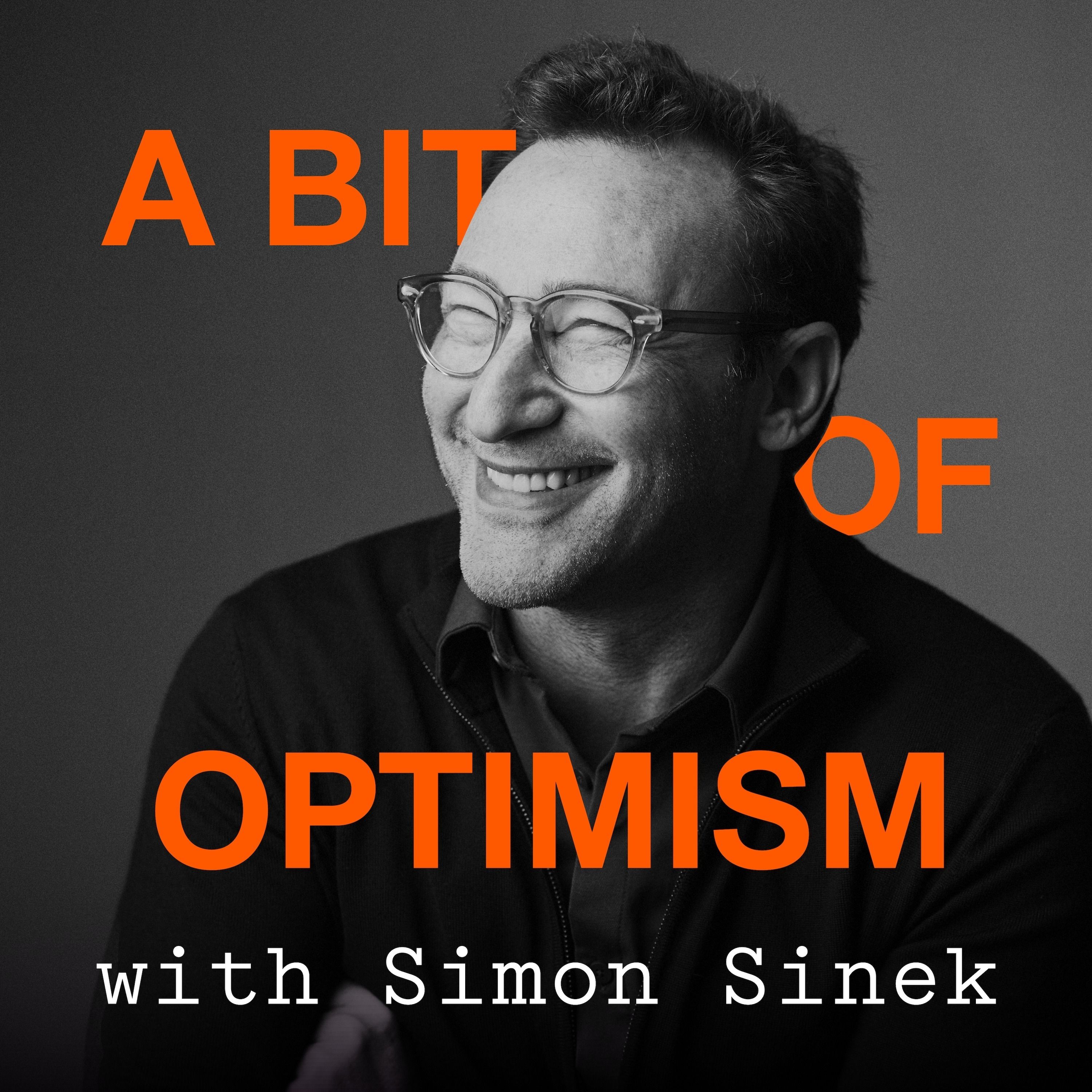
A Bit of Optimism
Simon Sinek
Seat 41A
Seat 41A Media, LLC
The Waypoint Better Podcast
Waypoint Better
The Non-Standard Podcast
Manuel Lamson