.png)
Everyday Warriors Podcast
Trudie's mission is to ignite a beacon of resilience, and inspiration through heartfelt raw, real and authentic conversations with Everyday Warriors like herself.
In this podcast, she delve's into the vulnerable and unfiltered stories of herself and her special guests, embracing the complexities of life's challenges and adversities. There are no preset questions, just real time conversations.
By sharing personal journeys, insights, and triumphs, Trudie aims to empower her listeners with the courage and wisdom needed to navigate their own paths. There are no transcripts as you have to hear the emotion in the voices to truly comprehend their stories.
Through openness and honesty, she foster's a community where authenticity reigns supreme and where every story has the power to spark transformation and ignite hope.
Join her on this journey of discovery, growth, and unwavering hope as she illuminate's the human experience one conversation at a time.
Everyday Warriors Podcast
Episode 44 - Matt Gilhooly: A Grief Journey
Use Left/Right to seek, Home/End to jump to start or end. Hold shift to jump forward or backward.
Some moments split a life into before and after. When Matt was eight, a phone call about his mum’s fatal motorcycle accident shattered the version of childhood where safety felt assumed. What followed was a quiet agreement many of us make without words. To be perfect, pleasing and fine so no one else leaves. Years later, a high school essay cracked open the grief he’d pushed down, hinting that telling the story might be a way through rather than a way back.
We go deep into what came next. His grandmother who moved close and became a mother figure, the kind of unwavering presence that re-teaches nurture. When cancer came for her, Matt chose a different path than the one grief taught him at eight. He had the hard conversation while there was still time, saying everything that so often gets saved for eulogies. He stayed by her side for the final 96 hours, present for her last breath and found a devastatingly beautiful truth. That love can be most powerful in the moments we’d rather avoid.
The conversation broadens to pet loss and the myth that these goodbyes are somehow lesser. Matt shares how losing his dog Mikey upended his confidence as a “grief pro,” forcing him to confront guilt, timing and the silent calculus of mercy. Together we unpack why every grief writes its own map, why comparison steals compassion and why men must be allowed to name feelings without shame. Threaded through it all is the power of storytelling, when people voice the messy parts, isolation breaks and healing starts in the echoes we recognise.
If you found strength or comfort here, follow and subscribe, share this with someone who needs it, and leave a five-star review so more Everyday Warriors can find their way to these stories. Then tell us: what truth do you still need to say while there’s time?
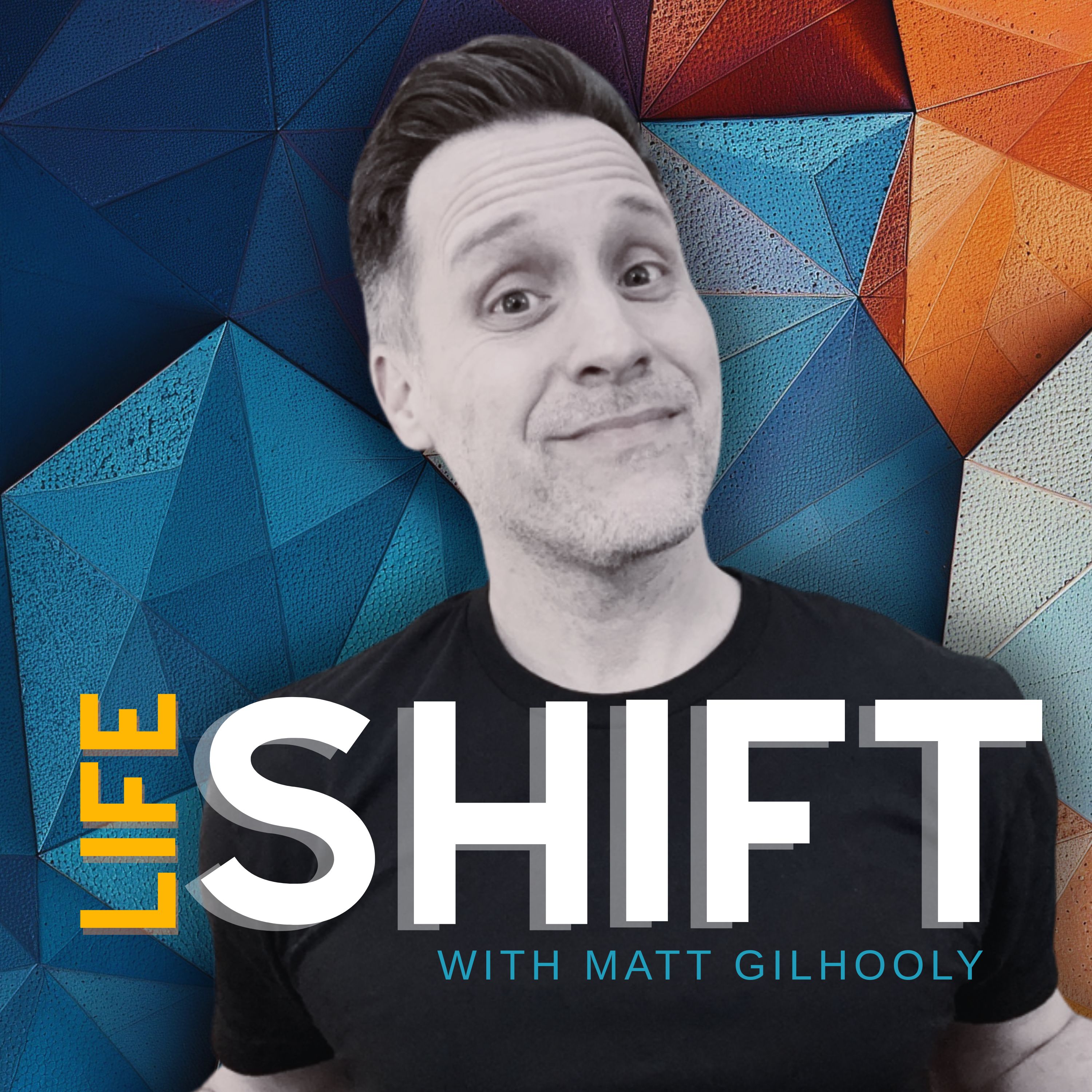
Check out the Life Shift Podcast here
Connect with Matt on Instagram here or LinkedIn here
Thanks for listening in!
Contact me directly at https://everydaywarriorspodcast.com.au or head to
Instagram Personal or Podcast
Facebook https://www.facebook.com/trudie.dwyer
Subscribe to Everyday Warrior Moments here
Support the Podcast - Buy me a Coffee
Buy my Book here
Apply to be a guest at everydaywarriorspodcast@gmail.com
Music Credit: Cody Martin - Sunrise (first 26 episodes) then custom made for me.
Disclaimer: The views, opinions, experiences and stories shared by guests on the Everyday Warriors Podcast are their own and do not necessarily reflect those of the host, Trudie Marie, or the Everyday Warriors Podcast.
Guests are responsible for the accuracy of the information they choose to share and speak from their own personal experiences and perspectives. While every effort is made to provide a respectful and supportive platform for open conversation, the host accepts no responsibility or liability for the statements, opinions, advice, claims or recollections expressed by guests during a...
Welcome And Safety Message
Trudie MarieWelcome to the Everyday Warriors Podcast, the perfect space to speak my truth and dive into deep conversations with others. This podcast is about celebrating everyday warriors, the people who face life's challenges head-on, breaking through obstacles to build resilience, strength and courage. Join me, your host, Trudy Marie, as I sit down with inspiring individuals who have fought their own battles and emerged stronger, sharing raw, real and authentic stories in a safe space, allowing you to explore, question and find your own path to new possibilities. Let us all embrace the warrior within and realise that while no one is walking in your shoes, others are on the same path, journeying through life together. Please note that the following podcast may contain discussions or topics that could be triggering or distressing for some listeners. I aim to provide informative and supportive content, but understand that certain things may evoke strong emotions or memories. If you find yourself feeling overwhelmed or in need of support while listening, I encourage you to pause the podcast and take a break. Remember that it is okay to prioritise your well-being and seek assistance from trained professionals. There is no shame in this. In fact, it is the first brief step to healing. If you require immediate support, please consider reaching out to Lifeline on 13, 11, 14 or a crisis intervention service in your area. Thank you for listening and please take care of yourself as you engage with the content of this podcast.
Support, Reviews, And Book Plug
Trudie MarieLove the Everyday Warriors Podcast? It would mean the world to me if you were to leave a five-star review to ensure that the Everyday Warriors podcast is heard by more listeners around the world. You can also support the show for as little as $5 with a one-time donation or by becoming a monthly subscriber. Your contribution helps me to continue bringing you inspiring stories of everyday warriors who overcome challenges to find strength, resilience and new possibilities in life. Head to the link to buy me a coffee and fuel the next episode. Every bit counts. A journey that was as much about finding my way back to myself as it was about conquering the trail through the highs and lows and everything in between. This book is taken from my journals and is my raw and honest experience of overcoming trauma and embracing the strength within. Grab your copy now. Just head to the link in the show notes and let's take this journey together.
Meet Matt And The Podcast Exchange
Trudie MarieWelcome to another episode of the Everyday Warriors Podcast. And today my guest is coming to me all the way from the United States, Florida actually. He is 12 hours behind, which is a little bit weird when I do these things. But we met last year, I think it was when we connected via his podcast. And I'm now reciprocating the offer of having him because he has an amazing story that I want to share. So welcome, Matt.
MattWell, thank you for letting me be a part of your journey. It was also pretty awesome to have you a part of mine and tell your story in your way on my show, which is this is a it's a journey that I never really knew I needed. And so I just love having the ability now to talk to people across the world because we have these remote recording opportunities here. So thank you for inviting me.
Trudie MarieNo, you're most welcome. And I think we have such similar podcasts in what we do. And I'll give a shout out to your podcast now, which is the Live Shift Podcast. And I actually started listening to that randomly one day. It came up on my list of on think on Spotify. And I started listening and then reached out and said, Hey, can I please be part of your show? And then here we are today.
MattIt and that's how it happens, right? These people, I mean, we probably never would have bumped into each other in the world, right? Like maybe, but I can't imagine. I've recorded with over 200 and let's see, 12 people now, 213 people now. And I think I know personally like nine of them because those are the people I started with. But since then it's just been people like you reaching out and saying, hey, I have a story, and I've really learned that people's stories are super important. There's a lot of power in telling our story or listening to other people's stories. So kudos to what you're doing.
Trudie MarieI totally agree that there is power in storytelling, whether you are a listener or a teller yourself. And I think what you've got going with your podcast, what I've got going with mine, it's just an incredible opportunity for people's voices to be heard.
MattYeah, there's so many of us that have these stories in our lives in which maybe when we were living those stories, we weren't telling anyone. And we felt like, am I the only person going through this? Maybe logically we knew we weren't, but at the same time, it really feels isolating. And so just by telling our stories, I think we give ourselves power. And I don't know about you, but when I started telling my story out loud, it felt more manageable than it did when it was sitting in my head, kind of swirling around and anxiety and worry and all the things that came along with it.
Trudie MarieI totally agree because that's the reason I started my podcast was to give myself a voice back, which I lost through my ordeal. And this was my way of recuperating that. And then along the way, I thought, well, if I can give myself a voice, I can give others a voice too. Which brings me to your story. And I know today is a very significant day as part of that story.
The Life-Shift Moment: Losing Mum At Eight
MattYeah, it's uh the 36th anniversary of my life shift moment, and really the reason the show exists, if this moment in my life didn't happen, I don't think we would be talking right now. I don't think I would have had the opportunity to talk to people. So 36 years ago today, on September 1st, when we're recording, just so everyone knows what date it is, 1989, uh, my mother was on a trip with her boyfriend, and my parents were divorced. We lived about a thousand miles apart. I lived with my mom full-time. And that summer I was visiting my father, probably for an extended period of time. I I I don't know for sure, but it felt like maybe I was going to be there for a couple months over the summertime. And my mom was gonna do her own thing, like the, you know, with her boyfriend, and they were gonna travel in a motorcycle motorcade. These are upright motorcycles, they're not like the super fast ones, they're the, you know, people going across the country. And so on this particular trip, she was going for the second time from Massachusetts to Colorado. And one day I got pulled out of after-school care, brought to my dad's office, and my dad had to sit me down and tell me that my mom had died in a motorcycle accident. And that life shift moment is really hard to remember, but also I can remember like the feeling of all of a sudden everything that I knew about my daily life and my safety and my security and all those things was now pulled away from me. So now everything that in those safe spaces I dreamed about for the future, I realized was just like no longer possible. And it was like the start of a really long and messy decades-long grief journey that I I don't regret, but also holy crap, that was a lot.
Trudie MarieHow old were you at the time that?
MattI was eight. So it was it was something where you know, when you're eight years old, you don't have the awareness of how short life can be. And I say that now with reflection and being able to look back of how I wasn't intentionally securing memories in my brain, if you will. Whereas an adult, I I make note now to be like, oh, I should remember this particular moment because it was so impactful. And so at eight, I was just living life, being a little, you know, an eight-year-old, whatever an eight-year-old does in second grade and and living with my mom full time and probably being a jerk a lot of the times because, you know, that's what kids do. And I wasn't really honoring all the things that maybe if I could go back and do it differently, I would. But it really felt like life was kind of the life as I knew it was over at that moment in time, as much as an eight-year-old can understand that.
Trudie MarieYeah, and I also put into perspective too the fact that you would have hugged your mum to say goodbye as you went to your dad's with the eight-year-old expectation that I'll see you soon, mum, because that's what you do. I can relate to that from my own children, because I'm also divorced with from my children's dad. And I used to send them on a plane to go and visit their dad. And you just the expectation would be that they would come home, and their expectation is that they would come home to me. So I'm just looking too at an eight-year-old with this realization that not only are you hearing this news, but you're not going home to what you knew home was.
MattYeah. Yeah. And this one was weird because I distinctly remember before I left for my trip, before my mom left for her trip, I threw like a tantrum. And I threw a tantrum and told her that I didn't want to go and I didn't want her to go. I don't know why. I was probably just being an eight-year-old, but at the same time, I remember that being like me begging her not to go and me not leaving. Whereas in the past, I don't think I would do that. So that was a weird moment in which maybe I had some kind of inkling of some sort, but at the same time, it's an eight-year-old kind of throwing a temper tantrum, which is just par for the course. So yeah, it was it was a weird situation. It was something that like you don't really plan for and you can't really plan for it. And to add a little salt to the wound, my mom and my mom's family weren't that close. They were close, but not that great of relationships. And my mom had a twin brother and she had a mother. Her father died when she was about 18. And so for the funeral or the wake or all the services that we went back for, my dad and I went through the house that I lived in with my mom and we kind of tagged all the things that I wanted to bring with me because I needed to bring stuff so that I could have my space in a new space. And what happens is we tagged everything and then the movers, we were gonna have movers, move everything down. We went back to Georgia and did, you know, started school and everything, and those were gonna come a couple weeks later. Well, when we got back, we got a call from one of my dad's friends saying, Hey, her family is selling everything right now in a yard sale. And so everything that I had tagged, they sold
Aftermath: Home Lost And Starting Over
Matta majority of it. So, you know, all the things that I think back now of like all the things that probably would have made me feel a little bit safer, you know, like my bunk bed, maybe my bedding, my clothes, like the things that would have made me feel like I had a home still, even though it was in a different place. And so I really didn't have most of that stuff. And so that really created another sense of like, I don't have a home anymore. I don't even have the stuff that I used to have.
Trudie MarieYeah, and I think that's hard for any of us when we're moving house, like I'm about to move house again. But when you're moving and you go to somewhere that you've got your familiar things around you, you like you do said, you do have that sense of security and safety net and familiarity that just okay, this is this part's normal. I can now deal with everything else. But you literally had to start over as an eight-year-old completely foreign.
MattYeah. I had I left my family behind, I left my school behind, I left my friends behind, I left my Boston accent behind. You know, like I feel like these are little things and they sound really little on paper, but when you're eight, they're so big because that's like your whole world, and you're walking into a space as the kid with a dead parent, right? So you're coming into school late, all the kids now, this is moving into third grade here. So this is when kids are bullies and they use those things against you, and it's just everything was so different. Fortunately, I had the best teacher in third grade who was so protective and supportive and really helped us out in that really challenging year. But it was, it was something, it was a really challenging year, but then it just grew for 20 years of like not great processing of grief because nobody knew how to do it. It was late 80s, early 90s, nobody was talking about grief, nobody was talking about anything that had feelings involved, right? Unless it was happy. So little Matt saw that everyone around me was like, Matt needs to be happy, so let's make him happy, let's buy him things, take him places. But a little kid, you absorb that, oh, people need to see that I'm okay. And uh so I took on this like perfectionist tendencies because I figured if I showed everyone I was okay and perfect, no one else would leave. Because uh a parent dying is a parent leaving, right? For that tiny brain.
Trudie MarieInteresting that you bring that up because early childhood is one of those first stages of your life that you do cement an incident that you then attached certain ways of being to. And most people don't recognize that in their everyday life, and obviously you've done the work throughout your years to be able to recognize that now, but you do cement that uh way of being, and like you said, it's that perfectionism and people pleasing, probably is part of that to make sure that you're okay and that everyone knows you're okay when deep down inside you have no idea how to deal with it. And like you said, late 80s, early 90s, mental health wasn't talked about, grief wasn't talked about, trauma wasn't talked about. These are all modern day issues that we deal with. In the past, it was just like, oh yeah, it happened, move on. But as human beings, we don't actually really move on.
MattWe certainly don't. And I think also there's another thing that adds to that is that kids will bounce back, right? I feel like people think that kids will bounce back, and we will, we will survive, we will find ways to survive. We don't know we're doing it, we're just kind of moving through the motions that we're absorbing from the people around me. And I say all this with without noting, and I should know, my dad did the best he knew how to do with the tools that he had. He was mid-30s, he didn't, he was not prepared to be a full-time parent to a kid that just lost the person he probably loved the most, you know. So he did the best he could and kind of made decisions on what he
Perfectionism, People-Pleasing, And Numbing
Mattthought was right. And it is what it is. We kind of move through it, but he never once, maybe once, but he never really like told me you have to be perfect or I'm gonna leave you. I don't think he would ever say that or ever even think that. But because you don't talk about it, you embed that in your psyche forever, and then years go by, become a teenager, I think I'm good. Like because I've been a pro at pushing this down, that it just doesn't bubble up until it does. And then you just create a a cycle of a big hot mess.
Trudie MarieAnd talking about that big hot mess, how did bottling up that grief, how did that actually impact your teenage years and obviously early adulthood before you started to obviously seek some help to deal with that in as you were older?
MattYeah, it was a it was a mess because I I think I just had to be perfect. So I was kind of living this life that I thought everyone around me wanted me to live and not like doing the fun thing. So one thing that really kind of permeates probably the first 30 plus years of my life is I didn't try anything really hard that I knew I couldn't be good at. So I never really took risks, I never challenged myself in things beyond like a couple steps farther that I thought, okay, maybe I can, I can do these things and I could do them really well. So I didn't take the really hard classes, I didn't take the really interesting classes. I was talking to someone the other day and I was like, I didn't dream. Not in the everyday go to bed and dream thing, but I didn't have dreams. I didn't create, you know, kids want to be astronauts or lawyers or doctors. I didn't have any of that because I just I I felt like I wasn't allowed to be my own person because I was trying to live the life that I thought the people around me wanted. So that is kind of the underlying of like how Matt operated. I'm sure I had a good time. I'm sure I did kid things as well. But I really did not associate or connect with people my age as well as I did with adults. And I think a lot of that has to do with just having a parent die when you're a kid, you kind of grow up a little faster and you you've you've experienced something that these kids have never experienced. So there's always that disconnect there. But the emotions were were definitely bubbling. I think early teens, when all your hormones and all the things are happening, the the emotions were bubbling, but I was getting really good at pushing it down. But it was also kind of making me more of a mad type person. And I remember distinctly when I was 16, I had an English paper that I needed to write, and we were asked to do a narrative life story of some sort. I don't know, three pages or something, nothing major. But this was the first time that I actually sat down and wrote about the moment that my mom died and down to like the minute of the day of which she died, and like kind of really narrated that for myself and let it out. And I broke down for days, like from this. And it what I equated to now is kind of like a bloodletting, if you will. Like it was it was not a full release, but it was like, okay, things are gonna bubble up, so I need to like pop the balloon and let a little air out. It got really, I was really scared of it. I was afraid of letting all that out. So it was like a bloodletting, and then I kind of pushed it back down, sealed it back up until like I had 30. So it was messy.
First Crack In The Armour: Writing At Sixteen
Trudie MarieYeah, and I can only imagine even as a 16-year-old, because obviously then your teenage years is what is that next segment of life where you start to cement who you are and and what what you're going to be in this world. And just going back to like what you said about the fact that you didn't dream and the fact that you didn't take risks. I wonder how much of that was actually attached to not only just losing your mum, but in the way she lost her life on a motorcycle accident, because there is trauma on both sides of that. So, yes, you've lost your mum and you're having to deal with that, and you don't know how to deal with that as an eight-year-old, and growing up without your mum. But then inside of that, most people would consider riding a motorbike a risky. Like it's one of those things that's like it's speed, it's adrenaline, it's a thrill, and all that type of stuff. And you're like, no, I can't do that because I can't take risk because this is the outcome. But on top of that, you lost your mum when she was quite young, I'm guessing late 20s, early 30s, that you don't want to dream because she had she could no longer dream and she couldn't plan a future. So you're like, it's almost pointless to dream as well. So I'm wondering, like, can you relate to to that?
MattFor sure. That last part is I didn't really picture my life after 32. Uh, she died when she was 32, and like I just never planned for a life after that. Not that I was hoping it would end then. It just seemed like, okay, well, hers ended at 32. Even though I was watching my grandparents get older, I was watching my dad get older. But for me, really internalizing the fact that, like, oh, I could go at any moment. I remember this is really sad, but this is probably very common for people that have experienced something like myself. But when I was like nine, I remember that I used to watch Unsolved Mysteries, like the original from back in the day. And it's probably not the greatest thing for a nine-year-old to watch, but I would watch it late at night and then it would go to bed. And I lived at the time in an apartment on the first floor, and my bedroom window kind of faced the parking lot. And I would think because unsolved mysteries, they're unsolved, so there's people out, and it would always be like, someone loose in Atlanta. And I'm like, oh great. So, but I remember I say this because I remember laying there and thinking, someone's gonna break in this window. That person is going to break in this window and kill me. And the way that I fell asleep was to tell myself, well, you're gonna die at some point. So if it's tonight, it's tonight. Yeah, so I I don't think soothing yourself or trying to fall asleep is in that way is super common for a nine, 10-year-old, but that was just that was normal for me because I don't think that I I think I realized how short life could be. And so I wasn't really afraid of it, and that was my soothing, but very weird thing to remember and also to fall asleep.
Trudie MarieYeah, I don't think that is exactly normal, like you said, and I think it's it's definitely a trauma response. Which leads me then to like I just go into the parenting styles of a mother and a father, and for most nuclear families, the mother is the caregiver and emotional support, and the dad is almost like the disciplinary and the hardware and things like that. And so you actually that nurture caregiving your dad do the basically.
Finding A Mother Figure In His Gran
Trudie MarieSo how have you found that growing up with how that you're hearing for was there another female figure in your life that you call that one?
MattNo, I got so lucky, I got really lucky. My dad's mother, she kind of realized that my dad might need a little help, and so she was really close with my mother. My mother and my dad's mom were very, very close, kind of best friends. And around 12 or so, my grandmother kind of sold all the things she had, and she moved down to Florida near us, about a mile and a half away from us. And she was kind of our rock. She was really the rock for my dad because that's his mom, and they were very close. But she became I it's it's kind of an indescribable relationship. It's something where it's a grandparent, of course, it's a mother figure, definitely, and it's almost like a best friend, which is really weird when you're 12. But we had such a great relationship, and so I think that she was that nurturing piece that you're mentoring, mentioning. She was the one to kind of show that motherly love and that unconditional peace. Not that my dad wasn't doing that, but you're right. I think there was more parental roles that were more defined in that way in the early 90s. But my grandmother really stepped up and she sacrificed a lot because she had other grandchildren that she kind of left behind. They had two parents around, and so she kind of sacrificed that and her own life to kind of be around us. And I think she made a beautiful life, and I don't think she would have any regrets, but I really got the lucky side of this and really just created the most beautiful of relationships. And when it when it came close to when she was passing the failure of grief and finally kind of dealing with it and figuring out how to process losing my mom, served myself and my grandmother in the most beautiful of ways. And so it's kind of a nice redemption arc of this really messy first part of my life, kind of living for everyone else. Her passing created a new version of me because of all that mess. Like so, it was really a beautiful story in the long run, but it it started out very bumpy and very challenging.
Trudie MarieDo you think that saying goodbye to your grandmother and having the ability to do that? And obviously, she didn't pass quickly and suddenly, that it was a long process that you were able to, in your own way, say goodbye to your mother that you never had the opportunity to do in your life.
MattYou know, I've never really equated that. I I can't say yes to the mother, to my mom part. I think when I was early 30s, it was when I finally realized, like, okay, Matt, you need to get it together, you need to go see a therapist. Other things in your life it are coming up, so you need to deal with this other piece that's bigger, messier. And once I kind of move through that, I really do truly believe that I close the door on grieving my mom in any kind of sad way. And uh, whenever I have this conversation, people are like, you can't really close the door on grief. And I'm like, well, this one feels different for me. My mom I only knew her for eight years. I don't know when you start creating memories, but I don't really have any memories before like five or six. So I don't I didn't have a lot of memories of my mom to begin
Doing Grief Differently: Gran’s Farewell
Mattwith. And so by the time I was in my 30s, as much as I had pushed down grief and not thought about all those things, the memories were faded. And so at this point in my life, or even in my 30s, my mother was more of a presence that was once in my life, more of this figment of a mother, and less of this person that I dearly missed or deeply missed because I didn't really remember her. So it was like missing the idea of having a mother and all the things that she missed out on and those kind of things. And so when my grandmother got sick, though, I knew what it was like to have a mother because I had her for so long, and I knew how terrible it was to push down grief for so long, and how that did not serve me in the slightest. So when she got diagnosed with cancer, I was like, okay, we're gonna do this right. And so I just spent more time with her, I visited her more and loved her more, took her to things that would certainly be high up on her bucket list of things to do, even though she was very much in denial that she was getting worse. And she was, you know, tamped down some of her feelings throughout her life as well because of early childhood trauma. But towards the end, I kind of knew that like we're getting kind of close. So we had her 82nd birthday, and I made sure that my her whole family was there, as many people as we could gather, her grandchildren, her kids, her kids' wives, all the people. And after that, We had a great time. She showed up, you know, like she she put in all the energy she had and she was really worn out. But after that, I was like, we're gonna have the conversation. And so at that moment, we I forced her to have the conversation that I wish and hope that everyone can have with a a dying family member. We said everything. Everything good, bad, ugly, indifferent, all the things we loved about each other, all the moments that we enjoyed together, all the things that annoyed us about each other, like everything. And I can tell you, when I left that apartment that night, I was it was devastating. It was really hard to do. But when I left that apartment that night, I was like, she's gonna die tonight. I thought this is it, which was really heartbreaking. But at the same time, I felt like I have there's nothing left unsaid. This is how we should do it. And so if I circle all the way back to your original question, kinda to the the part that I couldn't do with my mom, I knew that I needed to do this with this mother figure, my grandmother who took over. So in a way, it was kind of like this tribute, but I don't know that it was definitely to my mom. Sorry, that was a long way of answering your question.
Trudie MarieNo, but I love what you said in the fact that as an eight-year-old, you didn't know that that life was short and that that was going to happen. But as an adult and watching your grandmother, you were like, I'm going to leave nothing on the table. I'm going to share with her the good, the bad, the ugly, every moment, every memory. And really just being full acknowledgement of each other and what part you've had in this lifetime, which for the majority of us, we don't just we take for granted that lives can be taken in a moment. And I think that is just such a beautiful way to be with somebody before they depart this world, not not in sadness, not in despair, but in full love and joy and wonder of the lives that you had together.
MattYeah, no, it I I wish this for everyone to because normally you hear those things in the funeral, you hear them in the obituary, you hear them when it's kind of too late. And it was so important for me. And I realize how hard it is. It's not easy because you're kind of acknowledging that this is it, right? Like you're acknowledging that this is the end, so we need to say everything. And fortunately for us, it wasn't the end. We had a few more months, which I spent the last 96 hours of her life by her side. I did not leave her hospice room. I my dad was like, Well, let's go get something to eat. And I was like, Nope. I will, I'm here
Redefining Grief: Cycles, Not Stages
Matttill the end because it's that important to me. And that last day, I was so tired of just waiting and watching. And I fell asleep on the couch, and it was like a three-hour nap, like a really long nap. And my dad thankfully woke me up and he's like, I think it's time. And I sat next to her head, like her face, and I rubbed her face, and I and I told her I was there. And within a minute, it was all over. And it was like, you know what? I was there for this last breath. I know she was rushing to the hospital when I was taking my first breath, and it was devastatingly beautiful. It was something that uh it's really hard. It's really hard to watch someone die, but it's so important. I think there's something really beautiful about being there and witnessing, and maybe hopefully if they're around, if they're in their body at that point in time, maybe they feel safer or they feel comforted. So I I look at my grandmother's passing and the time leading up to that as such a blessing for me. Not the fact that she died, but and not the way that she died, because I think we would all choose to just go to sleep one night and not wake up. But I was so thankful that I had such a crappy grief journey with my mom because it gave me this gift with my grandmother that is irreplaceable.
Trudie MarieI love that you've had gratitude for such a hard experience that we all have to endure at some stage in our lives. But to look at it in that way, I just think it's such a different perspective for people to go through growth is to have that moment that is like you said, it's irreplaceable.
MattBut we're also taught, I feel like, or I grew up thinking, God, when someone dies, we have to be sad forever and we can't celebrate anything. And that's not what grief is like. Grief is is a roller coaster, and you know, and I think the older I get, the better I get at acknowledging how I feel at any moment in time. Whereas I was a kid and I started feeling sad, I realized, oh crap, I can't be sad, you know, like I need to buckle up. And now when I go through moments, I'm like, I'm sad. And I'm not gonna always be sad, you know. So I'm gonna move through these motion, these moments. And I think about people like my grandmother dying, it was sad. It was heartbreaking, it was devastating. But did we do it right? I think so. I just feel really proud of myself because I was able to do the hard thing that I think a lot of people shy away from.
Trudie MarieYeah, and I love that you were able to do that, and you're so right in that Green is a roller coaster, and there is this societal expectation. I mean, you know, you have to go back into history and look at the number of days people used to wear black for because you had to be in a period of mourning, and you couldn't celebrate and you couldn't do anything joyful or happy, and I think people go through that even to this day is that this expectation that you just have to continually be sad or angry or in despair.
Pet Loss And The Weight Of Goodbye
Trudie MarieBut it's it goes back to the circle of light. The only thing we are guaranteed in this world is that one day we will leave this world. Everything that happens in that dash between the dates is entirely what we make of it, and we can choose to stay in that low vibration and negative energy of misery and suffering and despair, or we can go out and lead big, bold, beautiful lives where we bring joy to as many people as we can. And I think you've gone on to do that. I think the Life Shift Podcast has become such a blessing in itself that this is your way of giving back to the world because most of the stories that you bring to to life are those where people have been through the mess, the chaos.
MattI agree. I agree that grief is is really hard, and I think that we're taught certain things that we should do it a certain way. I've learned you and I will grieve differently, and the next person will grieve differently, and there's no rule that works for everything. And there's also what I've learned recently is that there's not one way that one person grieves. So I think of my m the journey grieving my mom, terrible, didn't do it right. Thought I figured it out, right? Figured it out for my grandmother. Like I knew what to do when she died. I took some time off work. I just lived the matte life and I did whatever I needed to do and honored myself in all sorts of ways of however I was feeling bad days, good days. Felt like a very short grief window. It felt like I was like, felt pretty good after like a month or two in which I was not actively grieving. Then we fast forward to last year. I thought, pro, okay, I got it. You know, like grief is I'm grief pro, like I can do it. So I've had a dog, uh, I've had two dogs. Uh I got my first dog when I was like 29, and he saw the pre-healing version of Matt. He saw the in the midst healing, he saw the grief that I went through with my grandmother. And here we are, 2024 last year, and my older dog, Mikey, starts to show signs of wear and tear and starts shaking and losing his hearing and all sorts of things that are happening. And I'm still in this moment of like, I'm sad, this is sad, but like when he dies, I'll be okay because I think society has taught us that quote unquote, these are just pets. I learned very quickly after Mikey passed that uh pets are not just pets. And pet grief and pet loss is something that needs to be talked about more frequently. And uh that was I just uh turned a corner and it's been 13 months since Mikey died, and I just turned a corner in my grief journey. Here I am walking into it, thinking, Grief pro, I got this. And it took me over a year to find a space in which I was I was on the other side of whatever that hill or that mountain looked like. And so I think it's really important that if you're facing that, that you talk about it, you share it with people, and not dismiss people's journeys because whoo, that one threw me for a loop.
Trudie MarieI can totally relate on that one. I lost my old girl this year after she was 14 years old. So I am literally not even six months into that brief journey of losing a fur baby. And you are totally correct that more needs to be spoken about that loss because these are unconditional loved best friends that can't talk back to us, but their mere presence impacts our lives in ways we don't get to talk about. And when we lose them, there are no words. You literally lose part of your soul when they go completely different to another human being. So I totally relate to that, and you've taken 12 months or whatever to move through that process, then that's okay. Because I know even for me, moving and packing up house, I'm leaving behind the memory last memories I have if they're here and going to the new house. I know that it will probably be bring up a whole new range of emotions. But like you said before, once you have some kind of therapist or counsellor that can help you deal with your emotions, and it's okay to feel these things, you can get up in the morning feeling like crap, or you can remember something and cry. You don't have to cry all day and make it your whole day is like now done and dusted. It's just be in that moment, feel all the energy, all the emotion, move through it, and then you can get on with the rest of your day. But the thing is, is that you've actually acknowledged
Permission To Feel: Men, Emotions, And Healing
Trudie Mariethat emotion, you haven't suppressed it.
MattAnd that's I think that's just like a self-awareness, self-love to understand that like we're all humans, and most of us are trying to do the best we know how to do, and we're not gonna get it right all the time. But that has been something that has been a key for me in all of the journeys, I guess, since my like 30s, of all the ups and downs since then, is just acknowledging that however I'm feeling is okay at any time. If it's mad, if it's sad, if I'm laughing, whatever it is, it's all okay. And I can't there's enough shame on other things that I feel like I don't carry around shame on my emotions about these things anymore. Whereas I did growing up, I was very much conditioned that, you know, boys don't cry, and you can't be sad. You can just be happy or mad because you're a boy, you know, and these are the the rules that you have. Not to say that anyone told me that specifically, but that was society's rule for all of us. And so now I'm just like today sucks. And you know, that's okay because it won't suck forever. And we just kind of move through it and be just like evolved humans and acknowledge each other. But I after Mikey died, and when I realized how hard it was, I legit called so many people or reached out to so many people that I know that have lost pets, where I felt that maybe I was dismissive when that happened because I didn't know. Like you said, it was like a piece of your soul. Like it was like losing your shadow because they were by your side and they seen you at your ugliest. Like they've seen you when you are disgusting and you smell, and you know, like most humans don't get that pleasure of seeing you in all the moments, right? And so it is, it is like losing a piece of you. And I think more people maybe are talking about it now, but not as much as they are talking about losing other people, which is hard in its own ways as well.
Trudie MarieI totally agree, and I think you're right, more needs to be said on that particular front because they are by your side through speaking thing, like a little shadow. And I remember before I lost my girl that we I actually ran a pet whisperer because I wanted to know what was going on with her. And the pet whisperer said to me that she is she's waiting to go, but she's waiting for me to be okay to let her go. And I was like, oh now I have to make that really hard decision when it comes to it. But she also said to me that our pets are us like a soul contract. They come to us in our lifetime for a reason, and they are there to be with us, to heal us, to guide us, to do whatever they need to do, but it's a soul contract, like we have soul contracts in our lifetime. They do as well, and they come to us, and maybe not maybe more than once. Maybe we've been together in other lifetimes, but for whatever reason they've come to us in this way to show us what they what we need and what they need, and that was totally true for my dog. I presume it was true for Mikey, is that they they are part of us, and we have a right to grieve them exactly like a person. We just don't give it enough space and allow ourselves to have those conversations.
MattYeah. And I mean, also having to make that decision is not thing we're also trained for, right? Like I feel like in my instances, I didn't, you know, losing my mom and losing my grandmother, I didn't have to make that decision. I don't know, you know, so that adds another layer of like, holy, holy hell, like is it too soon? Is it too late? Is it what is it? Is it the right thing to do? It's really complicated beyond just the fact of losing that being. But also now you have to make these hard decisions that you will then wonder, maybe if you're like me, if you're an overthinker,
The Hard Choice: When Love Lets Go
Mattyou will wonder if it's the right time, did you do the right thing, did what all the what-ifs, right, that come with it. And so I think again, it comes down to like knowing yourself enough and giving yourself enough grace to move through these moments in that way too, because that's just a complexity that most or a lot of people don't have to decide with other people unless it's you know a situation in which you have to make that decision, which hopefully it's not a high percentage of people have to do that, but maybe maybe so. I just haven't experienced that yet.
Trudie MarieNo, and it's it must be like when I think about doing it with a pet that a human having to do it with another human might turning off life support. It's such a difficult decision because you are left in that world of what is.
MattYeah.
Trudie MarieIs it is it the right or the wrong decision? You you never know, but you have to trust that what you're doing is the right thing in that moment. And that's the way it's meant to be. But yeah, you're right. It doesn't make it any easier in that great journey.
MattNo, and it's a one-way conversation, right, with a dog, right? So you don't get you don't get to have that conversation. Whereas with humans, you've probably had like, okay, if this happens or if I get close to this and my quality of life is this, then make these decisions. There's a back and forth conversation. And I think that we just don't have that with, I mean, we feel like we do as as pet parents, right? You feel like you have that conversation, but you actually can't totally have that conversation. You were able to in in your way. Uh, but yeah, it's a it's a mess. But I say all of that to say that like one grief journey might not inform the next one as neatly as we want it to. There's not step one, do this, step two, do this, which as humans, we just want like, give me the steps, I will do them, and then I'll be done with this. And it's just not that clean cut for any of the grief that I've gone through, and probably for you too.
Trudie MarieNo, and I think grief in itself, like I know that having just turned 50, and I'm starting to look at my my parents and friends of my parents all in that age group, that it's almost not inevitable in that way, but it's going they're going to happen in the next, you know, years, decades, whatever. And you really start to look at your mentality. But the conversation with you today, when your mum passed away at eight, is just proof that it can happen at any age, and even as parents, the parents who lose children, that there is no time or timeline, I should say, for grief. It happens when it happens. And as long as we allow ourselves to move through it, we are compassionate, we are kind, we are respectful to other people on their grief journey. There is no vital wrong way to do it. It is something that is unique to not only the individual, but to the loss of that individual because it changes, like you said, between what happened with your mum, what happened with your grandmother, what happened with Mikey. You didn't experience the same thing all three times. So it is a journey of its own and it needs to be respected as that.
MattYeah, it does. It's hard though. I think you know, we just want answers, and it's at least for me, very type A. Like, I just wanted answers. Just tell me the right way to do it, and I will be perfect at it, right? Like A plus, Matt, you did a good job. I learned that it's not quite like that. And I've been so fortunate over the last three and a half years now with my podcast, is like I've heard stories that like I can't even imagine experiencing and how people,
No One-Size-Fits-All Grief
Mattthe human, human spirit is so like resilient. If we give it the space to be, right? I think if we give that forgiveness, that openness, that grace that we were talking about, people have overcome some stuff, right? And and I've learned also early on in my journey, I was comparing my my experience to other people's. I think it's a natural kind of human thing to do. And I had one person that really set some perspective for me because they're like, that was my worst experience, and you've experienced your worst experience. We've both experienced the worst thing we could ever imagine. And I was like, oh, wow, you're right. And and I think that's important to think about too. We're so conditioned to be like, oh, well, losing this is not as bad as losing that. Well, it's probably just as bad for both of us. And so I've just I've learned so much from the people on my show of just their human experience and their their ability to move through, move with, move around, all the things that they've experienced, and and not always, but try to make the most beautiful of lives from the circumstances that they've gone through. Because I'm sure it's not easy. I know it's not easy.
Trudie MarieNo, it never is. And just you saying that is and all the different people and somebody else's worst is not your worst, and vice versa. And the name of my podcast, Everyday Warriors, we are all warriors just fighting our way through this lifetime. Because we have battles that we win, we have battles that we lose, and we just have to keep going one step at a time in a forward direction. And I also say that while we may not be walking in somebody else's shoes, we are along this path together of life. And we experience similar things, we experience different things, we experience the same things, but no one journey is identical. Even identical twins will experience two different lifetimes. So, yeah, it just comes back to that kindness and compassion for humanity itself.
MattYeah, no, I've I've heard wildly different stories, but I think there's a through line. I think there's a very human through line of how we feel in certain moments, how we feel, like the despair we feel, the anguish that we like all if we start listing all the emotions that are in inside out and inside out too. You know, like you start listing those, and despite the differences in our journeys, we can relate to each other on those emotional levels and the way that we feel about certain things. I don't know. I I will say though, to your point about being a warrior, it's much easier, in my opinion. It's much easier to stay sad, down, depressed. It's so easy to stay in that cycle because it's comfortable. There's something about it. It's really hard to step out. But once you do, it becomes this like snowball effect. And you kind of just keep you keep going and you see that that you are resilient and you can move through. But it's really hard to get yourself out of that mud at first.
Trudie MarieYeah, and I can't remember who said the quote,
Resilience, Comparison, And Shared Humanity
Trudie Mariebut there's the quote about it's not how many times you fall, it's about how many times you get back up. And I think if we can all just remember to continue to get back up, we rise above the mess.
MattOr help each other up.
Trudie MarieYeah, and help each other up. Like to lend a hand where it's needed.
MattYeah, or just listen, right? I mean, that's what we're trying to do on our podcast, your podcast, my podcast, is like listen to other people's stories. Some of the people that you and I have both talked to have never told their story before they came on a podcast. And you can see at the end when they're done telling their story for the first time, you can see the weight lift. You can feel there's a different sense than when they first started telling it, right? There's so much power in just getting our stories out there. And then you think of, you know, listening to other people's stories and how the most random parts of people's stories are the ones that validate your own. So what I'm saying right now is just everyone should be telling other people their stories and share their stories, even the really hard, messy, not pretty parts of their stories. Because I don't know about you, but those are the parts that I connect with the most, the the messy part, not the mountain peaks and the you know, the summit and all that stuff. That's beautiful. Keep telling those stories, but tell me the other parts too.
Trudie MarieYeah, because you realize that you're not alone.
MattI was so alone.
Trudie MarieThat there is somebody else experiencing what you're going through, even though it's not the same, but other people are experiencing that mess and chaos just like you are. But we and I think social media has had a big part to play in the pretty and the beautiful because everyone has these curated lives of how it is or how it isn't. And that's what society's expectations are. But at the end of the day, we all bleed reds, we all go through the same or similar emotions. And if we can just be well for each other in the good, the bad, the ugly, just like you do with your grandmother, then it the world would be a bad wipes.
MattI mean, I feel like to your point about social media, I think people are getting a little better. They're not, they're sharing a little bit more. There's a vulnerability that people are sharing, and not to like trauma bond and those kind of things, but I think I think we're less performative, maybe, than we were five years ago, which is a good thing in my opinion. Maybe that's the pro proliferation of podcasts like ours where people are just being real humans. And I have nothing, I mean, my proudest moment is how I handled my grand my grandmother passing and how I moved through that moment. I have degrees and all these things. I don't care about that. And so those are the things that I celebrate and and hope someone can take a little nugget of of inspiration to kind of move through, like you said, what we're all going to go through at some point.
Trudie MarieWell, I'm for one am thankful that or very grateful for what you have created out of what you have experienced because I think it is such a magical place to be, to be a storyteller. And I just want to thank you for coming on today and sharing your story. I know you glimpse over it in your podcast, but to actually get a full insight and experience it firsthand,
Why Stories Matter More Than Highlights
Trudie MarieI I'm extremely grateful.
MattWell, thank you for creating the space for it, for holding the space for it, for all the people that have been on your show. I think keep doing it. You know, you you you listen, which is important, and that's all we can ask for, right? From the rest of us is just like be there and listen and help us see ourselves in a in a better light. So thank you for what you're doing and putting out into the world.
Trudie MarieThank you for the acknowledgement. And I always like to finish my podcast by asking you what is the one thing you are most grateful for to then.
MattToday or in life?
Trudie MarieUp to you.
MattI am uh most grateful for for the roller coaster. I think the roller coaster of my life, had I not been on that roller coaster, that really long, bumpy roller coaster, I wouldn't be able to do what I do now and talk to these people and share moments with all these people. So I I it's all brought me here. You know, so I'm really, I'm really grateful for the ups and the downs because they've really made this version 2025 bad.
Trudie MarieThank you for tuning in to the Everyday Warriors podcast. If you have an idea for a future episode or a story you'd like to share yourself, then please reach out and message me as I am always up for real, raw, and authentic conversations with other Everyday Warriors. Also, be sure to subscribe so that you can download all the latest episodes as they are published. And spread the word to your family and friends and colleagues so they can listen in too. If you're sharing on social media, please be sure to tag me so that I can personally acknowledge you. I'm always open to comment about how these episodes have resonated with you, the listener. And remember, lead with love as you live this one wild and precious life.
.png)
Podcasts we love
Check out these other fine podcasts recommended by us, not an algorithm.
Triumph Beyond Trauma
Rosie Skene
Victim To Victory Podcast
Tracey Cook
No Sight, No Excuses Podcast
Kijuan Amey