MarketPulse: Pros & Pioneers
Your STORY becomes your WHY.
Marketpulse is, at heart, about sharing marketing advice and support to those who are either trying to 'DIY' what they're doing, or to help those who are looking for support, to find the right partners, and ask the right questions as they outsource.
As we recorded and released season 1 (ending April 2025), we realised, that we're each of us, the product of our journey, story and vision. That's what connects us to our 'why'.
As we launch Season 2, we're going to dive deeper into the amazing stories of our guests, to find out exactly what makes them tick - from working with Hollywood producers, to go-Karting with Lewis Hamilton, and from prison to running a £10m business, we've seen it all on our show!
If you want to hear the incredible stories of our guests, and advice on finding your own, then tune in, give us a subscribe, and please leave feedback if you enjoy the show!
Contact us at:
Email: Paul@javelincontent.com
LinkedIn: https://www.linkedin.com/in/paul-banks007/
Website: www.javelincontent.com
MarketPulse: Pros & Pioneers
From Healthcare to Helping Others | David Birchmore
Use Left/Right to seek, Home/End to jump to start or end. Hold shift to jump forward or backward.
Enjoying the Show? Share Your Experience!
What happens when life forces you to pivot, and you finally give yourself permission to succeed? In this MarketPulse Pros & Pioneers episode, I sit down with David Birchmore, who went from a career in healthcare to building a business that helps others find the courage to make a change. His journey is full of lessons about resilience, self-awareness, and the importance of family.
David’s story begins with the dream of becoming a doctor – a dream that was brutally shattered. But instead of giving up, he found another way to live out his purpose of helping others. From healthcare to corporate life and eventually launching his own business, David’s journey is a powerful reminder that setbacks can become turning points.
In our conversation, David shares the pivotal life moments that shaped him, why every job has a purpose, and how he turned a side hustle into a full-time career. He also opens up about the challenges of ambition, burnout, and the traps of chasing prestige – and how breaking free led him to a more authentic and fulfilling life.
If you’ve ever felt stuck in the wrong job or pressured by expectations that don’t align with who you are, this episode will resonate deeply. David’s mission is to help 1,000 people leave jobs they hate, and his story proves that with courage and clarity, real change is possible.
🔗 More from MarketPulse:
📌 Subscribe for weekly episodes: https://youtube.com/@marketpulsepodcast?sub_confirmation=1
🎧 Listen on Spotify: https://open.spotify.com/show/2zX5nKf2DLHuvB1B1zF7tV
🎧 Listen on Apple: https://podcasts.apple.com/gb/podcast/marketpulse-pros-pioneers/id1789161234
💡 Follow us on LinkedIn: https://www.linkedin.com/company/javelin-content/
Thanks for listening!!
You can catch us on all major podcast directories - New episode every Wednesday at 3pm UK time. Give us a subscribe to make sure you don't miss out!
We're also on YouTube!
If you want to feature as a guest, and you're either a business owner who does most of their own marketing, or you're a marketer with a passion for sharing your knowledge, current trends and adding value, reach out to me directly.
This show is brought to you by Javelin Content Management.
We're a husband and wife team who specialise in helping fascinating people launch amazing podcasts, where we extract all of the content 'juice' by squeezing their episodes and repurposing the clips.
We manage podcasts across lots of industries and sectors for our clients, specialising in hosts with ADHD and neurodiversity (like us!)
We also work with existing podcasters who just want to get the hard work off their hands, or who are finding the whole process tiring and dull!
what happens when you stop waiting for permission and finally back yourself? Welcome to this week's Marketpulse pros and pioneers, where this week I'm interviewing David Birchmore. David's on a mission to help 1000 people leave the jobs they hate and build lives that they truly love. After 20 years in healthcare and working for others, he realised he wanted more time with his young children and the freedom to work on his own terms. Post COVID, he took the leap and turned his longstanding interest in entrepreneurship into a full-time reality. David now runs Via Nova, a global consultancy that guides people through the transition from unfulfilling careers into thriving businesses. Alongside his consultancy, he also hosts a podcast where real people share their stories of change. Showing that backing yourself really can work out. At his core david is driven by a simple truth. He just loves helping people unlock a better future. David. Big welcome to the show. I'm glad to have you on.
DavidPaul, thanks so much for having me. A pleasure to be with you and thank you for the amazing and lovely introduction.
PaulWe do our best. We do our best. but genuinely, so for a little bit of context for folks watching along, I joined your podcast and I thoroughly enjoyed the conversation. So this is the return trip for us and I will pop the link for that podcast in the show notes below. So if you want to see my version of David interviewing me, if you're, if you are, mad enough to want to listen that story, then you're welcome to do so so I want to rewind back, David, because, for the longest time you were in healthcare, but what predated healthcare? what was David? as a young man, what were your dreams and ambitions at that point?
DavidOkay, so I wanted to be a doctor from about the age of 4. I remember going round and as people always ask, oh, what do you want to do when you get, when you grow up? And I say Doctor, I don't really remember why or how that came around. but that was very much it. And that was it for the longest time, I don't think I ever wanted to do anything else. I remember and I've spoken about this before on various channels, giving CPR to a giant Pink Panther teddy I had and that was it. I was gonna be a doctor, that was it, age 16. I was way at boarding school. And I went on a pre-medical degree day, basically to, for Nottingham University to sell medics their course. And it was great. There's lots of blood, lots of guts and gore really enjoyed it, wanted to be a doctor more than ever. And then it came to the academic bit and they said, oh, so you need As and A Stars at GCSE and As at a Level Okay, dream shattered. That was, I didn't have A's at GCSE and I certainly wasn't gonna get A's at a level. so that was it. That was the end of the dream. there were lots of tears, lots of weeks of worry and then I decided to use a career test that we'd looked at some point at school and I found radio therapy, so the treatment of people with cancer and I thought, great, it still gets me into the medical world and allows me to help people, which as you've already alluded to, is really the very core of everything. so that's what I did. So I ended up at university, so actually healthcare is all I ever really knew. apart from working in Wetherspoons. The day I turned 18, I started my first shift in wetherspoons and lasted about 3 and a half years. dare I say, the best job I ever had. I loved it. I had such a good time.
PaulBut I think you've already gotten to the crux of this episode and the, it's the point of your business. It's the conversations that we've had is that, at an early age, you'd already identified not just the career path that you wanted to go into, but why you wanted to do it. You already knew yourself. Which is really unusual for a lot of people. people figure that out until they're old and they've lost all their hair, which is where I'm at, right? it's, to be fair, I was quite young when I lost my hair, but here.
DavidYeah.
PaulI think that's, I wish more people could see that, because it, that, that kind of self-awareness is really important
DavidYeah, absolutely. And I think it's, I have always known deep down, I've obviously had lots of different careers, lots of paths. I've been very fortunate to have a great career. Across the years, and I think knowing what I wanted to do has both been a help and a hindrance because when I realised I couldn't be a doctor, that really did throw me, it really did stall me. and I think I never, possibly never quite recovered from it in many respects, although I look back now and realise actually I wouldn't want to be a doctor, not with all the rubbish that's going on and love the NHS, love all the people that work in it, but I clearly have a role in helping people escape it now because it isn't satisfactory. So I think it, it's been it, I was young when I knew that I wanted to help people and it has taken me probably till now really to kind of mold that and shape it. But the whole 20, 25 years of my career has molded that and shaped it and allowed me to define what I want. I grew up in a vicarage at the age of 7, I remember homeless people, desperate people who were sad, who'd been given bad news, who'd had problems knocking on our door. We lived in a very deprived area in Essex and my dad was a vicar and he was there to help and support people. I think that rubbed off. Both my parents were there helping people and even if my dad wasn't there and I can remember one chap in particular, a real, a homeless guy, smelly, dirty, very sad life would come and sit in our kitchen and my mum would just talk to him. So I think that's really where that deep down need and desire and want to help people actually stems from.
Paulthats amazing. what an interesting story and I guess that helps make you aware of empathy and compassion and all the things that are necessary for helping people. And I always say that like nobody, nobody gets into a career for 15 years if they don't really enjoy it. Even if it is just aspects of what they've done. And I'm, my career in retail was a similar sort of length, right? And there were, I'm not gonna say I hated the entire time. I absolutely didn't. I stayed too long is, what I'd say. But there were elements and quite a lot of elements in that job that I really got a kick out of and I really enjoyed and drove me forwards. Was there, in your time in, healthcare, like what, first of all, is a career in healthcare look like? And secondly, were there times when you knew that there was something more waiting for you, that you were waiting for the right moment?
DavidI think I've always had itchy feet, always wanted to move on to the next thing. I was quite driven as a young man, exceptionally arrogant. I wanted to save the NHS, if not the world single handedly. as a fresh graduate, that was it I was going in and I was gonna climb the tree and save the dying NHS And it was in a state 25 years ago but nowhere near what it is now. And I think that's what I wanted to do and I was always just seeking the next best thing. And I knew that healthcare was the right thing and I loved working clinically and I had the opportunity to leave the clinical environment and I think that had probably always been coming, if I'm honest. I knew fairly early on in my degree that I didn't want to be a treatment radiographer as we were called, forever. I didn't want to be that person and it wouldn't satisfy what I wanted. so when I left and I joined the corporate world and corporate healthcare into one of the big companies. I knew it was the right thing and I enjoyed it. I loved it. I loved traveling the world. I lived abroad, had amazing experiences, but I was always searching for the next thing, the next pay rise really is what I was looking for. What can I get, how can I do it? and the foolishness of youth really thinking that I could climb this ladder probably without doing too much work and just swan around Europe and America drinking, living off being English, foolish, But it was always, it was the right thing at the time
Paulyeah, and I think that's a trap that a lot of people fall into though, is believing and we are, we're almost conditioned to believe that, a successful career and a happy job and the best job in the world is the most highly paid one with the nicest, bonuses and freebies that come with the job. And it takes a lot of years of maturity for a lot of us to realise that actually that's, the thing that's driving us to an early grave.
DavidYeah, absolutely. And I see it now more and more, and I understand it more than I ever have done. And I think looking back, yes, it's the innocence of youth, the ambition of youth. And a lot down to personality. I hope that my children have a different perspective from day one and I think they will, because I think the system is changing as a whole. But I think I was in that trap and it took a job that I thought would be the best thing in the world and the most prestigious thing in the world to actually break me and that was my first out of healthcare or at least the first time I thought. This absolutely is not what I want to be chasing any longer and I'd go to work, I'd be crying on the train, I'd have palpitations and I did 11, 12 months at this job and I look, I will share, it was in Harley Street in London. I was young, I was 26 and someone asked me to go and work in Harley Street. Now if you know anything about healthcare, you know that Harley Street is probably one of the most prestigious places in the world to work. What young, arrogant man wasn't gonna say no to being headhunted to work there. as it turns out, it was absolutely horrific and it nearly broke me and I walked in one day and I said to the boss, I quit and I'm leaving and I did. And I moved to Devon. I went back to working clinically and that was the start again of I guess the new phase of life in a very big transition
PaulI, like a, lot of people will give certain employers a tough time of things, right? but I'm a big believer that actually, yes, there are some toxic workplaces to work in and some work cultures that are outdated and need updating to 2025 model. But I actually think that for a lot of people, they're just, they're in the wrong culture for them. They believe that they're a specific sort of person and a specific and that they can deal with that environment and actually find out that they can't and there therefore it becomes toxic for them. Not necessarily for everyone, but for them. And. I think that's the bit that we need to help people understand a bit better is what is it about, it's, less about the prestigious nature of the job or the role, or the title or the money that comes with it. It's about how much time are you gonna get to spend each day doing the sorts of things that make you truly happy and is it gonna give you enough time doing that to balance out the stuff that won't be so fulfilling? But, to your point, you've alluded there, you, started on this path to then bring yourself closer to the things that you enjoy doing again, and, move back towards that more, more simple way of doing things.
DavidIt's not right for you. It's not right for that individual. I think so many people are brought up and almost forced into a role because they think it's what they should be doing. lots of people come from families that maybe are medics, maybe military lawyers, and they are forced almost down this path of a career. It's never what they want to do, but they feel like it's what they should do. And I think that's where the problem starts, is when you're, I talk about it and I talk about it being, having a career built on a fault line because there's a crack. And it will appear at some point. I don't necessarily think I was forced into being in the healthcare, but I think having known what I wanted to do, it forced me down a path that maybe I would've taken slightly differently if I'd not had that real burning desire to be a doctor at such a young age. I don't know. I can't say, but I think, and I, there are so many people who are on a career path like that and it just, it's about finding what is right for that person.
PaulIt is. It is and I think, I wish career guidance for young people lent itself to that because I think we kind of condition young people to believe that they either need to be, a really well paid, high earning professional of some sort, or they're going to be left collecting bins and, working on cars. And I don't believe that there's any differentiation between the two. It's simply about what makes you happy. And we need people to be able to do all of those rules and more. We need to stop it. It seems to be a very British thing actually. and certainly a western, education system where we belittle manual services and trades people and almost threats to young children who don't study. And I have a massive problem with that because I have utmost respect. when a plasterer gives me a quote that is eye water. I accept the quote generally, unless they, unless I think they're really trying to screw me because I know that plastering is an art form. I've tried to plaster. I'm, I've done plastering in my first house. I was all right at it by the time I plastered the entire house from top to bottom. But what I want to do it again, absolutely not. Could I do it as well as a plaster? no chance! It takes years of skill determination. and, but why do we threaten people? if you don't work, if you don't study really hard, you're gonna end up in a call centre. Why is a call centre a bad job?
DavidAbsolutely.
PaulI know many people who started at the bottom in a call centre and are now have their own call centre company who are CEOs, who are executive directors, who you know, and there are so many careers out there that we shouldn't because they're seen as menial. but actually highbrow jobs aren't.
DavidNo, always
Paulwhat they're cracked up to be either. So it's like, when are we gonna wake up
Davidabsolutely. And you, know that I've spoken about it before, and I post about it quite a bit on LinkedIn. Being stuck in it in a highbrow career is as dangerous as being a plaster or working in a call centre or doing something for yourself. It just doesn't really make much difference. And you're right, why should it be? Plastering painting, decorating. I look around the state of my lounge, it's, I can't paint at all. And people need those jobs. And of course the irony now is that as AI comes more prevalent, the chances are some of those more manual jobs will probably be the ones that stay and are sustained through the technology that comes. So that's, yeah, it's very interesting. And sorry, we diverted from COVID.
PaulIt's quite all right. I enjoyed, the little sidetracks. so Yeah. COVID happened. Where were you when COVID happened and
DavidYeah, it was a really interesting time as it was, I think for so many people and definitive for very many people and i'd actually been made redundant at the back end of 2019, and I thought right time to go out on my own. Fulfill that dream. It started to fizz up before then and I got a, recruiter called me and said, oh, would you come and do this job? I like, yeah, sure, why not? I was un unemployed for 5 weeks in the end, good, bats with good salary. I was a medical rep for Southwest, so not traveling the whole country, which is what I had been doing and that must, I think that was November, 2019. So just getting into the stride of everything and then. There was this funny thing going on where people buying masks and there was some rumblings about what might happen. And I remember my now wife and I sitting in Salisbury the weekend that the plane flew over from China and landed at Liverpool and we're watching this on TV thinking that's all, it's all a bit weird, something's not quite right. And I think he stopped at petrol station on the way home and bought some masks and some hand gel because it seemed that was what everyone had been doing. And then of course, the big lockdown. We moved in together. We squashed our four children and the two of us into a two bed house, so we could be together. homeschooling was the biggest challenge of it all, which just cemented that I was never, ever meant to be a teacher. As much as I might want to help people, I think I want to help. Adults, not children. God bless any teachers and I was immediately stopped from working. I was very fortunate that I was employed the whole way through. but working for a diagnostics company, no one was doing anything. So I sat at home, the drinks came out a bit earlier and earlier, I actually went on a diet and lost a load of weight because we realised that this would, could be quite serious if we didn't. I love spending time with the kids. I look back at the photos and my children now will say, oh God, we hate COVID. It was horrible. It was horrendous. The reality is, I'm not sure how much they actually remember. And when we look back at the photos, we had a nice garden. It was sunny. We played, I went online and we'd find activities to do. There were lots of groups that came out, for parents to entertain their children. So we did a bit of schoolwork in the morning. Sometimes that works, sometimes it didn't. And then we'd have fun and we'd go on walks. We used to walk 2, 3 miles a day, exploring the area. We'd never been, we'd never really seen, because we're too busy working. And I, it was just a good time. Don't get me wrong. I know it's horrendous for so many people, and it was truly horrific but for us, in our little bubble, it was a good time. What it really made, both my wife and I feel was we didn't want to go back to the way things have been beforehand. Like many people, we are not alone in this. And I'd already had this thought of starting a cleaning company. so it's funny you should touch on menial jobs, and I'll come back to that in a minute. And as COVID kind of ending And lockdown released. We said, let's start this. We created a logo. I'd done all of this during lockdown, created a Facebook page and asked a few friends, and suddenly we had some work. and then I joined a networking group against my better judgment. and suddenly we had offices to clean and we had people looking for building cleans and, the tendencies and all sorts. Suddenly this idea had ballooned all the while. My wife was working nights in a care home. I was still a rep for the company I'd been working for and we balanced the two. And I look back and it really makes me chuckle 'because I'm not really sure we managed it. It was crazy time. But it was the right thing. And there was just that feeling of joy that we were doing our own thing. So actually we could, if we built this, we could spend time with our children and make that COVID bubble and the way we'd lived during COVID may be more of a reality. The thought of having to drive to Redding for a 7 o'clock theatre appointment with my work, just the fun. The idea of it all just banished as, I don't want this anymore. And then my wife on a walk one Sunday, fell off the sea wall down the road here and snapped her leg in 2. I say that's because she wanted to get out. It was easter Sunday. So I say it's because she wants to get out eating lamb, which she doesn't like. And I had the, an amazing piece of lamb. which went in the bin. she snapped her leg in two and I was suddenly left with four kids, two jobs and fairly minor in the grand scheme of things. But that was the turning point, and that was it. So I once again, quit myself, before we planned. So we had a plan to move forward, work the side by side, see what we could do, raise some money, keep some money aside. But actually space falling off the wall really just catapulted that decision, and I do not regret that decision in any way, shape, or form. And that was really the start of living the lifestyle and that ambitious lifestyle that we wanted and that we had.
PaulI love that. I love that turning point, and I think that's true of almost every guest we've had on the show is that there was, a crucible that led them where they're meant to be. the final turning point for people, and it's quite often that moment of either clarity or catastrophe, right? It is a case of, for many of us, sadly, some people crumble by the wayside and it's, really tough for those people. But for some of us, it is really that moment where we finally get out of our cocoon and spread our wings and figure out what it is that, that we're being pushed towards doing. And so you set out on building your career consultancy whilst launching a podcast at
DavidThank you.
Paulso congratulations on the podcast as well, because I know you are. How many episodes are you in now?
DavidI've actually just launched 30 today.
Paul30? Good grief, right? So yeah, you are flying now. Well
Daviddone! Thank you
Paulit's so hard to get past episode 10 even for so many people. what's been the hardest part? Since setting out on your own, was there a point where you just thought, do you know what? I've made a mistake of here, maybe i shouldn't be doing
DavidYeah, monthly, weekly, daily. Sometimes hourly. Ah, no. Look, you know what it's like. It's, there are hard times and I will be the first to admit that there are tears, there are tantrums, there are days I want to jack it all in and find a job and then I stop and I think what I actually have and my children will always come first. That's why I left full-time employment. So on the days where it's bad and it's hard, I then remember, actually I've got school run. I can get my kids, my son's got rugby match, I'll be at the rugby match. So that outweighs all the hardships and look, it's not easy. Being employed is for the most part, a cushy little number. You have your pay at the end of the month. You're told what to do. You have a support team around you that when you need something, when you have an IT problem, you have someone to go to. When you have a finance problem, you have someone to go to, you submit your receipts, and suddenly you get paid your expenses. Wow. I do all of that and I love it, but I also surround myself with the right people who help me on that route. And I think that's the key to it, is finding the right people and meeting amazing people, making connections like you and I have done, where you can ask questions, you can have that support to see you through some of those really hard times. but quite simply, I will never go back to full-time employment. I couldn't. I was probably unemployable and a pain in the arse from day one. It's just taken me 20 odd years to work that out.
PaulI think that's you and I connect so well, right? Like we're both very why that same boat now and Yeah, there's been times when, since starting my own business, I've thought, you know what I should but this is really tough. Cash flow's not where I wanted it to be at times and I'm looking around the house and I'm thinking, you know what, I could be getting paid 3 times what I'm currently earning at that point in time. And then I think, yeah, nobody would employ you anymore Paul, because you just, yeah. You've broken yourself in that regard because I just, I couldn't go back to being told what to do anymore. I, now that I have that freedom and now that I know that I can be in some modicum of the word successful, in however we're gonna view that word. I enjoy that too much to go back to being
Davidtold what to do Yeah. Yeah. and critisied
Paulin the way that I
DavidYeah. do
Paulit, and that, for me as a neurodiverse person, as an ADHD dad, I, that's the bit, I struggle with the heaviest because when I look back on my career now, knowing now what I know about my myself and the way my neurodiversity is, I just think everything I've ever been criticised for was outta my control. Because, and, it's the same for a lot of people, right? We go to work to do a good job. Nobody goes to work to do a bad job, but I've never once in that 15 year career had any conversation with anyone in any serious capacity about neurodiversity. And had I realised my traits and I struggle to call them. Anything negative because I love being ADHD and I don't get me wrong, I know there are plenty of people out there who absolutely hate being ADHD because they are far worsely afflicted than I am. And what is a superpower for me isn't as super powerful for other people. So I don't get me wrong, I sympathise with that, and empathise with it. But for me it was a superpower. but for everything that I struggled with, I now know that actually I did give it my best. It wasn't that I wasn't trying hard enough, it was that I'm incapable of those things because that's just not the way my brain works. And so if for no other reason than the fact that it's given me the space to understand myself better,
DavidYeah, am so
Paulhappy that I did set out on my own journey
Davidand that's so important. I think you. You are not alone in thinking and feeling that and people are so compressed by that traditional 9 to 5 that we talk about. And employees, employers, sorry, are obsessed with people working to rule and there's a place for that. And again, great that some people do. It doesn't give that flexibility for people that think or work differently. And I think that's why so many people feel so unhappy and restless and just don't quite fit in 'because you're trying to be molded to a system that doesn't really work for everybody. And the sooner we realise that, the better. And of course the irony of it all is probably for you and I, is that if we were to go for a job. The chances are might be where you're a bit overqualified or under or overqualified, and you might get bored instead of seeing it as a real positive and saying, look at all this experience you've got. Come on board, hang on. You've applied for a job where you want to take a lower grade. Come work for us. we'll use you and build you up again. But people don't see that. They just see, oh, hang on, you've been a company director, you've done your own thing or no, why would you want to come and do this again? Just
PaulWhy would you want
Davidso shortsighted, and that for me sums up that whole kind of 9 to 5 corporate culture.
PaulAnd I, I think everybody, like in 2025, I think a lot of people are stuck in that way of thinking, I introduced, I was talking with a guy the other day, so a good friend of mine is looking for consultancy work for startups and small businesses. I put
Davida post Yeah,
Paulout on LinkedIn. He's a very good friend of mine. He doesn't want to be named publicly, he just wants to find a bit of quiet, private work that he can help people with or for a couple of months to help you know him in his situation as he is at the moment. And I was talking with a guy who was interested in his help and he could not get his head around the idea that I was not benefiting commercially from helping my friend. He's like, I don't understand why you're helping him. If you are not working for him or you are not getting paid by him is, and, he actually gotta the point where he asked me, have you built an AI that's really clever? And fair play to you if you have, that you are pretending is your friend, and you're just gonna pass me information from this ai. And I was like, ha. We're going to take your tin foil hat off. I'm not that clever. and actually no, I'm not transactionally driven. I just want to help my friend. But that attitude is not uncommon. That is not unusual. And we laugh about it, but how sad is it that's the world that we live in now? That people assume that's the, my motivation, That aside, I want to bring us back a little bit on track. So you've got a podcast 30 episodes in called,
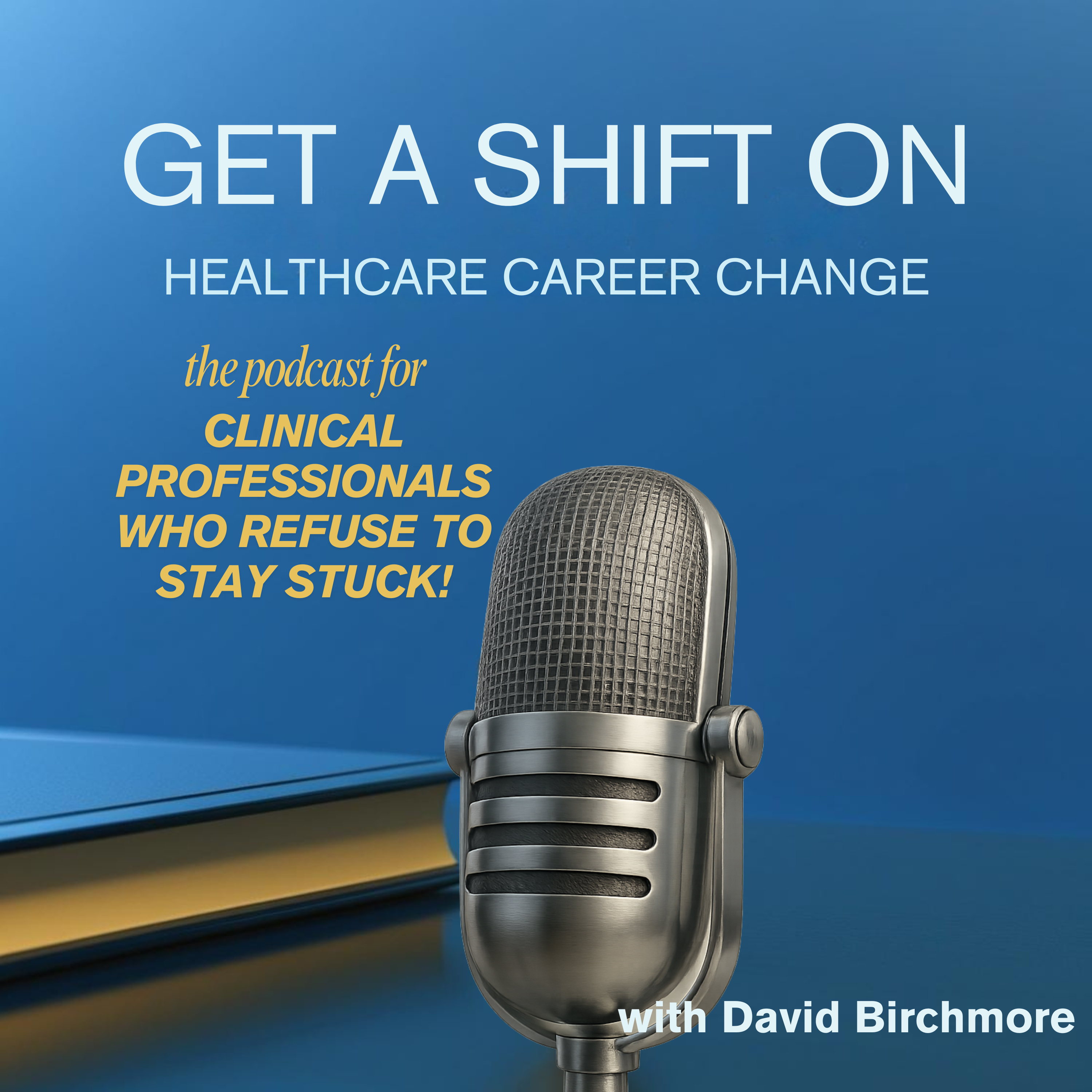
Davidyeah, get a shift
PaulWhy Start That? What was your purpose behind that, David?
DavidIt was actually never in the initial plan with my business. I think I fell into it. What I realised fairly early on is, that sharing people's stories is exceptionally powerful. Making real human connection is super powerful and as you, you've just alluded to getting away from that transactional feeling that so many people seem to have. So I started it. I, in True Me style, just went headlong into it, created some imagery, read up how to do it, found a platform and it said create 3 episodes before you get too far. So I did exactly that and I linked with someone on LinkedIn, a GP who's doing some amazing research around watercress and he was my first guest. And I guess it has just snowballed from there. And it has been so fascinating to meet so many different people from all walks of life. And the whole premise of the podcast is to showcase that career change is absolutely possible. And as I'm sure you are well aware, when you see a real life story, it's much more interesting than me sitting there saying, oh yes, you can do this, and this. And that really helps you get out of the job that you are stuck in. But when you see that people have done it from all walks of life, I've had. that gp, I've had other gps who've gone on to do other things 'because they don't feel they can work any longer in the NHS and the way it's functioning. I've had teachers, I've had civil servants, I've had ex rugby players from both the local and English team. its just been a really fascinating journey and it's been nice as well because I managed to speak to some of my friends. One of which a guy called Ollie, we went boarding school together. I've known him probably longer than I've known most people and we shared a room for a very long time as well. And we've had very different careers and he's done amazing things. He runs a marketing company and he is worked with Liquid Death, and he's just like his own company. But it's really fascinating to hear his story, having known him all those years. To understand how people develop and change. And I hope that people watching it and, my subscribers are few and far between. I can't even claim my mam's one of them 'because I don't think she really understands what a podcast is. but if she could, she would. but those figures are growing, but actually it's, for me, it's not about that. It's about helping as many people as I can. On my mission to help a thousand people leave the jobs they hate. And if I can just help one person by sharing someone else's story, then that makes me happy. So episode 30 out today, who knows? Will it grow? Will I get some money for it at some point? I don't know. And that's, it was never in the plan, so it's never been my driving force, but I am loving meeting people and getting the opportunity to speak to just different people.
PaulAnd nor should it be part of your plan, David, I and I applaud that if
DavidYeah.
Paulit happens, it happens.. But money, shouldn't be a motivator for most podcasts, unless you are, you've got the, connections and the money upfront to be able to turn it into
DavidYeah. something super
Paulpremium. then for most of us, you've absolutely nailed it. I'm gonna, I'm gonna admit something here live or not live because for a couple of months ahead, but my mum is a follower my podcast, so mam hiya, glad you're watching. i'm not going to lie, i forcibly signed her up in the beginning because I wanted some extra subscribers. but my mam does watch every week. she watches it after, she's had her dinner on an evening. she's, Very lost sometimes by some of the conversations that we have, but she loves watching. ano, it's nice, my mum
DavidI love that.
Paulwatches my show David forcibly sign your mum up. You'll be very surprised how educated she gets about podcast once she starts watching. but yeah, I, guess thinking about everything that you've learned since. Moving into your own business and all the advice that you give to people, the work that you now do with, individuals stuck in their rules. And as somebody who worked in discount retail, right? Like I know there are a lot of people who are, in the wrong job for them and they're desperate to get out. I was one of those people once all I could ever see myself doing was more of the same for a different company for a different brand. And I honestly thought that everybody on LinkedIn was, I'm gonna say it out loud, sorry, mam. Was full of shit. I genuinely thought it was all smoke and mirrors and it was, the only people that were successful are the ones that already had money to start with who were trying to ram their market and methods down our thought. I'm living proof that's not true. However, I'm conscious that I've probably joined that band of people that I wouldn't have believed if I was in that role Still. if someone's listening along today and they suspect I'm full of crap and maybe think that you are a little bit full of crap, I hope not, but maybe they do. What could they do today to prove to themselves that there is something else out there that they could be doing that would make them far happier? That isn't the role that they're doing now in a different
DavidThat's a great question and yeah, i think you're right. We are probablallle full of shit in our own way but you have to get through that. And genuine communication, genuine connections, like The type that we have, I think is very important to see through some of that. think if you are really stuck in a role in a job and you know there's something else, I think the first thing to do is truly identify what makes you happy and what skills you have that could see you out of it. And I'll give you an example. I was speaking to a chap the other day, works in healthcare, not sure what to do. Has a well-paid job, fairly high up, has done a master's, so he is got all the right things should we say, that one would expect to have, but actually is really not very happy. So we had a conversation and I said to him, okay, so what is it that you'd like to do? Really, if you took away all the barriers? Take away the money, take away what people might say, take away the fear of that change. And his eyes lit up and he said, I think I've always wanted to have a pizza cafe that serves great coffee. But his eyes shone at that thought. I was like, and that's the key. That's what you need to do.
PaulYep.
DavidI think so many people that I speak to have somewhere deep down, that burning desire, that burning wish to do something but have stopped for whatever reason. And it's about finding what that is again and you might stumble across it. It might be something that you've always wanted to do but never had the real, the possibility. But when you get to a point where you are so stuck, I think you're willing to try anything to get out. And if you've got that inkling, then do something. And whenever I have a call with someone, I always offer three calls for people to start with. I will give them three actions to do because it's about moving forward. And if you are that stuck, if that rusty nail is that rusty, then you have to do something. So tho3ree actions, it could be anything. Think, just imagine what you want to do. What skills do you really enjoy using, ask a friend. So I think it's really pinning down what lights you up, what gives you that joy, and then finding a way to manage it and taking even just small steps. And it's very cliche, it's very, it is what it is, some of that fluff. But actually it's true. If you don't take that step, you never move anywhere and you get stuck in yourself. And then that's just that, cycle of misery and then you make everyone else miserable. So it's about doing it for you and everyone else around you. i
Paulthink there's a, couple of things that I would add to that in that, first of all have an idea of what you want to do, but be prepared for that to change as you get closer to whatever you're heading towards. Because quite honestly, I never intended to set up a marketing company of any sort. I never intended to end up, if you told me 10 years ago, I'd be working around video editing and repurposing and working with podcasts, I would've laughed so hard in your face. And, I would've definitely raised my eyebrows at who I am today. But here I am thoroughly enjoying myself, My goal was to get out. I found a role using technology, which I love working with technology, and that was a stepping stone to where I am now. But always be listening to what makes you happy in the moment, and be looking for a, way to find more of those little things that you do every day that make you much happier. My second thing would be if perhaps you are not ready to talk to somebody like David yet, and you like, like I say, I still suspect that I'm full of crap. Then there is a tool out there called chat GPT. You may have heard of it, you may not. A lot of people, it's surprising how many people in corporate roles in retail, have never even considered chat gPT or Claude or Gemini or whatever versions on your phone have a conversation with it. You would be surprised how insightful it is at identifying what makes you happy and what skill sets you have. It is there, it's a, it can be very constructive. and critical thinking for you in a way that gives you that confidence to have a conversation with a real person. Next and that's where I'd go with it is try a prompt along the lines. You don't need to be an expert to write prompts in, in AI these days. Just try something along the lines of, I want you to act as a career change consultant. I'm gonna tell you what job I do, I'm gonna describe it to the best of my ability, and I'll maybe even upload your CV into it and it'll ingest that. Conscious of data every once or I'll give you that warning as well. you load something, it's theirs. but feed that information in and see what it comes back with and ask it some questions and ask it to ask you questions. And maybe that's a good starting point for a lot of people who are thinking about it, but aren't quite brave enough yet or haven't committed. Because the other thing that I would say to people is you need to be in the right point in
Davidtime Yeah.
Paulto make that pivot. If you are still dithering about doing it and you thinking about it, but then you never go and do it, when is the right time? When are you ever gonna do it? You've gotta find a point in time and there will never be a perfect moment. You'll never be able to afford it. You'll never have loads of money in the bank. There's a comfort buffer, so you can go and do it, and quite honestly, if you did, you wouldn't make a success of it. Sometimes just doing it by the seat of your goddamn pants. Getting out there and being terrified is what makes u successful
DavidHundred percent. Yeah. i'm
Paulnot gonna lie.
DavidYeah.
PaulI love it. David, thank you so much for what has been a wonderful, I genuinely love helping people with careers and things like that as well. I don't want to be, I don't want to make it my job, but I love hearing the passion that you have for helping people, and I'd always encourage anybody if they're interested to go and talk
Davidwith you Thank you.
PaulI will make sure your contact details and everything from Via Nova are included in the
DavidAmazing.
Paulshow notes
Davidyou.
PaulIs there anything that you'd leave the audience with before we, end the episode?
DavidFirst of all, thank you. Thank you for the connection that we've made and the friendship that we've made as well. I think what I would leave people with and touch on your point is allow there to be that human connection. Look through the fluff on LinkedIn or any other platform. And you said then that allow things to change and be prepared that things might change. It's amazing when you give yourself the opportunity to be open and free of constrained thought, the opportunities that present themself to you. I never thought I'd be doing what I'm doing much like yourself, but I let myself. Go. I just give myself permission to be free, as it were. And it's amazing what you find works. Podcasting is just another example. Never thought I'd do it, and yet here I am. So give yourself the opportunity to enjoy something and see where it takes you.
PaulFantastic. Thank you so much for your wise words today, David.
DavidThanks, Paul, for the opportunity.
PaulAnd I will see all of you. Make sure you subscribe, make sure you give us a follow up. We'll see you next week called MarketPulse Pros and Pioneers.

Podcasts we love
Check out these other fine podcasts recommended by us, not an algorithm.

CX Passport
Rick Denton
Next in Queue
Rob Dwyer

Naked at the Top
Aleyx Ward
Breaking the Blueprint
Iqbal Javaid & Vinay Parmar
Rugby Legends with Arthur Dickins
Arthur Dickins