
Mystical Mermaid Lounge
Dive deep beneath old currents in the Mystical Mermaid Lounge, where we shed limiting beliefs like ocean waves wash away driftwood. Together, we reclaim our power, rewrite our stories, and swim into new waters of healing, truth, and spiritual freedom. Come nurture your soul and rise with the tide.
🌊✨🧜🏼♀️
Mystical Mermaid Lounge
Roots, Stones, and Knowing with Kim Baker
Use Left/Right to seek, Home/End to jump to start or end. Hold shift to jump forward or backward.
The moment Kim Baker says the trees move at a different pace, you can feel the room settle. We invited Kim, Professor Emeritus with a PhD in literacy education, a Usui Reiki master, and a high priestess initiate, because her life bridges scholarship and sacred grounding. She opens up about childhood out-of-body experiences, the quiet power of daily gratitude, and the day ancient sites turned intuition into touchable energy. From Avebury and Glastonbury to the oak that’s watched three centuries pass, Kim shows how place can be teacher, mirror, and home.
Details
We follow her path from reading the Ogham tree alphabet to serving on a local Mohawk Hudson land conservancy board, where preservation becomes practical. Her story pivots to animal guides—a blue heron that once trailed her days and the hawk she found inside her screened porch. With gardening gloves and a calm voice, she carried it back to open sky, accepting that guides change as we do.
Kim offers a reframing that sticks: we aren’t destroying Earth, we’re destroying our own habitat. Trees and plants have endured five mass extinctions; they want us to make it, too. We talk forest bathing and childhood wonder, tree communication and fungal networks, “invasive” species and the cycles that turn loss into shelter and food. She shares what claiming the crone title feels like—less stamina, more presence—and why intentional vegetarianism aligns with caring for land while honoring the life in plants and animals. The throughline is simple and fierce: compassion, connection, and gratitude are choices we can make today.
If this conversation roots you like it did us, follow the show, share it with a friend who needs a walk among trees, and leave a review so more listeners can find their way back to wonder.
References
Chione, Chloe and Kim met each other in a Sacred Wild Priestess container held by Elyse Welles of Seeking Numina (www.seekingnumina.com)
Canyon Ranch - Wellness Resorts, Health Spas, & Retreats - Canyon Ranch
Johnathon Ellerby - Jonathan Ellerby Phd
Steven Farmer - Dr. Steven Farmer
Eckhart Tolle - Teachings Eckhart
Braiding Sweet Grass, Author, Robin Kimmerer Wall
The Third Plate, Author, Dan Barber
Shameless Promotions
Chloe Brown is the graphic artist behind all of the Mermaids’ delightfully whimsical branded reels, stories and picture posts on social. Contact her at MysticalMermaidLounge@yahoo.com for artistic consultation and design work.
Sponsorships
We do not advertise nor accept sponsorships so that your listening experience remains free of distractions. If you are as passionate as we are about supporting spiritual seekers, consider buying us a coffee at: https://buymeacoffee.com/mysticalmermaidlounge.
Please feel free to email us with positive and constructive ideas, questions or comments at MysticalMermaidLounge@Yahoo.com.
Thank you for listening! Please follow and rate/review if you love us. Blessed be.
Extremely excited to introduce my new friend and sister priestess, Kim Baker. She is joining us here today on the Mystical Mermaid Lounge podcast. And I want to share a little bit about her and her background before we dig into her amazing experiences. Kim earned her PhD in literacy education and holds the title of Professor Emeritus. She is a Yusui Reiki master as well as a high priestess initiate of the sacred wild. I can personally attest to her beautiful, kind, and magical soul. And she has an innate ability to communicate with animals and trees. She enjoys traveling astrally and spending time in the cosmos as well as in 3D, visiting sacred lands, communing with the flora and fauna, and even sends insects to the light when their time has come. She is an animal enthusiast and consults her animal spirit guidebook, enlightening her sister priestesses, very much, me included, with the significance of often surprising animal spirit guardianship. She lives with her playful and energetic pop, who I have adopted as my niece, Finley, in upstate New York, near native flowing fresh waters, which we will also talk about. Welcome, my friend. Thank you so much for gracing us with your presence today.
SPEAKER_05:Thank you for such a lovely introduction.
SPEAKER_04:I also have my co-host, Chloe, here with us. And we are going to jump in to this amazing spiritual journey that I feel must have started 10 past lives ago with you, Kim. But please do tell us how you grew up and what prompted you to pursue such an amazing spiritual path that has put you into so many different integral places.
SPEAKER_05:Growing up, one of the things that would happen to me, and I never shared with anybody, probably until my 50s, was I would do out-of-body experiences. I can remember looking down at my body, and I can remember being up wherever that is and feeling a connection to everything and in a pulsating way that it would be things would get really, really fat and then just really, really tiny. And it just and it was just an amazing feeling. And as I said, I never shared that with anyone. I don't think my mother would have understood. Then always had a connection with the earth and talking with Brittany, just feeling comfortable in water. We used to go, my mother had a place down at the beach. And when I was like a year and a half, the stories are that I would just lie down at the bottom of the ocean, and my brother would save me all the time, pulling me up. And babies naturally do hold their breath when they go underwater. Then my mother sent me off to camp in Maine at the age of seven for eight weeks and was very homesick for the first couple of years, but loved it after that. And that relationship with land and earth was just fostered. And I would say a lot of what I experienced for the next few decades, I've learned what it is or what people now call it. I didn't realize I could manifest as well as I did, and that was what it was called. I realized that when people prayed, a lot of them were always asking for things. I realized mine was always just a grateful prayer, and that is developed into a gratitude meditation almost every morning. Being introduced to Reiki, my daughter found it first, was eye-opening. At first, I just experienced it, and then the person who was doing Reiki on me encouraged me to get my Reiki masters, which I did. And learning how to tap into that energy, that light of the universe was, I think, life-changing and a way to tell others about what that was. Another thing which I have always understood is just, I've always called it my knowing, call it intuition. I just knew, yes, I needed to follow this path, or yes, this was right to do. I couldn't always explain it. There wasn't always the logic that I am used to using pragmatically, but I knew that that was what to do. And going to on a trip with about 10 other people to Aveberry, Stonehenge, and Glastonbury, that was a huge change. That was when I discovered the power in touching certain stones and the energy they give off. But also the group around me realized I was talking to trees. And then one of them mentioned the um, or you can call it og. There are two different pronunciations of that tree alphabet, which I didn't know anything about. And I remember finding a couple of little pamphlets on it in a Glastonbury. I started a journey over the next year finding each of those trees or flowers, making a relationship. I'm sure it comes from past lives, but knowing that you approached the tree, you asked if they were willing to give you a twig. I had a relationship with them before I asked. And I put together the 20 Ogam tree flower runes, and that's what I use for divination.
SPEAKER_04:You're not sure your mom would have understood your abilities. Would she have disapproved of your astrally traveling and connecting with nature in that way? Yes.
SPEAKER_05:And I think she would have considered that maybe I needed some kind of help. Oh, okay. I see it. I don't think she could have understood it. Very early on, I was probably about four. I realized because I was being chastised for picking up a cat that was in heat and thinking as much as I admired her. I mean, this is my mother. I mean, she's life, you know, everything, that I loved animals. I knew she didn't, but I knew that was a good thing about me. And that she would be better if she did.
SPEAKER_04:I completely understand the concern that she may have had for a child if she was not in touch with those types of energies, the nature energy, the earth energy, or even cosmic energies. I think it's all kind of one, but we got the idea. I remember my husband wanting me to see a neurologist last year or so with a similar scenario. So I totally get where you're going with that. But being that your mom didn't really have those inclinations, where do you think this came from? Do you think there is some lineage there in your family where the ability to see beyond the 3D existed?
unknown:Yeah.
SPEAKER_05:And I think my mother probably had some of that ability that she never would recognize in herself.
SPEAKER_04:Ah, god damn. A lot of people don't know what it is and then turn off to it if it's unexplainable or scary. I get it. Yep.
SPEAKER_02:Yeah, the fear of the unknown is so real, especially in a different era. It's not the same world that it was.
SPEAKER_05:Yeah, and we're talking the 50s.
SPEAKER_02:And that's that's what I'm trying to say, is that it's a very different world. As in modern culture, if we don't understand something or want to look it up, we can just whip out our phone. But I remember in the 80s, going to all the neighbors' houses looking for an encyclopedia that was the most current, you know, or a proper dictionary.
SPEAKER_04:It's pretty amazing that you, as a child, and so many children do feel that connection with nature. How to even approach a tree, as you mentioned, or what an animal needs. And you know a lot about your surroundings and the different trees and the different animals around you. I can't tell how many pictures we've shared of snakes and bugs and and all kinds of good things. So is being an earth steward important to who you are, the fabric of who you are? Yes. And how do you see that? How do you see that role?
SPEAKER_05:As I retired, I became part of the Mohawk Cuts and Land Conservancy, was on their board and a year into it on the executive board. And local land conservancies are the ones who are conserving the farmland, conserving preserves for people to be able to walk in. We make trails in many of our preserves. A lot of land conservancies don't, so that we encourage people to be out there with the land, with the animals.
SPEAKER_04:I know that you had mentioned saving a fair amount of acreage, I presume, from development.
SPEAKER_05:Yes. If it's a preserve, then it becomes something that everybody can be on. We also work with easements. If you work with someone who wants to be able to pass down their land, not just literally give it to the conservancy, but they want to put stipulations that it cannot be developed, that it will always be farmland, or it can be used for maybe logging, but nothing else.
SPEAKER_04:I think that's admirable. Takes a lot of perseverance to have essentially preserved 60 acres of your neighbor's land. Is that correct?
SPEAKER_05:There is a preserve behind me. I worked with her. She was originally going to give it to the Nature Conservancy, which is a wonderful organization, but they would have sold it because they need the money and concentrate in specific areas.
SPEAKER_02:Wow. I had no idea. I'm learning so much. Like I'm so grateful you're educating us on this.
SPEAKER_05:Well, it's even the World Wildlife Association, who I love. If you give your land to them, they will not necessarily keep that land that you think is going to be preserved. They will take that money and use it for a greater good. But yes, working with the neighbor who did want to preserve her land, it is one of our preserves. I think probably one of the scariest things I did was to take on their first capital campaign. Yes. We went from being really a mom and pop organization, one full-time employee and one part-time employee to six full-time employees.
SPEAKER_02:Wow. Congratulations.
SPEAKER_05:That's huge achievements. Thank you. As I've gotten older, I've thought through what are those things I'm most proud of. So it was easy for me to start sharing them.
SPEAKER_04:We've had discussions offline about being part of community activities and the challenges that can come with stepping, at least for me, stepping outside of my comfort zone. I had done something similar with a horse organization as far as preserving a specific breed and getting recognition for it and making sure that these animals were treated with the utmost care. It just astounded me how we could all have the same goal but come at it from such different ways. Good for you. And I appreciate that effort that took. So would someone who wants to take their drum and do a ritual or an offering, would that be permitted in a preserve type place?
unknown:Sure.
SPEAKER_05:Most of the preserves, we don't allow uh mountain bikes, dirt bikes, but there are one or two that we do. What else don't we allow? We often will say dogs can be off-leash if they are well trained, you know, but you're responsible. It's sort of a sunrise to sunset. You're not supposed to be out there at night. Yeah. But I'm grandfathered in to do whatever I want on the preserved behind me, including picking all the wildflowers. And we sort of like, I don't know if the next direct is going to know that, but I'm grandfathered in to be able to take as many wildflowers as I want from the back.
SPEAKER_02:And the blackberries and any blueberries or something. Anything that grows.
SPEAKER_05:Well, that we let everybody, including the deer, eat. Sharing is caring, yes.
SPEAKER_04:Kim, you and I have had a lot of interesting discussions on the art of learning. And you made a few comments about how you would love for everyone to be a two-year-old, just like your grandson, especially when learning technology. Just pushing buttons until something worked.
SPEAKER_05:I learned from my grandson. I was using technology pretty early on because education just did. It's like I did my master's on a typewriter, but I did my dissertation on a computer. But I watched him, I mean it too. He would he just push things. And I thought, we all need to be like two-year-olds and just play and try.
SPEAKER_04:And be curious about the results instead of putting so much pressure on doing it right.
SPEAKER_05:Well, that's what I was gonna say. You learn from failure, it's okay to fail. In fact, we learn a lot more often from failure than our successes.
SPEAKER_04:We are very perfection-driven culture instead of giving ourselves the benefit of the doubt that the knowledge will come with the experiences.
SPEAKER_05:One of my favorite quotes to teach my teachers was look for the intelligence in a child's mistake. Because often there is a thought process that you can build upon. There's a lot there. If you just give them an X or say, no, you're wrong, you are squashing. Yes.
SPEAKER_04:Often the belief in protective animal spirits is attributed to indigenous people, at least in North American history. I'm dying to know what sparked your interest in animal spirit guides. And that book that you reference, the author's name. Stephen Farmer. Yeah. That is the foremost used book across the board. In fact, every shamanic journey that I've ever gone to and journeyed within or assisted the shaman with, we always bring that book.
SPEAKER_05:Kristen introduced me to Canyon Ranch. She went out there for herself, and then we went out as a Tosome the following year. They have a variety from the foo-foo stuff, and you can get a lot of facials and all, or they have a great spiritual department. You have the woo-woo and the foo-foo. Exactly. And I met Jonathan Ellerby there, who guided me in many ways. And I probably went on a spirit guide journey with him. And I will share that Blue Heron was my spirit guide. And it's spirit guide journeys or power animals, they're pretty easy to do. I've done that for having had it done to me. It was easy for me to just go do for friends and stuff. And I used to see blue herons all the time, and they'd fly over and go to the mohawk. And I realized I was thinking about that, I don't see them anymore. But about 10 years ago, I went to my screen porch and there was a hawk there. So I still don't know how he got in. There were no holes in the screening. I've always put a brick up against the door because I didn't want birds flying in there and getting stuck. So I opened that and I tried to shoe him out and he didn't go. So then I got a broom and I tried to shoe him out. And he would get to the door and he'd fly back. And I'm thinking, I can't leave this open and have the birds coming in and out, and the door maybe even close on them. So I went and got gardening gloves, realized that hawks can turn their heads. I think 360. Picked up a hawk and took him out. And I realized that probably my spirit guide to the power animal was now hawk.
SPEAKER_04:There are people that wear very thick leather-coated gloves in order to have a hawk just sit on their arms and you have gardening gloves.
unknown:Yeah.
SPEAKER_04:That's amazing. Were you communicating? Did you feel like there was any sort of telepathic communication happening with that hawk?
SPEAKER_05:Yeah, and I was talking to him. I said, I am not gonna hurt you, but you can't stay here. You'll starve. He didn't even really turn his head much, so I guess he understood me. It was an amazing feeling.
SPEAKER_04:Yeah, that is amazing. I was just talking to an animal communicator not too long ago who told me that not to worry when I first started to establish communication with non-domesticated non-human animals, is how she described it. Because they are not often communicating with us. So their communication vibe is a little bit different because they're they're in the wild, obviously. And you just put on gardening gloves and picked them up and did that. So I think that's pretty amazing. Why do you think there was a shift between the blue heron to the hawk?
SPEAKER_05:I don't know. Those are the type of things, rather than questioning why this is happening, I usually try to just accept and move on.
SPEAKER_02:Good for you. Do you find that during your processing the why still becomes clear occasionally in hindsight? Because I think for me, when I am processing things that I've been through, even though I may not have started with a why did this happen? Once I feel like I truly embodied the message, usually it's like a light bulb just comes on and it's like, oh, that's why I wasn't looking for the why, but thank you. Yes. So I was just curious if that was part of your process as well.
SPEAKER_04:Yeah, I'm uh I'm addicted to why. So I need to learn from both of you and lay that down. I'll spend way too much time on trying to figure out the why behind things instead of just enjoying the what is.
SPEAKER_05:Or accepting change. I think that's a huge part. I watch my friends who just can't accept change, and yet it's the one thing that is a constant in our lives.
SPEAKER_04:I never even thought about it from the standpoint of resisting change by trying to figure out the why. But I guess that's true. Because it needs to make sense to me in order for it to be the next thing happening. So yeah. So, Kim, how much do I owe you for the therapy session? What my lack of evolution? No, that all of us are struggling with it.
SPEAKER_05:As soon as yeah, we all tack. I admire what you do. I mean, you do a phenomenal job with working with people and with past life regressions. Don't sell yourself short.
SPEAKER_01:Okay.
SPEAKER_02:I want to second that just real quick. Everything in totality, whether it's friendships, just the people you encounter, your heart is so kind and so pure and so compassionate. Don't be so hard on yourself.
SPEAKER_05:And knowledgeable. I mean, she you have a great wisdom, the ancient wisdom.
SPEAKER_02:The good kind of wisdom, yes.
SPEAKER_04:Yeah, the good kind of wisdom. Wow, I appreciate the unsolicited compliments. I do more than you guys can ever realize. The both of you. Thank you. Do you feel your spirit guides around you, kid? Be they animal or yes. I mean, I feel the trees around me. Do they have a different sense? Are you able to say that feels more this versus that?
SPEAKER_05:They can be very comforting, but they have, I think Elise has talked about it, their pace is much, much slower than ours. The oak that I talk to the most has been there for 300 years. And it's it's a different perspective. And it's a different perspective in understanding that their root systems intertwine underneath, that an oak looks or any large tree allows evaporation from the bottom of its leaves down and nurtures all sorts of plants and other trees underneath it. They scientifically have proven that the roots talk to each other, and plants and trees can figure out ways to protect, or they often sacrifice one to make sure that the rest can survive.
SPEAKER_04:I remember asking you, and we had started going down this path a little bit, about just the amazing network of communication, just like you're describing, that trees have with not only its own species, but others as well, because one tree communicates energetically as well as hormonally. I believe, like you said, scientifically, they've proven that this communication happens chemically down the line of trees of all species, these alert systems that are happening right in front of our eyes that we don't even realize it. But I remember we had started talking about this in bits and pieces. And when I say talk, we mean messaging each other when we were partners. And I asked you, especially with this elder oak, did they feel sadness or did you pick up grief or loss after having seen, especially up in New England, seen all of the variety of destruction and wars and wildfires and just a zillion of different things, as well as good things? Did you get a sense of loss from them? And you said quite the opposite.
SPEAKER_05:Yeah, they'll feel loss because I'm on a tree line that goes back to the Revolutionary War. Different people have taken down some of these oaks, and I think they feel that loss. But no, they're full of presence, of hope. They would like to work with us that we will survive. I find it amusing now how many people say we're destroying the earth. We're destroying our species, we're destroying destroying our habitat for our species. But trees and plants have been around through all five of the catastrophic events that have happened. The trees and the plants will survive us, but they would like to help us.
SPEAKER_02:Do you think that concept of using air quotes here, we're ruining this earth or we're destroying ourselves? Do you think that comes from the rude idea of humans putting themselves at the top of the list? I don't agree with that phrase and terminology. I see it exactly how you just shared it. So I was curious what your thoughts were on that as well.
SPEAKER_05:Yeah, I think it's that huge ego of so many people and so many people in power, that they feel it's all about us. And if we can't survive, their outlook is it's gone. But the earth and life on the earth will not be gone.
SPEAKER_04:I love the perspective, bleak as it is, that the more that we destroy the very things that provide for us, the very thing we're doing ourselves in. And the fact that we don't see ourselves as a major cog in our ecosystem is just astounding to me. Yes. We are seeing like worms and things that have been frozen in the ice, different bacteria or germs that are now, since we're destroying our earth and the the climate, you know, temperature has been rising and these things are thawing, they're like, we're back. They're ready to take root. How do you recommend that we get entrenched back with the nature that is all of us?
SPEAKER_05:That connection, because everything is interconnected. I am convinced of that. It has to be on a personal basis, it has to be that we connect with other people with compassion, with encouraging people to be in nature, to observe nature, to understand it. I have hope for mankind. Um there's there are a lot of um what do they call it now? Um tree bathing that is a new term that you know it basically they're telling you to go take a walk in the woods, but it has to have that capitalistic okay, we will call this tree bathing, and it is something very special, and you're going to want to do this.
SPEAKER_02:In fact, oh, go ahead, Chloe. I was just gonna say, I think most of us would refer to that as childhood.
SPEAKER_05:Oh, in asking people, do you have a favorite tree or something? So many people do, and so many people it goes back to their childhood.
SPEAKER_04:Absolutely. And it's so funny you say this, Kim, about tree bathing, because earlier today, divine timing, right? I saw a course on social media. You yourself can get certified in leading tree bathing exercises. In fact, you can be the lead bather. And um, yeah, you can now become certified in between, depending on what level you want, either level one six weeks or level two certification in 12 weeks, on essentially leading people to the woods and saying, sit down and shut up and listen. And you can pay a lot of money for that certification.
SPEAKER_05:Marketing is great. There is seriously something wrong with our species.
SPEAKER_03:They call it opportunity.
SPEAKER_04:So last no, go ahead, Chloe. I was gonna say where you can make a dollar, then it shall be done.
SPEAKER_02:Yes. Last year I took a trip to Seattle and I'm at this beautiful, it's called the Garden and Glass Museum. And sure enough, in the shopping area, forest bathing. And I thought that is the first time I'd ever heard of that term, but they branded it as the Japanese art and science. And I thought, well, duh, I live in Oregon. I need that book. What is that about? So I'm reading it and yeah, just go outside. The whole book that I paid$22 for.
SPEAKER_04:And Shintoism, I always thought was super interesting, even as a young person, as I I told Kim and Chloe knows this, I've been searching for God in all the wrong places. It feels like a country song. And I haven't, I didn't find her in all the places I thought she would be. And my mom told me, my mom is 86. She told me that she and her brother, since the time they were able to walk alone and just go out and go places unsupervised, that they went to church. They tried to get into synagogue one time and didn't, as children, understand why they weren't admitted. And she did try to go into a temple one time. And this is when when they lived near Oklahoma City, she lived all over the place. But I realized this path of trying to find God in all of these different places is something that runs in my lineage. This toiling for no good reason. And then I read about Shintoism, and I am far from a Shinto expert, but the very belief that the divine is sitting right in front of my house in front of me in a houseplant was like, duh.
SPEAKER_05:Going to camp when you're seven and non-denominational services on Sunday, because of course you had to have those in the 50s. We would walk down out into the woods. We would walk on pine needles, we would sit in stones that they had just found around. And so for me, that was nourished from a very young age that was spiritual. And I'm gonna take you out so you can see what I look up at and what I call my green cathedral.
SPEAKER_02:The respect in that title is just so powerful in itself.
SPEAKER_05:Oh Finley, maybe I should put you, Finley, you go on the board so you can watch me.
SPEAKER_04:She's so cute.
SPEAKER_02:I think this is the podcast's first field trip. I'm so excited.
SPEAKER_05:Because number one, she heads for the compost pile too hot now. Because she's what they do for. Oh yeah. Delicious.
SPEAKER_04:So true, and they come back smelling so bad. My mom would say, You've been in the compost. I'm like, it wasn't me, mom, it was a dog, I swear. It's so amazing, Chloe, that as we're going on this field trip, and Kim lives in New York. I mean, she's in New England. But how many people who are growing up in this city who don't know what to call that feeling in nature?
SPEAKER_02:And to have that connection and to recognize it, I think we've heard so many people talk about how they felt it at a young age. And then on top of that, another layer I'm finding very common is they all keep looking for this sense of community. And what I love about her story is that she embraced it for she didn't allow anybody to tell her or shame her.
SPEAKER_04:Exactly. And that she was able to feel the connection and just know I'm sitting on pine leaves or pine needles. Yeah. And embrace it.
SPEAKER_01:I love that. And didn't lose sight of it. But she still has so many accomplishments.
SPEAKER_02:Like that's amazing.
SPEAKER_05:Obviously, I lost my connection. I will have to take a picture and show you what it looks like. You, however, come on back in.
SPEAKER_01:Come on, fam.
SPEAKER_05:But yeah, it's um I just feel incl incredibly blessed with where I get to live. That is such a gorgeous view. Well, I probably can do some of it from the porch. Because I know on my I can get on the screen porch and still keep connection.
SPEAKER_02:It's not lost on me too, Kim, that when we do see you in these live videos, especially on the weekend ones, you're always out in that screen porch with your trees sharing that energy with us.
SPEAKER_05:What was that?
SPEAKER_02:I heard something about sharing the energy of the trees. Yeah, when um I was just saying, I love how when you come and you greet us in the on the lives in our container classes, that you're in I think your screen porch, that you're often sharing the energy from outside with your trees and flora and fauna with us. Yeah, there.
SPEAKER_04:Yeah. Nature imitating art. Like that's what it always feels like. Like you have the best paintings behind you. No, that that's like my window. Just say. So I'm constantly seeing. So you want to know blue heron? I see them constantly. And the egrets and the snowy egrets and the red, what is it? The red tufted, red-tufted woodpecker is always out here doing his little thing. And I just think, gosh, how can I how can I ever think I wanted to move back to the city? Although the city has amazing places too.
SPEAKER_05:And a lot of our cities have beautiful parks. They do. And they are very accessible to everyone.
SPEAKER_04:Yeah, for sure. And I think, oh, I never asked you, Kim. Sorry, I I digress again. But do as you can see, there's a lot of editing that goes in while we're having these conversations. I'm assuming. Do you guys allow horses on your preserve? Some of them. Some of them do.
SPEAKER_05:Yeah.
SPEAKER_04:Because that that can always be challenging because a lot of people are super scared of horses and they're huge. At least huger than common man. So and they do leave piles behind.
SPEAKER_05:So I just wondered. Which um becomes really great compost and is good for everything. Yeah, certain ones. They do. You know, and I think the website shows, you know, kind of what you're allowed to do. I mean, certain ones you can do fishing, certain ones you can't. And yeah.
SPEAKER_04:Yeah, that helped me personally because I really do have a problem with killing or eating things that I feel like I don't have the right to take their life unless it's for sustenance, obviously. And when we were talking the other day about the spotted lantern fly and how I'm just like, I don't know how I can just kill this thing. And um I could probably kill it, but I couldn't.
SPEAKER_05:When Elise asked about cutting off its head, it's like, no, that I could not do.
SPEAKER_04:Yeah, I'm I'm not sure decapitation is in my job description.
SPEAKER_05:It's not in your character, it's not in mine either.
SPEAKER_04:Yeah, I just I have a really hard time with that, but I can say when you said you can send them to the light and just essentially send them off with honor, as opposed to saying you don't belong here. And that's I think that's the thing that gets me. How do I have a right to say you don't belong here? And yet I realize that changes the entire ecosystem. So the things that are native here now may no longer be if we let these things proliferate. So it becomes this big philosophical challenge to me.
SPEAKER_05:I agree, but I also it's like uh people get all upset with what they call invasive species. This landscape 500 years ago was probably very different, and 2000 years before that, it was very different. Again, it's change, and I think nature accepts change probably better than we do. They figure out ways to survive, to connect to each other, and if you watch an area over time, I mean, an area that is very wooded that way, when I first moved here, had a whole lot of sun and rhubarb was growing on it. Well, there's no way rhubarb would grow there anymore. So I there is a borer that obviously, like the ashes attacking all the um black walnuts. I have lost out there, even though it's really not my property, but at least eight huge black walnuts. But they fall down and they give homes to other animals and they give insects, and they are going back to the earth. And yes, I think it would have been great if that boar didn't exist and come and kill them all, but the land and the plants and the trees will survive.
SPEAKER_04:Yeah, I agree. When I was in Yellowstone and and we would we were watching nature can can feel extremely brutal. We were watching wolves chase a lame bison, uh younger bison. And and the biologist said something very interesting. She said, I know this seems brutal to watch. She said, but I'm going to tell you how nature takes care of itself, which is very similar to different perspective, but similar to what you just said, Ken. She said, usually the predators go after the sick or the very old. So those who are close to the end of their life cycle are usually the ones that fall prey to whether it's illness, disability, yeah, another predator. And then they feed herds and packs of all kinds of animals. And magpies and everything else. So yeah.
SPEAKER_05:I watch hawks go after other birds, and it's what they do.
SPEAKER_04:It's what they do. I watched a golden eagle. Oh. That and they are they are aggressive and they let everybody else do the work. And then they come in and sit on top of the kill and say, I'll let you know when I'm done. And I said, now that is the top of the food chain right there.
SPEAKER_05:Is she good? She's chewing on something. I don't know what. And it may be either a rock or uh an abug may have gone to the light.
SPEAKER_03:So long as you don't feel it, I'm good. It's not a toe or an extremity.
SPEAKER_05:She never no, never. She's never been. Oh, wonderful. She's so pretty.
SPEAKER_04:I want to know about your just innate attachment to these Celtic traditions. Do you feel it in your lineage, or is it just a knowing?
SPEAKER_05:Or it's a knowing. I mean, when I went there, I and in Scotland especially, I just knew I belonged. I belong to this, and it's land again. It's the earth. It's like I belong here. I know this place. Um, I feel its energy much more strongly than I will other places.
SPEAKER_04:Really?
unknown:Yeah.
SPEAKER_04:So like the moors, the highlands, all of that was just like, oh, I know you.
unknown:Yeah.
SPEAKER_04:That's super cool. And it makes, and I say super cool only because I don't even know what it is you're attaching to. Because is it the people that were there before and it's just like a homecoming to you? Or is it what sprung from that area you relate to?
SPEAKER_05:I relate to the land and the stones and the trees. Now, whether that connection was always with other people, probably, but maybe I was there as a tree. I don't know. And I again, you're into the why, and I'm oh, I always am. I accept this. I just it was a feeling of coming home.
SPEAKER_01:That sounds beautiful.
SPEAKER_04:We've talked about our status as retirees, and you've definitely found a better balance than I have. Maybe you've had more practice. We're just gonna we're gonna put it out there. I'm I'm newly early retired, but you would tell me that you are doing your morning meditation, having your morning coffee, reading, and just sounding to me like you're enjoying life where I'm cooking hot dogs for sweaty old people.
SPEAKER_05:You love that you cook the hot dogs, knowing you are a vegetarian for those for those sweaty old people, because those I feel so badly for them. I I sit on my porch and think how lucky I am and how independent I am, and how physically, and yes, I've tried to keep that up. I am the thought of just being in a nursing home or and being it's sad, and your being there and so lively and so loving and giving is a bright spot for them. I am sure it absolutely is, it absolutely is.
SPEAKER_04:I absolutely, as many jokes as I make, I'm sure you recognize I wouldn't go back if I didn't want to. No one's attached me to the grill. And in fact, I love seeing, and it something you said earlier, Kim, kind of comes back to me in this observation, which is they recognize they're not 20 anymore. And so while these men have and they're all absolute gentlemen, somebody said darn the other day, and they're like, you know, like they want me to know that they respect the person that I am being there. But they can bat, they can catch for the most part, but they can't run well anymore, they can't bend anymore. And these people are everywhere from 59 and a half, so you have a large age group, 59 and a half to death. So they have had people that have played the week before and then passed. And so it's very interesting seeing that life cycle happen in front of you, and seeing people in various ability levels and mobility levels still just being out there and enjoying the community. And I even took a picture of the tree line that surrounds the entire, you know, one end of the softball field and just enjoying the nature being there. But I say all of this because I don't feel that I've gotten a balanced perspective yet of what it means to enjoy being retired, in addition to just appreciating everything as it is around me. And I even told you that I find you to be so grounded and calm, and I just love that, that's just energy that I find super attractive, that I want to smother you again.
SPEAKER_05:I think it's something I've had. Yes, and then you know, and then I read enough to find Eric Toll and discover that I'm good at living in the moment. I make plans, I do preparation, but I'm good at realizing I have this moment. Enjoy it, do something with it.
SPEAKER_04:So that that that ability to be in the present, you feel has just been part of who you were. It wasn't searching for balance because you already knew to be.
SPEAKER_05:Yeah, uh there's a lot in doing this course, it is amazing to me how much of I knew that I could everything in the one-sentence descriptions that Elise had. I thought, well, I do that, I can do that. And it's just realizing what I have been doing on my own again. I mean, I have had this very solo practice of whatever it is, and I have found mentors along the way. I also know when it's time to break that tie and move on, that I've probably learned as much as I can. And I find certain mentors do want to try and really hold on to you. And um there are times when it's just time to move on.
SPEAKER_04:So you're good at recognizing that a certain relationship or exchange has lived its lived its good life, and it's and I'm thankful for that.
SPEAKER_05:And yeah, then I need to keep growing.
SPEAKER_04:And you told me that you didn't fully accept that crone persona or title until you were in your early 70s.
unknown:Yeah.
SPEAKER_04:So what did that because I don't I don't get the feeling like it's an acceptance. You knew it was coming, but what did that feel like when you said, I'm here, I can wear and embody this title with pride?
SPEAKER_05:An acceptance of the wisdom that comes as you age, but also that your body, I don't have the stamina I had in my 60s. I mean, I just don't, there's a difference. And there's a there's a looking back, as I said, that I've looked back on what it is I've accomplished. I am trying to work on the next 15-year plan. It's not a 20-year plan like my life has usually gone in 20 years. I do these major changes, and but I think part of it also is accepting how much of a good life and long life I've had. And maybe that's part of being crone that yes, if I get to keep going, wonderful. But if not, I've had a good life, it's been good. Two things in terms of accepting death. When I was seven, my boyfriend of the time died. I was teaching him to skip on Friday afternoon, and he was dead Sunday. I remember throughout my life thinking and being very thankful for all I got to do that he never got to do. And then again, probably with this, we're talking about aging. My brother died at 65. And I have thought just how much I've been able to travel and live, and people I've met and the connections I've made in this 10 years that he never had.
SPEAKER_04:So the gratitude is really, just like you said from the beginning, is really the grounding point of knowing that instead of wondering why or worrying about next or what if, it's it's really your your grounding point of saying it happened and I'm here and I'm experiencing it, and I'm just so incredibly thankful for it.
SPEAKER_01:Yeah. What time is it? 156? Do I have time to squeeze in one more?
SPEAKER_04:I'm gonna try to. You talked to me about doing intentional vegetarianism, where you consciously made a decision to consume less meat, I believe is the way you put it. Yeah. What happened? Why did you make that decision?
SPEAKER_05:Because I think a lot of our meat growing has a negative effect on the earth. I don't object to eating animals. I sometimes I never bring it up with vegetarians, but I think we're eating plants are living things too that we're eating. And so I don't think it's necessary to eat the amount of meat we have, and that if you can limit it, I mean, I know beef and how much carbon dioxide and everything else that the it the growing of them, the slaughtering of them and all does, that it's um there are better ways to still feed our bodies.
SPEAKER_03:Gotcha.
SPEAKER_04:Yeah, I wondered about that and agree with you 100%. I think I may have upset the apple cart with the ovary of our vegetables.
SPEAKER_05:I thought that was hysterical. I I still do. Well, yeah. I never thought about it, and I do think about that now often when I go to see them. And I never want to, I mean, if someone is happy in their vegetarianism, that's their choice and fine. Vegans I have a hard time with just because I don't think it's healthy. Yeah, it's hard to be to eat vegan and be healthy.
SPEAKER_04:Yeah. It's it it has been it when I first went to veganism. Of course, many beautiful things happened. My cholesterol levels dropped incredibly, my blood pressure lowered incredibly, and that's how I when I became aware kind of backhandedly of all of the estrogens and different things that were being placed into meats. Yeah, yeah, yeah, injected in into our food sources. So from that end as well. But you're absolutely right. The one thing that that the doctor keeps telling me is the lack of protein is going to end up being a problem. So I'm looking at other ways. But I wondered about your thought process around making that decision. And I think, isn't it braiding sweetgrass where they say that the Native American, or at least the Pottawa, wasn't it the Pottawatami tribe only eats as much as they need for that specific time period where we tend to slaughter and store. And so we're over consuming, or I should say overkilling in expectation of consumption, which sounds like your concerns.
SPEAKER_05:Well, Dan Barber has a book. I think it's called The Third Plate, and he talks about how it used to be all meat and little vegetable, and then it went to sort of half and half, and now he shows it as a small amount of protein and using all of an animal. I mean, he runs Michelin style restaurants and all, but using every piece of it and having mostly vegetables and grains. And that's what I I aspire to.
SPEAKER_04:What can you leave us with, my friend? Leave our listeners with as we continue on our spiritual, I'm not going to say search, our spiritual being. Journey.
SPEAKER_05:Okay, journey will work. These are difficult times. They're disturbing times. There are many things that we can't change or we have no control over. But those things you do, try to be compassionate, try to find connection with the earth, with other people, with supporting the relationships you have.
SPEAKER_01:That we can control. Yeah. Thank you for spending this time with us.
SPEAKER_05:Thank you for inviting me.
SPEAKER_04:It was everything I thought it would be, and so much more.
SPEAKER_05:Sounds cliche, but it's true. It is my first podcast. Um really, of course. Who do you think in my generation is doing podcasts?
SPEAKER_04:Well, the thing is with the amount of information and knowledge that you have about different land, the conservancy, the conservancies, and also teaching teachers, there are so many podcasts out there on related topics. I'm surprised nobody's tapped you for your expertise. We'll put it that way. Thank you. Yeah, and they may now that the word gets out.
unknown:Okay.
SPEAKER_04:But you shall accept and not question. You're one of my my most very favorite people, honestly.
SPEAKER_05:Thank you. This was delightful and fun. And I was a little nervous, you know, going into it. Oh yeah. And I'm thinking, this is crazy because you have presented in front of in lecture halls.
SPEAKER_03:And now people not lecture halls.
SPEAKER_05:I'm just thinking I worked with one of the top people in my field. So I was in national conferences and presenting to like a thousand people and getting taped. And I'm thinking, this should be fine.
SPEAKER_04:I think Chloe can be super intimidating. So I'd get where you're going with that, Kim. Oh, yeah, really. She's scary. Look how scary she is.
SPEAKER_05:But I admire her too for what you've gone through and come through, and yeah.
SPEAKER_04:And continue to do. Thank you so much, my friend. Thank you. Have a great rest of your weekend. You too. See you soon. Think Finley needs to go out. Bye, Finley. Go take good care of your mama.
SPEAKER_05:See you, girls. That's her Kilroy position.
SPEAKER_01:Oh my god.
SPEAKER_05:She doesn't have the paws up. She usually has the paws up. I call it her Kilroy position. She does look like Kilroy.
SPEAKER_03:Melted my heart again. She can.
SPEAKER_04:She is a right, girls. I'll see you later. Okay, thank you. Thank you, ma'am. Bye bye.


Podcasts we love
Check out these other fine podcasts recommended by us, not an algorithm.

The Magick Kitchen Podcast
Leandra Witchwood, Elyse Welles
Opening The Door
Haley Bea.jpg)
Enlightened Empaths
Samantha Fey and Denise Correll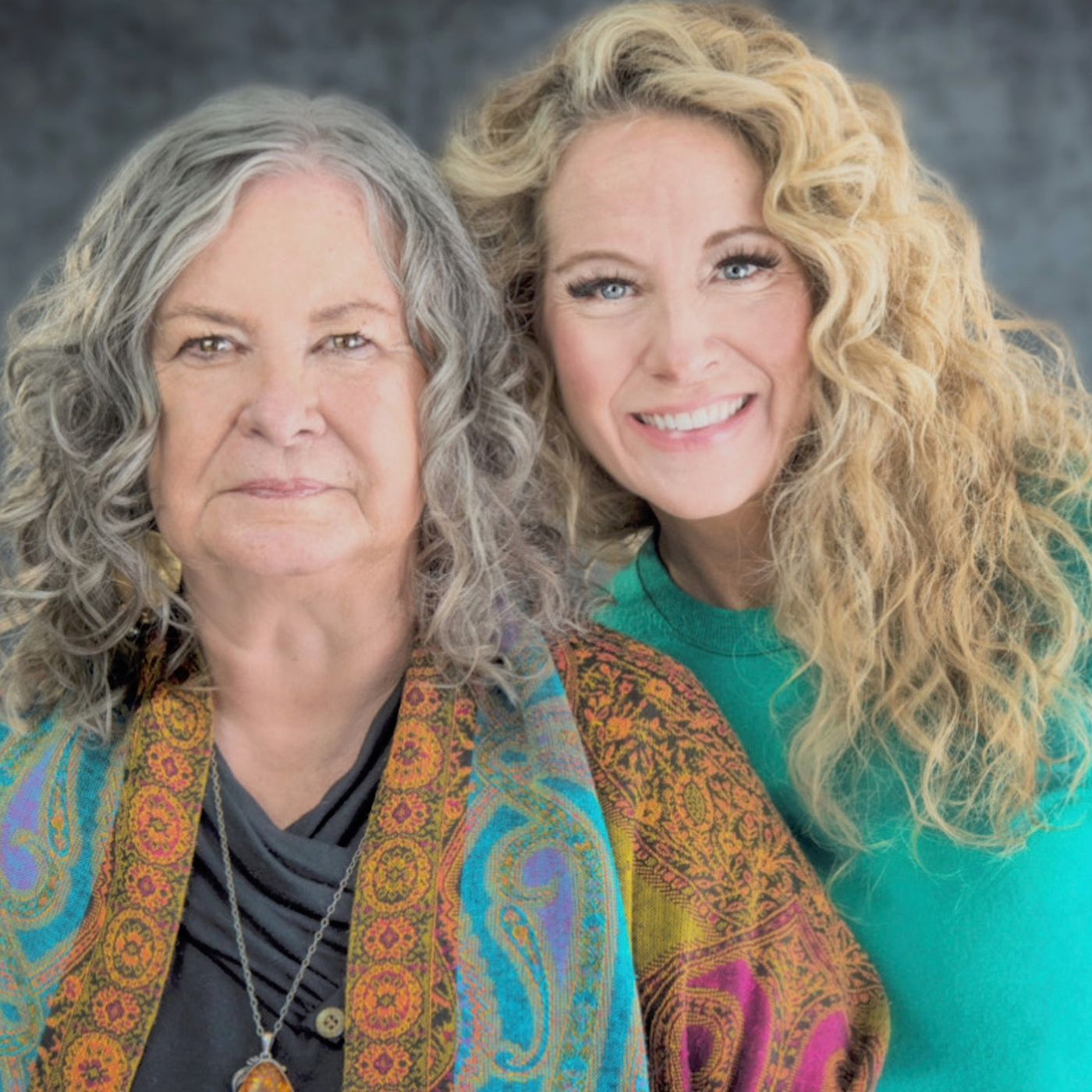
Psychic Teachers
Samantha Fey and Deb Bowen
Seeking Numina: The Sacred Places Podcast
Elyse Welles