
Mystical Mermaid Lounge
Dive deep beneath old currents in the Mystical Mermaid Lounge, where we shed limiting beliefs like ocean waves wash away driftwood. Together, we reclaim our power, rewrite our stories, and swim into new waters of healing, truth, and spiritual freedom. Come nurture your soul and rise with the tide.
🌊✨🧜🏼♀️
Mystical Mermaid Lounge
Gaslighting and Narcissistic Abuse with Dr. Stefanie Bennett
Use Left/Right to seek, Home/End to jump to start or end. Hold shift to jump forward or backward.
In this episode of Mystical Mermaid Lounge, Chloe Brown and Chione Star sit down with Dr. Stefanie Bennett, a transpersonal psychologist and author who explores the deeper dimensions of narcissistic abuse through depth psychology, spiritual science, and Aramaic linguistics.
Together, they unpack gaslighting, the differences between covert and overt narcissism, malignant narcissism, and why precise definitions matter when the word “narcissist” is often overused. Dr. Bennett explains why recovery can require more than talk therapy, including the role of somatic healing, spiritual integration, and reclaiming sovereignty and inner authority after trauma.
Learn more about Dr. Stefanie Bennett’s work, books, and sovereignty training at:
https://www.drstefaniebennett.com/
Shameless Promotions
Chloe Brown is the graphic artist behind all of the Mermaids’ delightfully whimsical branded reels, stories and picture posts on social. Contact her at MysticalMermaidLounge@yahoo.com for artistic consultation and design work.
Sponsorships
We do not advertise nor accept sponsorships so that your listening experience remains free of distractions. If you are as passionate as we are about supporting spiritual seekers, consider buying us a coffee at: https://buymeacoffee.com/mysticalmermaidlounge.
Please feel free to email us with positive and constructive ideas, questions or comments at MysticalMermaidLounge@Yahoo.com.
Thank you for listening! Please follow and rate/review if you love us. Blessed be.
Welcome to the Mystical Mermaid Mountain Podcast, a space where all spiritual speakers are honored and celebrated. This podcast was born from the journeys of your hosts, who have each faced growing dark night of this morning. But they've emerged with an unshakable belief in divine connection, cosmic inspiration, and her true life's calling. Join us on a journey of personal growth, transformation, and magical self-discovery. Your first co-host is Chloe Brown, a gifted intuitive empath and shadow work life coach. Your second co-host is Keoni Starr, an intuitive energy worker, an acclaimed past life regressionist. The Mystical Mermaid Lounge Podcast starts now.
Welcome And Guest Introduction
SPEAKER_02I'm so excited. Thank you for being here today. We have Dr. Stephanie Bennett with us. So excited to have you here. Welcome. Thank you so much for having me. It's a real delight. So I have Keoni here with us, my fabulous co-host.
SPEAKER_01Very happy to be here and happy to meet you. Dr. Steph, thank you.
Defining Narcissism And Its Types
SPEAKER_02So today I'd like to share Dr. Stephanie Bennett is a transpersonal psychologist, an educator, and an author who specializes in the deeper dimensions of narcissistic abuse. Through a unique synthesis of Aramaic, linguistics, spiritual science, and depth psychology, she helps others understand what she calls the spiritual anatomy of abuse and how harm imprints on the soul and the true healing requires both psychological insight and spiritual integration. Her work bridges ancient wisdom and modern recovery, offering a framework that empowers survivors to reclaim their inner authority and to rebuild a soul-centered foundation. So excited. Dr. Stephanie Bennett is passionate about educating individuals and professionals on the unseen layers of manipulation, trauma, and spiritual disorientation that often accompanies narcissistic dynamics. Wow. Who in this world cannot relate to a droplet of that intro?
SPEAKER_00We can all relate to narcissism. I think we're being inundated with the plethora of narcissists on the planet right now. I don't think we've ever had a period of time where there have been so many. So we've all come across them in one way, shape, or form.
SPEAKER_02So eloquently said. Yes. So if you don't mind, let's start at the beginning. What has your spiritual path looked like? And how did it lead you to this fabulousness that you are now?
SPEAKER_00Oh, that's so nice. Thank you. Well, I'll begin in childhood. I was always kind of a shy child, and I came in clairent. That was my main gift, also clairvoyant and clairsentient. So I had all of these sensitivities that I didn't really understand at the time. And I was kind of the odd kid. And it took me quite a while to really understand what was happening and who I was and how to really take these gifts and make them work for me. I went through a period of time after I was probably 19 where I turned them all off. I just couldn't, I couldn't blend in the world anymore. And I couldn't figure out how to be both things. So I kind of just tuned it out after some time. And I was in university at the time. And so it really did actually help me focus on my scholastics. And that was a really good time for me to, you know, focus on that. But I eventually came back to it years later wanting all of the gifts back because I realized, oh, I'm supposed to be using those things. So I pulled them back out, polished him off, and here we are.
SPEAKER_02So many people say that. Like, wait, I needed those.
SPEAKER_00Yeah, those are my gifts. Yeah, they say the the purpose of life is to find your gifts, and the mission in life is no, the purpose of life is to find your gifts. The mission in life is to use them. And so it's a two-part phenomenon, and the onus is always on us, you know, it's a it's an inside job.
SPEAKER_01Dr. Steph, did you come from a family where having clear audience or clair sentence was something that was readily recognized and or cultivated? Or was it just you kind of floundering trying to figure this thing out on your own?
SPEAKER_00It was really me floundering on my own. I I came from a you know German, Norwegian, Scandinavian background. We were Lutherans, you know, nothing. We went to church on Sunday, went to Bible study. It wasn't anything, you know, deeply spiritual. There were no practices by anybody in the family like that. My family was faithful on both sides, but there was nothing really for me to go, no one for me to really go talk to about here's what's happening for me. When I got to be a little bit older, I could speak to my mother about it. I basically threw myself into books. My first job was at a rare bookstore. And instead of getting money, I wanted books. I wanted to build a library. So I read all kinds of esoteric, all kinds of occult, Christian cosmological, ancient history, you know, the mystery school, evolution. And so that was really my background. So, I mean, for the most part, I was really self-taught.
SPEAKER_01I just am in awe at divine timing of your first job. That's amazing. Like, how does that fall into anyone's lap? So good for you. Thank you.
SPEAKER_02Yeah, my first job, I was trying to figure out how to smuggle more cookies out of that subway shop for my friends that night, not how many books can I read? So wow, that's amazing. Sounds like you were definitely always called to the spiritual world right out the boat.
SPEAKER_00Definitely, definitely. I remember being 12 years old and just knowing my path. You know, I always knew I was going to be a writer and I wanted to work with mystical subjects. I really wanted to be Clara Barton for the soul. Oh, go ahead. I I think you maybe.
SPEAKER_01Oh, that's so the first transpersonal psychologist, nursing soul fixer. How's that?
SPEAKER_03That's beautiful.
SPEAKER_02Thank you so much. Yeah, I love that. That was actually one of the questions. Did you always know you wanted to be here? That's one of the side questions I had. So I love that. As we know, narcissism is kind of a blanketed, overly used term, I feel like. I mean, it does seem to apply to you know, everybody, from me to our president, the tech billionaires, like you said, even to my mother-in-law. What is our current working definition of narcissism? And how do you see it impacting behavior on, I think you touched this a little bit, but on the subtle and the direct destructive is how it feels kind of ways. Okay.
Misuse Of Labels And Correct Diagnosis
Borderline vs Narcissistic Traits
SPEAKER_00Well, we have to be careful about how we use that word. It's being tossed around right now, like baseball at a fifth grade ball game. But there, there, in order to really follow the definition of narcissism, there's nine different symptoms that we have to, you need six of them in order to qualify as a narcissist. So, but before we really go there, I want to talk about the different kinds of narcissism. There are different kinds, and then there are different frameworks that they operate out of. So let's go through that really quickly. So, first of all, you have an overt narcissist, which is also called grandiose. We can recognize these in a moment. This is the person who walks into the room, needs to get noticed, needs to be admired, needs to be talked about, needs to be the focus of attention the entire time. Okay, we all can spot these people. The other kind is a covert or vulnerable narcissist. These people are a lot harder to spot. They operate kind of quietly, they're very covertly manipulative, they operate out of a like a quiet shell. You do not notice them, they don't actually want to draw attention to themselves in the same way that a grandiose does. They are far more chameleon-like. The third kind is a malignant narcissist, and this is actually the worst. So these work on a gradation. So you start at the bottom and then you work your way up in terms of intractability. So malignant narcissism is at the top. These are the people who are completely cut off from their sense of self, they no longer have any compassion, any empathy, any humanity left. These, generally speaking, fall into psychopath personality profiles. So that's kind of how that works. Now, additionally, the next layer is there are somatic narcissists and cerebral narcissists. So cerebral narcissists have to be the smartest person in the room. They have to know everything. You cannot tell them anything. They always have to be in control of their knowledge base. They're going to garner supply, narcissistic supply through showing you how smart they are, intelligent they are, what connected they are, et cetera, et cetera. The somatic narcissist is going to garner supply. I want to make a point here, too, that the word narcissism, the base of that word, the etymology is narc drugs. Okay. Well, what's their drug? They are a drug addict for supply. That's their supply. So the somatic narcissist is going to garner supply through their body, their physique, their looks, their it could also be, you know, their home, their boat, their whatever. They're gonna garner it through physicality. Now, there's no one type. One a narcissist is never just one type, they weave through these types, somatic and cerebral, as their supply chain changes. So each narcissist has a main type that they are, but they also have a subtype, so it can vacillate one to the other. So as they as they move through garnering supply, if they lose supply from their cerebral talents, they will move into a somatic phase, and vice versa. So oftentimes narcissists are diagnosed with manic depressive, but it is a faulty diagnosis. Now, they do look the same diagnostically, they do behave, there's very similar patterns here because there's an up and there's a down, and it goes on and on and on. Oftentimes, narcissists, when they lose supply, they suffer from narcissistic injury, or it can even be more traumatic and dramatic than that. And that's when they generally speaking fall into a deep, deep dark depression. They become, you know, they have suicidal ideation, they become suicidal, and that's when they generally show up in the doctor's office and they get diagnosed with manic depressive. This is what's actually happening. So it's important for us as you know, members of the public to really be aware and educated and knowledgeable about what it is that we're seeing. The other point I really want to make is that when we run into one type of narcissist, it's generally a very jarring experience in life, traumatic, disorienting, discombobulating. People end up wondering what just happened to me. Well, just because you recognize one type of narcissist, because you know, a lot of us have been married and divorced because we ended up married to a narcissist of one flavor or the other. We get divorced, we enter the dating scene again, and we run into a completely different type of narcissist, and we think, oh, we're in the safe zone because they don't look like that last person. Well, we're sadly mistaken. Oftentimes, we find out the this the a new way to discover, oh no, there's different. I mean, this is really a forced education in narcissism. Oh no, there's a different style of narcissist I never even knew about. So it's really important for me. I mean, I know there's a lot of people out there talking about narcissism and educating on this, and there's a lot of really good work going on, but there's also a lot of misconceptions, a lot of misnomers, a lot of lay people throwing terminology out there that they actually don't really understand. So I just want to make a point for everyone to take note that double check what you're hearing, make sure you're listening to people who have qualifications and education. And I don't mean they need to have a PhD, I mean they need to have education, qualifications that they actually do know what they're talking about. Because if we're going to be learning, we need to learn it the right way the first time. The Swiss have a saying. If you if you learn the hard way, the no, how does it go? If you you either learn the right way and you take one step, or you learn the hard way and you take two. Well, when you're dealing with narcissists, less is better because the more trauma we take on, the harder it is to come back out of it, you know, and that stuff really does matter. This path out of narcissistic abuse is it's it's fraught with difficulty.
SPEAKER_01How do you know, or maybe they converge or or overlap, but how would you know the difference in dealing with someone with borderline personality versus narcissistic behavioral symptoms? Because my experience and and research very high level, nothing in depth, but shows me that both engage in behaviors that include gaslighting and you're too sensitive, reverting the problem back to you as opposed to them being emotionally unintelligent andor pushing buttons. And why is it important to know the difference? And I'm asking this doctor stuff specifically for people who are looking for partners or maybe have children with some of the these symptomologies and knowing what kind of help to get them.
SPEAKER_00Well, there's good news and bad news here. So when you're dealing with a borderline personality disordered person, according to Sam Bachnan, and I agree with him, they are failed narcissists. So you get a lot of the same behaviors, however, it's not as narcissistic personality disorder is intractable. The recovery rate is slim to none. Borderline doesn't fall under that category. There's more to work with there. If you want to look at it from a spiritual perspective, too, the the dark forces that embed in the narcissist are not as embedded in somebody with borderline. So Sam Vacnan, Dr. Sam Vacnan, is the one that really goes deep into that piece. So if you want to learn more about borderline and the difference between borderline and narcissism, he is the the expert to go to.
SPEAKER_01Perfect. Thank you. And I didn't even think about that from intractability because I I tend to think of of narcissists as well as as people with with borderline personality as as very deeply hurt, wounded people. So I never thought about the fact that there may be no return for some of these people, which that's what the research shows.
Why We Get Pulled Into Narcissists’ Orbits
SPEAKER_00Yeah, yeah, the intractability part. We all have to hold out hope. You know, we're our humanity asks us to, but we also have to be realists, you know. So, you know, the thing to really remember, we have to we have to stand from a place of compassion. And from that place, we have to look at narcissism for what it really is, and even borderline for that matter. It's a trauma response. These people are deeply traumatized, and this is their way of surviving trauma. Oftentimes there are multiple traumas, there's layers of trauma, and that is just in this life. There, we also have to consider this next layer of you know, the karma that we bring with us when we come into this life from other lives that you know we have lived. So there's there's layers to that topic.
SPEAKER_02I read somewhere sometime, I wish I knew who where this reference came from, but that we all encompass narcissistic abilities and traits to some degree. And when I read that, it made me question where that overlap is and if it's factored in when it comes to mental health and narcissism. Does that make sense? Because I feel like they have to be, yeah. Anyway, I was just curious your thoughts there.
SPEAKER_00From what I understand, you're asking, I would have to qualify what you read as misinformation. So, but if we want to answer it just on its face, fair enough. We all have traits of quote narcissism in us, which means we have an ego. We have our capital I, our deepest self. Now, if you want to say we all have narcissistic tendencies, we need to define what that actually means. How are you using that word narcissism? On its face, I would have to answer that by simply saying that the human being in all of its layers is functional because it is in balance. All of the bodies are in balance, the willing, the feeling, and the thinking are in balance. If we're out of balance, yeah, we can develop narcissistic traits or tendencies, but that doesn't mean that we fall into the category of being a narcissist. And that's what I see when I'm looking out into this area of I don't know, the topic, people are throwing that word around like it means something that it actually doesn't. So, my my what I'm trying to say is let's actually be specific.
SPEAKER_02Be specific. It's important. That's a great answer because I think that is so hard sometimes to know where our resources, as far as what their expertise, expertise are or are not, because that is not always as transparent. So thank you for addressing that. That's a great one. What prompted you to create a healing services specifically for those who have experienced this traumatic narcissistic abuse? And how do you feel like this kind of trauma affects someone, not just emotionally, but spiritually, psychologically, and physically?
Somatic And Spiritual Healing Basics
SPEAKER_00Well, so it goes into my personal biography. And years ago, I was with a person who was a grandiose overt narcissist, and that was a very difficult situation to separate myself out of. And I did learn a lot about narcissism back then. Fast forward years later, I came into relationship with another person who was a different kind of narcissist, and it was a covert style, so it took me much longer to figure out what had happened. Because by the time you realize you're in a trap, it's too late. And then the question is what the hell just happened to me? How did I find myself here? And dear God, how am I going to extract myself safely? So it came through real life experience. Now, when I was in the phase of orienting to what just happened to me, the person I I've whose material I've found that really helped a lot was Sam Bachnon. Now that helps with a psychological layer. The next layer for me is the spiritual layer. And that's what I found extremely difficult, if not impossible, to find. So that's where I felt like, oh, this experience is finding me because this is my initiation into raising my spiritual mission. This is my peace that I'm here to offer, at least one of them. So I wanted to offer that piece. I wanted to create the information and the tools that I wanted to have to, you know, extract myself from that situation. And in addition, healing from narcissistic abuse is so difficult because most of the material only addresses the psychological level. Suffering from narcissistic abuse is a spiritual trauma. And so you absolutely have to address both of those pieces in order to fully heal. There's people that you know I talk to it's months later, years later, and they still haven't healed. And this is why, because they're not addressing the deeper layers of what's going on at the soul level. And that's what I really go into in, you know, deep deeply in my book, The Soul's Return. And I hope that that is my contribution to helping alleviate this type of excruciating pain that people are suffering from this abuse.
SPEAKER_02Absolutely. Why do you think that we allow ourselves to get pulled into those relationships? Because each and every one of us, I think, walking into a friendship or a relationship or even a coworker situation dynamic, we all walk into it knowing, you know, we don't want to be manipulated. We don't want to be gaslighted. We do want to be told that we are, you know, good and fabulous and all of these things, but somehow we still find ourselves in those situations. How do you think why that happens?
SPEAKER_00Well, I mean, there's a couple different layers to that, I suppose. The first is, you know, we're humans and we're social beings, and so we're drawn into relationship. And as a human, we always seem to give the other person the benefit of the doubt. I mean, that is the definition of humanity. At the core of our being is love. That is the greatest power and the most pleth, I don't know what the right word is, commanding force in the universe. It is our very soul. So it's it's in our nature, you know, to grant that to people. Now, when we're dealing with people who suffer from narcissistic personality disorder, that is not a safe response. So that is not a safe response. So I don't know if I don't know. Yeah, it's interesting because I guess let me talk really briefly about Aramaic uh language. In the Lord's Prayer, when the the saying is let us not fall into temptation, the correct translation is let us not, let us not falter in ourselves. God, the universe, life, whatever you want to call it, doesn't lure us into falling. We fall into it. So it's our own humanity that needs to rise to the occasion of what we're being asked. And then on another level, I have to believe that we choose the experiences that come to us. So these are mini-initiations or grand initiations. This is an opportunity that we are presented with to raise our game, to better ourselves, to ask ourselves the deeper questions. You know, we are not victims of this life. You know, we are empowered and we have to find that place of sovereignty inside of ourselves. That is the answer to narcissistic abuse, is taking back what was robbed under the pretense of false light and find our own light and shine that light. It's not about ruining anything, destroying anything, eradicating some, disembodying something. It is about embodying the light that we are at a higher level, deeper level, broader level, bigger level. That is the task.
SPEAKER_02Yeah, definitely. What's what do you believe is that spiritual or deeper subconscious hook that gets us? Do you think it is that the benefit of the doubt that they're stuck?
SPEAKER_00You know, a really good question that we can ask ourselves when confronted with situations like this is what is it in the other person that drew us in? What is it about them that answers us in Younggian terms? This is the animus. So what is it about them that we are drawn in by? Because that is the very thing that we actually want to bring out more of. And that takes it from a blame situation, somebody else's at fault situation, somebody else's bad. It takes it out of that realm, and we take ownership over our sovereignty. The answer is always ourselves.
SPEAKER_02So is that how we begin to recognize those trauma trauma patterns?
SPEAKER_00Well, I think yes, I think so. Because, you know, at Delphi in ancient Greece, there was the temple of Delphi and it had the saying, know thyself on it. And that is always, always the answer. So if we if we on the other hand, if we find ourselves confronted with multiple narcissists in our lifetime, you have to really start looking at karma. What is the karma? Okay. There's a bigger question there. And that that's kind of a broad topic. But at a certain point, you really kind of have to like figure out what your perspective is going to be. Where are we looking at this from? Are we looking at, you know, from five inches away, or are we going to go five miles back and look at it from there? So it really is a matter of where are we looking at the problem from, you know, because if all three of us are on a mountain and we're talking about, I don't know, something that we all see, we're each on different places on the mountain, we're going to have different vantage points, but we're all seeing the same thing, but it comes in perception-wise from a different lensing. So we're not all wrong and we're not all right. It's just a matter of percept perspective.
SPEAKER_02I love that you brought that up. That was actually something that was profound for me that I had somebody bring to my awareness. And it was a very simple, they took my cell phone and said, okay, what does it look like to you now? You know, face to one direction, and they're standing over here. So to me, it looked like a long rectangle. And to them, it was a very tiny, and it didn't mean anybody was wrong. And I think that shifted how I interacted and thought about every situation when I'm my best self moving forward. So I I love that you mentioned that. So, how do you recommend that we start to recognize those trauma patterns, especially, you know, as we tend to normalize them or internalize them? And sometimes we inherit them from our upbringing or other dynamics.
Aramaic Worldview And Mind‑Body‑Soul Unity
SPEAKER_00Well, that I mean, the for me, my answer to that is uh we have to do the spiritual work. So that can mean something different for everybody. I'm drawn to one tradition, you're drawn to another tradition. So, whatever tradition you're drawn to, try to go deeper into those subjects because we are a mini-universe. Our body is a microcosm of the cosmos, especially the heart. The heart is a supersensible or again that is the cosmos internalized, it's turned inside out. So if we learn about the cosmos, we're actually learning about ourselves. If we learn about ourselves, we're actually learning about the cosmos. So I always like to steer people to well, what calls you? We all know what calls us. And if you don't know, because a lot of people are covered up with life, go back to your childhood. Who was that little person? What were they drawn to? What were their dreams? What did they think about? What did they daydream about? Did they have invisible friends? I mean, we really have to uncover the layers of what has happened to us to get to the core of who we are and to honor whatever it is that's calling. I mean, some of my dearest friends are drawn to the Buddhist tradition. While I find it utterly fascinating because it's so rich and complex, it doesn't speak to me or the Hindu tradition. I'm more drawn to the Christian tradition, the ancient ancient tradition. So a lot of my study focuses around the Aramaic language, and the Aramaic language for me uncovers the deeper mystery of esoteric Christianity. Christianity was never intended to be a religion, it is a way of being in the world. And so I'm not here to say that my way is right and your way is wrong. I'm here to say find what calls to your soul.
SPEAKER_02I cannot love that enough. That is the premise as to why we have this mystical mermaid lounge right there.
SPEAKER_00Love it.
SPEAKER_02That is a mic drop moment. Like you've done it all. Just kidding. No, but when you're talking about that, that does kind of make me think of almost somatic healing, right? Kind of encompassing and believing. And I believe you do put a pretty strong emphasis on that. Could you tell our listeners first what that is, how you feel about that, how it links together? Kind of let us in on your brain as smidgen.
SPEAKER_00Yeah, I'm happy to. So somatic healing just basically means the body. So the word soma kind of means it's a cell. So it's the body healing. So Dr. Candace Purt was the first one to come to this space. Uh, she wrote Molecules of Emotion, and that book was groundbreaking in its day. More people have probably heard of Bruce Lipton. He has sort of carried the torch that she brought to a stage. And so, what this means is we have to get in touch with our body because our bodies hold our emotions. So the other person who actually does an outstanding job with this body of work is Bessel Vander Kolk. He wrote the book, The Body Keeps the Score. Yes, a lot of people have heard of him. For me, he's one of the gold standard. That book changed everything for me in terms of understanding why talk therapy doesn't necessarily work. You cannot assume that you're going to go into talk therapy and get over things. You have to incorporate the body. And then I would also argue you have to incorporate the soul. So the soul and the body have a deep connection, or what is known in the literature as the mind-body connection. They're not separated. So in ancient Aramaic or ancient Semitic worldview, there was no difference between the body and the soul. There was there were no words that separated these things. When Greek and Latin came in, especially the Greek, the body and the mind became split. They became separated. And then that got more reinforced with Descartes. So these splits are in the Western world because of the stream that the information came through. But if you go to ancient literature, those things don't exist. And that's where I'm finding in my research that Aramaic brings language to a psychological conversation in a way that English just doesn't inherently have. So it's extremely educational and healing, even to hear the language and to start thinking about psychology from a worldview that incorporates the body, the soul, and the spirit. The other thing, too, about Aramic that's interesting is that there's only one preposition. So there's no difference between in and out, you and me, there and here. It's all one grand field, or in language that we use today, the quantum field. Newest language in this in this conversation is plasma. So everything, everything is connected through plasma, the invisible, the invisible field that is proto-material that intersects with material, the material world. It's all one weaving tapestry of becomingness, is the way that Aramaic would phrase that.
SPEAKER_01I the Native Americans, North Americans, have long practiced soul retrieval, walking between worlds, looking at how people have or on a soul level have splintered and left themselves at traumatic times. If if we look at time and place as a construct, right, that we recognize in the 3D world. They seem to understand that splinters of our soul have impact on us in almost every whether it's the the our etheric level, our physical, somatic level, our mental level. And they seem to understand that when they did either a soul retrieval or some other type of process, that not only would they be applying healing energy to all of these different layers, but they would be reuniting the soul with itself, pulling it back from trauma. Why do you think, with your with with the knowledge that you've gained from the the time periods of Rene Descartes as an example, great mathematician, but clearly pushed the soul out of the picture to a certain extent? Why do you think the that esoteric portion of us was removed from our whole body equation? Because it's clear to me that we're coming back in realization that this is the missing piece. We can band-aid, we can set a bone, we can spend our life in electric convulsive therapy. But at the end of the day, if we have a spot missing in our souls, we need a different perspective.
SPEAKER_00It's a great topic. I don't want to go into it too much here, but I will mention that there are different types of soul fragmentation. So the soul can become fragmented for different reasons from different places. And each type of soul fragmentation requires a different practice to go retrieve it and bring it back to the soul level. So to answer your question, though, it ends up touching on the political. So a lot of these things became splintered off with the introduction of the Roman Catholic Church. Yeah. So a lot of these types of conversations don't happen in Eastern Orthodox religion. So that's kind of an interesting thing for people to notate. A lot of people are being drawn towards more of the Eastern Orthodox tradition right now and for a while now because these things have been so widely recognized. So if you go back to Christianity before Constantine, it is a different, it is a different Christianity.
SPEAKER_01He was a heavy editor, I understand.
SPEAKER_00Yes, he was.
SPEAKER_02So if hurt people hurt people, how do we identify our own tendencies, I guess?
SPEAKER_00Well, this really goes back to being self-aware and understanding our wounds and befriending them. You know. So I'll borrow from Aramaic again, but the concept of our inner life, there is a community of voices inside of each one of us. And they're all speaking from different places, from different times, from different perspectives. And so the task here in trauma work is to go in and find those inner voices and see who the who's hurt, what's the trauma, and to bring them out, hear what they have to say, what are they bringing to the table? What are they asking me to attend to? Address it with, generally speaking, love and trauma healing techniques and bring them into a closer alliance with balancing out with these other voices. So again, we come back to balance and harmony as well. If these inner voices are at war with each other or there's some kind of disharmony, the person is going to feel not quite at home, not quite right, exhausted, disoriented, like they're not really who they are, but they won't necessarily know why. But I find that this concept of looking in on who is the community of voices inside of me, and to make sure they all are given voice, you know, and a lot of those voices are trauma imprints, they are siphoned off into the unconscious, into the subconscious, and that's where soul uh work comes in. So that's my viewpoint on that.
SPEAKER_02Yeah, I I'm very grateful for that, for your viewpoints, and that really helped me understand. So I'll just open up a smidgen here. Most of our listeners know this, but I was in a 10-year relationship with the evolving narcissist, who was a few of those on your list. And, you know, almost 10 plus years later, after that experience, I'm still trying to regain bits and pieces of who I am. And I did the talk therapies, I did the group therapies, I did the niche specific therapies, I did the tap therapy, all of the things. And it wasn't until I joined a spiritual container where I was able to find that missing piece. Like I had done the pieces, I had done the legwork, I had asked myself the questions, but I was missing that final puzzle piece to really start deeply, deeply flushing everything from internal systems. And so your opinion is really so valuable and so important. And thank you for sharing that. Cause I think for me, at least in my own personal journey, it's allowed me to understand it wasn't necessarily wrong or right that I spent, you know, X amount of years on each therapist or psychologist or modality, that it was each one of those were needed to replace those pieces internally. So thank you for speaking to that. I think that was very, very powerful.
The Double Mirror And Reclaiming Life Force
SPEAKER_00Yeah, you're welcome. I'd like to add a caveat to that, and it's the concept of the double mirror. This is um the concept that the narcissist projects or reflects what you want to see while at the same time projecting their wounds onto you. So an important thing for us to all recognize and acknowledge and work with is that when we're healing from narcissistic abuse, it's very important to identify what is mine. We have to take stock. Is this mine? Because oftentimes in this situation with narcissistic abuse, it is not even ours. And so at that point, we have to disclaim it as ours, send it back to sender with all things attached, never to return. Okay, never to return. So when we're when we're taking stock of ourselves after these relationships, this double mirror concept is absolutely vital to understand that you know, make sure we're working with the right material. We can't, we can't die, we can't digest somebody else's trauma. And oftentimes with narcissistic abuse, it's not even ours. So it's about uncovering where is our light. Because what they're actually doing, they are not operating out of a connection with their true self. So we have a self and we have a soul. If we want to just overly simplify it, they are disconnect, these things are disconnected. So what they're doing is they're siphoning. Your life force from your will center to replace their inner light. So that's why oftentimes after you've been years in a relationship with these people, you literally are drained to the to the point that you have you're in bed or you're sick or both. You have no life force. They are literally siphoning your life force because they don't have their own to set to work with. So it's important to realize that you have to work with rebuilding that flame that is in your solar plexus before you start dismantling. Like, what are we taking apart today? Well, you got to like fill up the coffers first, fill yourself up with more life force, with more life, rebuild your will. And then from that point, you can start working with, you know, taking things apart. But it's it's really important to do things in the in the right order, right?
SPEAKER_02Absolutely, because we can't run before we learn how to crawl and then walk. I mean, we sure can try, but it might be a little painful and dangerous for everybody around us. Wow, that was snaps all around. Something I saw on your website that I have been so excited to ask you about, which we will share all of your website information in our show notes as well. And while I am thinking about it, I wrote it down. It is Dr. Stephanie Bennett with two N's, two Ts.com for the listeners.
SPEAKER_00An F with an F.
SPEAKER_02Yes. Sorry, one of my girlfriends is Stephanie and she spells it the same way you did. So yes, I forgot that is not the normal. It's S-T-E-F-A-N-I-E. Got you. Thank you. Thank you for saying that. So can I get you to talk about this soul chart? Like, yes. I am so excited. I started breaking a sweat. I just want to hear all about it.
Soul Charts And Spiritual Diagnostics
SPEAKER_00Oh my gosh, this is so exciting. So um, in preparing for this talk today, I had never heard of human design. So I did some looking into human design, and I'm actually fascinated by that too. So a lot of people have heard of human design, but getting your soul chart reading is different because it's a spiritual diagnostic tool. So what we're looking at is we're looking at the imprint that the stars had on your soul the moment you were born. So in order to do a soul chart reading, we take your birth time specifically, it has to be exact, your birth place, and your birthday. So what happens is there is a framework that is worked with. So I started incorporating it with working with people who are suffering from narcissistic abuse is because oftentimes this question of karma comes in. Why do I keep running into these people? Why did I have this horrifying experience? Well, it's really important, I think, to take an inventory of your soul before you start working on these types of topics. So, really, to better understand yourself is just a tool that a lot of people like using to get a good idea of who they are across the arc of their lifetimes. And so, my contribution to this soul chart reading is my intuitive gifts, my clair audience and clairsentience and clairvoyance comes into play as well with the reading. So the way I work is you get a full report so that you can go back and read it at any time. And a lot of times, what ends up happening as well is I ask for like a mantra for the soul. Like, what do they need right now? What can they work with? And that comes as a piece to it as well.
SPEAKER_02So yeah, that is pretty cool. After doing some digging, it sounded like you said it felt a little similar to human design and maybe astrology. But could you explain to me and help me understand? Sorry if you did and I missed it, how how this is the key piece, like you said, to understanding and translating this into real life. Okay.
SPEAKER_00So I will remark initially that it is different from human design because human design is basically you plug in people's information into like a computer program or some kind of a system and it spits out a report. This is different in the sense that my intuitive gifts come into play. And it also works with a cosmology that comes out of spiritual science. So it works from a different framework as well. So it's really intended to highlight your soul lessons. Like we all wonder why we are here. This is just a tool to utilize to help answer that for yourself. And I think too, when we better understand ourselves, we bring a deeper cognition to the table when we're doing our spiritual work. So it's really a tool of initiation as a spiritual diagnostic.
SPEAKER_02Thank you. Somehow I was missing a connection there. So thank you for revisiting that. I appreciate it. One of the other things that I saw on your website, sorry, I got a little excited, was that sovereign sovereignty training? And my soul immediately was like, well, what person in this planet doesn't need that?
unknownYeah.
SPEAKER_02So could you walk us through what that experience is like? What inspired it from your your end, and what kind of growth or support that I could expect if I were a part of it?
Sovereignty Training And Practices
SPEAKER_00So I love this question. So I developed sovereignty training just a few months ago out of the impulse to really give people tools that they need as they walk through this journey, whether they're dealing with narcissistic abuse or not. It's not, it's geared towards that, but that's not necessarily where you need to come from in order to embark on this journey. So sovereignty training is in lieu of like taking a course or a class, these are journaling exercises, mantras, spiritual exercises, things to really ignite your inner sovereignty. So it's basically mapped out over the course of however long you want to participate. So the choice is always up to you. There's different levels of sovereignty training. So it just depends. Like, what are you called to? What do you feel like you want to give to it? What do you want to get out of it? So I really geared it towards, you know, everybody can find a place that they want to fit in. It's pulled from life lessons out of depth psychology, ancient wisdom, esoteric tradition, transpersonal psychology. I mean, I'm really drawing from the wealth of my expertise and my research and my field and my own soul gifts into this offering for people. And I really hope it resonates because I I've never seen anything like it.
SPEAKER_02It's it's truly, I think, my own. Yeah, I definitely agree. I, from what I've heard, I should say, it sounds so exciting. And I love how it is so incredibly unique to the amazing skill sets and talents and knowledge that you do have and the gifts that you also provide to the table. That is really beautiful. And how much service work you do, that is so beautiful as well. I think that says a lot about you as an individual.
SPEAKER_00Thank you. Thank you. You know, this work is really all about coming home to yourself and finding inner sovereignty. It's so I titled my book, The Soul's Return, for that reason. This is all about coming home at deeper, bigger, wider levels. So the narcissistic abuse piece is how we get there. Not everybody has to walk through that gate, that initiation, but a lot of us have. And so it's a unique stain because it really incorporates darker forces in a way that we're not necessarily well equipped to recognize and deal with. And I hope that in my work I help people elucidate and begin to identify and diagnose. Because when we can correctly diagnose, we can correctly offer the right therapy. So a lot of times these toxic imprints are not addressed in the right or the best way, I should say the best way, that helps somebody incarnate at a deeper level into who they actually are.
SPEAKER_01In your experience, what is the primary reason we give our sovereignty away? Or maybe we never claim it?
SPEAKER_00Maybe we never claim it. Why do we give our sovereignty away? Well, I honestly think that fear is a really potent impulse in this world. And so a lot of us are grappling with fear from all of its shades. You know, some of us want inclusion, others want, you know, the house, others want relationship. It doesn't matter what we want. There's some kind of fear embedded into this overarching structure that's called, you know, society. Part of where my work is taking me now is to in is into out of the narcissistic abuse from an interpersonal place, but to the state, the overarching power structures of what we're governed by. And those systems are designed to divorce us from ourselves through fear. So I think that overcoming fear is a really important piece. There's a psychologist, his name is Dr. Robert Sardello, and he wrote an absolute gorgeous book called Free the Soul from Fear. And it is a beautiful contribution to this question. You know, he really speaks to not just facing fear, but meeting it with courage. Meeting it with courage over and over and over again. And once we can free our soul from fear, we find that inner sovereignty that is our core identity.
SPEAKER_02Hopper Roach taught me fear is face everything and rise. And that really helped transition the way I thought of it. That's great too. I wanted to ask who needs to seek your services? Because to me, it's like who doesn't? So, in your perspective, I mean, I see on your website as well for the for the listeners, everything is here. There's some workbooks, there's some all sorts of things, but who do you think would be the ideal client or customer or person to experience this sovereignty training?
SPEAKER_00Generally speaking, my clientele are people who are coming out of narcissistic abuse situations and they have some deeper call to other things have not worked. This looks like it could work for me. So, as part of that contribution, I have written The Soul's Return, and I also wrote a companion manual for it. It's basically journaling. I mean, if you want to work with yourself, not everybody wants to work with a therapist. If you want to work on your own or as a complement to working with the therapist, that's there too. I have other different types of workbooks with the same idea in mind. This is a full-bodied offering of what I'm trying to bring to people to serve. And that is my mission is to serve. So I I really think that I'm drawn to working with people who have a deep spiritual call on their life, and that's where I am most comfortable. But I'm obviously capable of working with anybody, but I really have a heart for people coming out of narcissistic abuse. I understand it implicitly and explicitly. I've been there, done that, I've found my way out, and I want to turn around and help other people do the same.
Recovery As Spiral And Timelines
SPEAKER_02May I ask your opinion on one other thing? I it's not in here. From your experience and your knowledge and your expertise, which in my opinion is profound. You spoke to how to find yourself and how to rebuild. And you've referenced some phenomenal references. One of the things I think you said, excuse me, this might have been a previous interview this morning, but it came to me, and I was thinking the recovery journey, right? And how that looks or should look, I think, is where we get stuck. And I think that's where the ultimate premise is of this question is what do you say to those people, you know, on a bad day, maybe even me, for example, you know, 10 years ago I dealt with this for 10 years. And now all these years later, and all of the legwork, no matter what it looks like, we're all still going to have those rough days. But maybe in that moment we don't recognize it. And that's the day that this person reaches out to you. You know, I had one therapist, talk therapist, tell me, I think she was a psychologist, and she told me that, you know, for every one month or every one year, excuse me, of trauma that I went through with that narcissist, it could take on average five to seven, some people 10 years to recover and recoup from that one year. And I think that's where the premise of this question is coming from is in your experience, it it sounds very doable. I think that's ultimately your message, is there's absolutely a way. But what would you say to the person who thinks that they're not doing it quick enough or they're not doing it the right way as far as recovery?
SPEAKER_00Well, recovery is not linear, recovery is a spiral. And so if we think about it in this way, there's no race to the finish line. And additionally, the premise we could we could caveat that by saying that not everybody responds to trauma in the same way. One thing may traumatize me, but it may not traumatize you. So everybody has different trauma responses. So I guess the the bottom line is that we are going to re-enter the trauma zone and process it at different layers on our way up. It's not from here to there, it's from here up. And at the same time, you have the the inversion of that going down. So we're going higher up into ourself and we're going further down into ourself concurrently. These things work together, and so that's probably the way that that I would answer that.
SPEAKER_02I appreciate that and love that because I think sometimes we can get caught off, caught up in comparing ourselves and saying, you know, it's been X many years. My friend says I should be over it by now, but I, you know, so thank you for that. Because comparison is evil in itself on our own self-judgment, right? Because all it does is I believe it is just created to just tear us down.
SPEAKER_00Yeah, you're never gonna stack up, you know. And the other thing too is there's always somebody ahead of you, and there's always somebody behind you. Like you are in the perfect place, you're not supposed to be where they are or where they are, you're supposed to be right there.
SPEAKER_02Love that, and finally, unless there's anything else, I really want to hear about this book. Yes, uh-huh. You mentioned the soul's return. I see it on your website, but could you please tell us a lot about it? Yes, okay.
The Soul’s Return Book And Tools
SPEAKER_00So The Soul's Return is all about the spiritual anatomy of narcissistic abuse, and there's a healing guide to reclaiming your inner freedom. The exercises go throughout. So by the time you finish the book, you will have gone through all of the exercises. So, in this book, I go into great detail the mechanics of how the dark forces are working through the narcissist and how they infect you. Narcissistic abuse is a spiritual plague, it operates like a virus. So you actually, as the target, become infected as well. And so there needs to be the correct therapeutic and curative for extracting it and healing the wound that it entered through. And that's an important piece. These forces enter through our wounds, through our fractures, through our splinters. That's why it's so important to do the work and to heal ourselves. So I go into a lot of different graphs for people. I love a good graph. So these graphs are taking the psychological component and giving the correlate to the spiritual component so you can actually see how this is operating on these different levels. So you don't have to go read a psychological book and then a spiritual book. It's all in here and it goes together. So we go through the whole anatomy of what's going on in that other person, and then into how it affects you and a healing guide throughout. So there's visualization, somatic exercises, journaling exercises, mantras, etc. The workbook goes deeper into that work, but this book ends with I don't know, a celebration of life because we talk about the era, the new age that we're moving into, and we're all called to be a higher version of ourselves in order to enter this new age. So it really does have a great ending, and I really hope that it helps people. I have to mention Dr. Douglas Gabriel wrote the foreword from my book, and he is a giant in his field and just as a human being. And he wrote that it is the best book on spiritual psychology he has ever read, and that's saying a lot. So big thanks to him for participating in my project. It was a really big moment of wonderfulness for me.
SPEAKER_02You should definitely be so proud of yourself. This, your website, I think I got stuck on it for hours. There's just so many beautiful things to just learn and and and services that you have, you know, like you said, the journal, the workbook, and the book, just for one of them. But you also have many other books that you have published.
SPEAKER_00I do. And I also made quite a few sets of oracle cards or altar cards, however, you want to work with them. One of them is geared towards healing from narcissistic abuse. Others are just, you know, beautiful mantras. There's another one for pregnant mothers, so working with uh the child in the womb. Um I also want to mention, too, I'm actually really excited about this. So I have two upcoming books. One is called Breath Divided, and it is it goes into how narcissism wounds the soul, and it's a synthesis of Aramaic wisdom with spiritual science, and it kind of is the same model as the soul's return, going through the diagnostics and then the curative. And then the book after that is called Word to Womb. It's about Mary Magdalene and the spiritual tradition that she brings to the table. So many of us are feeling her call right now, and I really wanted to add my voice to this. It's a synthesis of deep esoteric tradition with me as an oracle, and there's images throughout. So it's really a pairing of visual with poetry, with scholastics. It's an absolutely beautiful piece of my soul that I put into paper for people. And I'm so excited. I also created an ultra card set that matches with it, and then a workbook for that as well. And it's basically walking you through an initiation because really all of this narcissism work is an it's a gate that we enter in order to get to the deeper levels of the temple. And so that's my map of how my work is coming through and what the offering is.
SPEAKER_01With all of us collectively, I'll say worldwide, what the heck? Not that I know what actually every single culture and civilization is going through in the world, but it's clear there's a shift in consciousness. We're having these discussions on spiritual psychology, where, as we had talked about back from Constantine's time, we were essentially severed from a major portion of ourselves, with so many of us advancing or expanding in consciousness and just awareness of who we are and and the humanistic position that we could be taking. How did how did we elect a person who is so clearly not well?
SPEAKER_00Okay, so I'm gonna answer that, maybe not in the way you expected, but what I will say is that the political structure. Is governed by forces that aren't necessarily connected to voting. That might be surprising for some people, but there is research to show that that is true. And in addition to that, I really do think that people who are drawn into that work may come to that work as functional human beings. But being a participant in that matrix forces the soul to sever from itself and you end up answering to the powers that be. So it almost doesn't matter who enters that seat, they will undergo the same quote initiation. And it is to come demand uh allegiance to forces outside of the will of the American people.
SPEAKER_01It's very interesting. So we almost undergo a soul-level humanism to transform to nihilism through that specific process.
State‑Level Narcissism And Collective Fear
SPEAKER_00Yes, and you know, this has really been on my mind a lot recently, especially with what's going on in Gaza. It's absolutely heartbreaking to me to see what we're witnessing. And that's why this question of state-level narcissism is really on my mind. I've written a couple different articles about it, and it deeply affects my mind and my heart and my soul at this juncture in time, especially in light of things that have happened this week. So I really do think that we all need to be aware that uh, you know, the political sphere is something that's dangerous for people to touch, especially if they're in service. But I think it's important to take note that the political, the cultural, and then oh, there's a third one I'm forgetting, but these these realms of society, there's a threefoldness to society. And when these things are inverted or turned on their heads, they end up being weapons against the people. We need to move into a society that is formed out of the integrity of these frameworks, and that is done by people who are awake. I don't think it can happen inside the structure of a political mountain that we we call countries. It has to be through pockets of people who subscribe to being intentional and awake and to compassion and humanity.
SPEAKER_01I I appreciate your honesty on that and agree that it it's it's almost like when you say someone in the family is ill, the whole family is ill. So is it the chicken or egg? Is this symptomology of what's actually going on collectively? Or sorry about that, or the other way around. So I appreciate, I appreciate your thoughts there.
SPEAKER_02It's a breath of fresh air to hear somebody say essentially my belief system on that answer. So I appreciate your authenticity on that because it's not, as you said, the expected answer. I think some people, not that anybody goes into it with an expectation, especially knowing Keone and myself, I know we didn't, but you know, societal standards. So I really appreciate that candidness and vulnerability in saying that because I think there's a ton of vulnerability in speaking that truth. There is, yeah. Thank you for acknowledging that. Thank you for sharing.
SPEAKER_00Yeah, I've been to Palestine and it changed my life. It truly changed my life. I studied international relations for my master's degree, and everything I had studied went into the dumpster when I went there, changed my entire worldview. And my studies from that point forward became more in with they became truer, I guess.
SPEAKER_01More lied to who you were on assault level. Yeah, that the fact that we can look at that type of atrocity, regardless of our political stance, and say that's okay, or they started it is not okay on any level. And it's not just with that specific conflict, it goes to the Ukraine, it goes to South Africa and some of the countries that are experiencing things there.
SPEAKER_00So yeah, so true. So in that field of study, one of the first things they teach you is how do you get away with these things? Well, you have to dehumanize the quote other side first. And if you really look at those campaigns from, you know, with an objective viewpoint and a critical eye, it's very well executed.
SPEAKER_01To a T. It it is, it feels like a very nightmarish cyclical story coming back from Nazi Germany coming to the United States to learn how to dehumanize the Jewish population based on the way we treated our slaves to then be implemented there to now coming back full circle and touching a variety of other countries along the way.
SPEAKER_00The broader perspective of that is we're in the age of what some people call the second coming in the etheric, quote, in the clouds. Now, whether you subscribe to that or not, it is irrelevant. The idea is that the forces that are coming in are being countered, and that's why we're seeing heightened views of evil manifesting in ways that in our lifetimes we've never seen these things play out. So it's a balance-counterbalance situation.
SPEAKER_01That's a good point because often, and you probably saw the look on my face for a second when you said that, was just like, oh no, we're not gonna go like extremist Christian MAGA here, right? But you're right, it that that second coming and that heightening of extremism on all ends can't better be labeled other than a second coming, and all of us being forced to face what this means for humanity and about who we actually are. But I have to let you go.
SPEAKER_00Thank you so much for having me. This has been a delightful conversation. I'm really grateful to both of you for the invitation and for having me and for having such an open conversation. Do you have a mantra you could leave with us? Yes, I actually do. Thank you for asking. To walk through the fire of narcissistic abuse is not merely to survive it, it is a soul-level summons. It asks of you a quiet courage and a sacred reverence, ushering the soul's return. So beautiful. Do you ever sleep? I do.
SPEAKER_01Oh, good. She's she's beautiful, she's intelligent, she's well spoken. I would think right, you're like the fact of intimidating, but everything about probably older than her. Are you adopting an older sister? I'm 55. Yes, I'm adopting. Yes, I'm adopting. You can be my sister. I'm 57, so I knew I was older than her.
SPEAKER_00Yeah, yeah. But we're looking good, girl. Thank you so much. Yeah, you know, we're finding our soul families right now. It's a wonderful experience. Yes, it is.
SPEAKER_01Synchronicity is alive, it is alive and divine, divine timing. Thank you, my friend. Thank you, ladies.
Closing Mantra And Support Links
SPEAKER_02Thank you. Bye-bye. Have a great day. Bye. Thanks for diving into the depths with us today. If you enjoyed this episode, show your support at buymeacoffee.com forward slash mystical mermaid lounge, as every little ripple helps keep the magic flowing. Would you like some more deep soul yearning conversations? Well, then swim on over to our sister podcast, Past Life's Cafe, where Keone deep dives into those past life experiences. Also, we'd love to hear from you. Please don't forget to rate and review and drop your feedback and comments at our website, Mystical Mermaid Lounge.com. Thank you again so much. And don't forget to catch us at the next high tide. Bye bye.


Podcasts we love
Check out these other fine podcasts recommended by us, not an algorithm.

The Magick Kitchen Podcast
Leandra Witchwood, Elyse Welles
Opening The Door
Haley Bea.jpg)
Enlightened Empaths
Samantha Fey and Denise Correll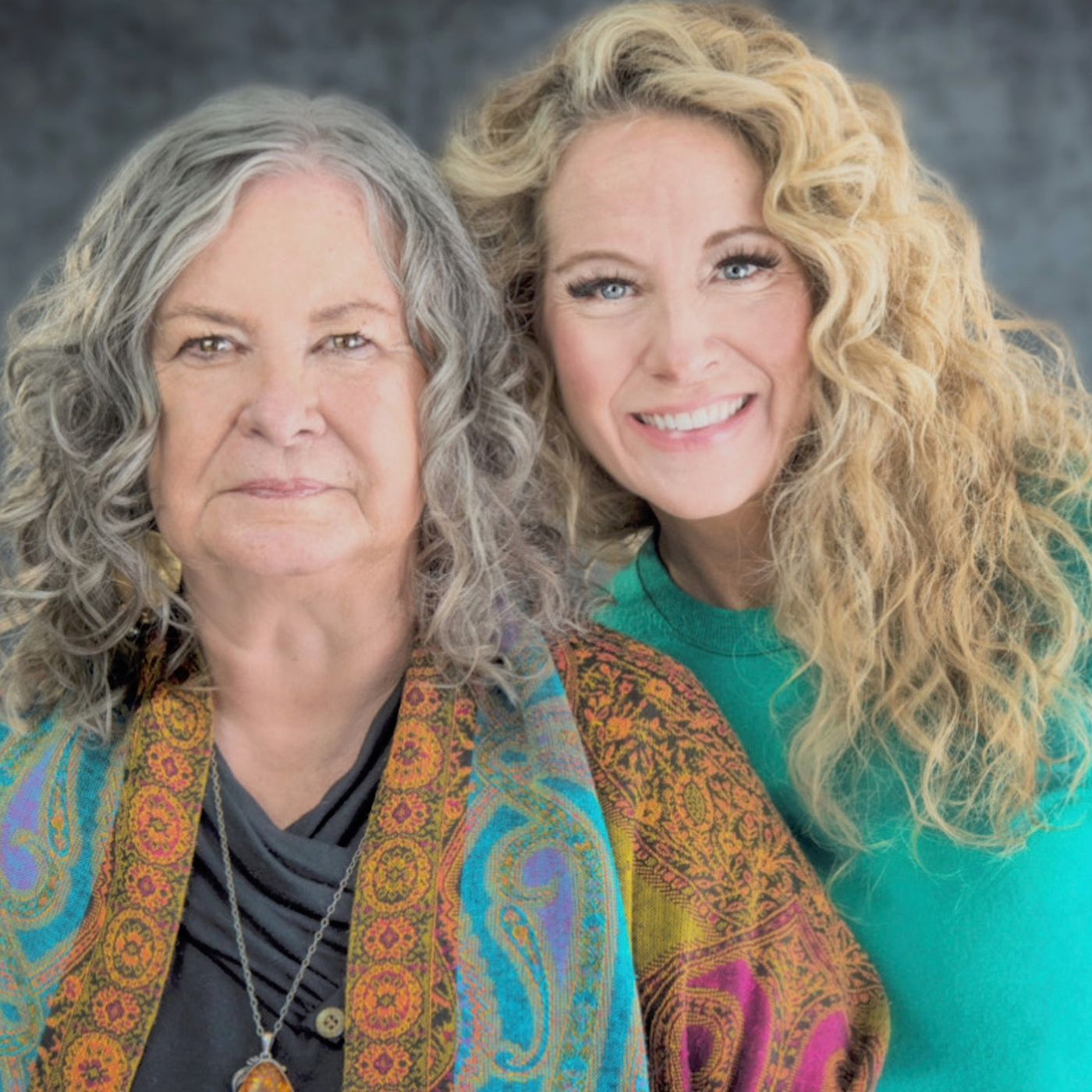
Psychic Teachers
Samantha Fey and Deb Bowen
Seeking Numina: The Sacred Places Podcast
Elyse Welles