The American Masculinity Podcast
Want to become a better man? American Masculinity is a self improvement for men podcast helping you master personal development, men's mental health, and leadership.
Hosted by Timothy Wienecke, licensed psychotherapist, Air Force veteran, and award-winning men's advocate. Each episode delivers expert insight and practical tools for men's self improvement.
Whether you're navigating fatherhood, building confidence in relationships, or working on personal growth, you'll find grounded conversations on masculinity, trauma recovery, growth mindset, and what it means to show up as a better partner, father, and leader.
No yelling. No clichés. Just thoughtful motivation rooted in psychology and real-world experience. Perfect for men seeking mental fitness, self-discipline, and meaningful life skills.
New episodes drop weekly with actionable advice on men's wellness, stress management, and becoming a better man. Subscribe now and join thousands of men committed to personal development and positive change.
The American Masculinity Podcast
MeToo's Impact on Men - A Conversation About Accountability and Shame (MeToo Part 3)
Use Left/Right to seek, Home/End to jump to start or end. Hold shift to jump forward or backward.
What happens to men’s mental health after #MeToo—once the headlines fade and you’re left with shame, confusion, and a culture you didn’t choose but still live in?
In this final part of the Men and #MeToo series, licensed therapist and veteran Tim Wienecke sits down with advocate Michael Brasher for an unhurried conversation about the “water” men were raised in: intergenerational violence, confusing sexual scripts, status pressure, and the stories that keep “good guys” from seeing the harm they cause.
Together they unpack why so many men feel attacked or shut down when they hear terms like #MeToo, “rape culture,” or “toxic masculinity”—and how those reactions are often about fear, shame, and status threat, not about being hopelessly broken. They also talk about young men’s dating anxiety, the mentorship gap, and what it takes to build a version of masculinity that is both strong and deeply safe for others.
The episode ends with something rare: an explicit on-air fact-check. Tim revisits several overstatements from the conversation and corrects them using current research on sexual assault, harassment, unwanted consensual sex, and male survivors—modeling how men can be emotionally honest and factually precise at the same time.
In this episode, you’ll learn:
- How intergenerational violence and family secrecy shape men’s addictions, relationships, and blind spots
- Why the “good men vs. bad men” story blocks accountability and repair
- What the latest data say about sexual assault, harassment, and unwanted consensual sex for both women and men
- How shame, empathy, and self-kindness interact when men try to face their own harm-doing
- Why status threat feels like a physical reaction in men’s bodies—and how to ride it instead of exploding or shutting down
Parts 1 and 2 of this series give you practical tools:
- Part 1: What to do when you’re accused
- Part 2: How men can support survivors without walking on eggshells
This conversation (Part 3) gives you the cultural context and emotional landscape those tools sit inside.
🔗 Full fact-check, references, and show notes:
www.EmpoweredChangeCE.com/american-masculinity
The American Masculinity Podcast™ is hosted by Timothy Wienecke — licensed psychotherapist, Air Force veteran, and men’s advocate.
Real conversations about masculinity, mental health, growth, and how men can show up better — as partners, leaders, and friends.
We focus on grounded tools, not yelling or clichés. If you have questions or want a tool for something you're wrestling with, leave a comment or send a message — your feedback shapes what we build next.
Note: While this doesn’t replace therapy, it might help you notice something worth exploring.
Welcome to the American Masculinity Podcast. Today we're finishing our three part series of Men and Me. We're stepping back into the culture and blindspots we hold, and what men can and are doing to improve. Oh, I've been really abusive to women in relationships. I've done it like a college educated guy. I've done it like a white guy. I've done it like a middle class guy. So in other words, I had never broken the law. We have a rape culture as a country, and we are certainly responsible for our end of it. I think just handing it back to men, saying it's all on you with no guidance isn't useful. Sexual violence isn't a random stranger. It's two people in a love relationship where their power dynamic is fraught. Parts wanted to give practical tools what to do when you're accused, and how to support survivors while staying home. This conversation is different. It's two advocates with nearly 30 years of experience comparing notes on the messy and honest parts of the experience. No talking points. I'm lucky to have Michael Brasher for this. He's an advocate with over a decade of experience fighting interpersonal violence, the kind that helps men see the water we swim in without shaming us out of the room. These are hard conversations, and I've been nervous about this series because so many people on either side take issue. It was wonderful having Michael here to help me articulate these topics so well. Let's get into it. Thanks so much for coming on. Yeah, absolutely. And my pleasure. I'm excited about it. Yeah, I was really excited when Sybil connected us. And it's just nice to hear another guy with the advocacy background to talk about these things with, like we talked about. I'm really nervous a little bit to have a public conversation about some of these things without having braced by another guy. Who cares? Yeah. So it means the world that you're here? Yeah, absolutely. No, I'm I'm grateful. And I feel that like that energetic of like, oh, it's so hard task. And, right. I say to my son all the time, many hands make light work. And that applies for like emotional struggles to write. It's like, let's let's try this together. So anybody who's been listening to the podcast knows a little bit about my background. And I have six years of advocacy working against interpersonal violence and ten years working clinically with guys to try to help men be better just in themselves, but also by reducing some of that other violence and other patterns. And tell us a bit about your background, so that people know who is having this conversation. My life changed pretty significantly when I was taking a gap year from graduate school, and I found myself working at a domestic violence shelter. As soon as I started that job, I was facilitating a therapeutic art program for kids and their moms, and my just whole consciousness got blown wide open about just sort of like the scope of the crisis of domestic abuse in our communities. It really began to immediately kind of wake me up and rearrange my consciousness. And I think part of it was it helped me to understand that the story of men's violence against women in particular, is really like my family's story. While my dad hadn't, you know, used violence against my mom, she had survived really prolific amounts of violence, normal everyday violence. I believe in a lot of ways from men in her community growing up, her and her sisters, her mom growing up in Decatur, Georgia, just experienced a tremendous amount of violence. My sister experienced a lot of violence. And then the truth is right, like my dad experience a lot of violence from his dad. And my brothers experienced violence from my dad. And so by working at this domestic violence shelter, all of the sudden, these big questions I had about my very own life and identity and pain and why I was addicted and drinking and why I was miserable and and repeating like self-destructive habits in romantic relationships. All of a sudden, by working at the shelter, I was like, oh, this crisis is the story of my family, but not a member in my family knows that. But it's clear to me as day. But I just sitting here working and listening to these women's stories every day. Yeah, I'd say that that was a lot of my experience studying behavioral health and then working in that advocacy. It's it's impossible not to see the parents around you and see how it touches your life. Yeah. And what I found is most guys doing this work see it in their family. And it starts from a place of, I'm curious, I'm here for somebody else. This is where I see it touch my life. Now I'm passionately engaged in that. And so how long ago was that that that transition happened for you where this started to be a focus of your work? About 2011, I started working at the shelter and then by I'd say 2012, 2013, the women that run that shelter came to me and said, hey, Michael, we want to start an experimental men's education program, which is premised on the question of what would it take to get men in this community to take responsibility for ending domestic abuse? And so I started doing that program. Which way it changed my life on a much more profound level, because I found out how implicated I was. And I didn't know that in a lot of the violence. And so that just kind of set me off on this whole men's work journey of doing intervention prevention work at a lot of different levels and scales. Yeah, really, ever since then. So since 2011. Yeah. So coming up on 15 years almost. Yeah. Yeah. I like how our timing lines up a little bit. My, my start was 2009 doing direct service for people that were survivors of sexual assault. But then just like you a few years later, I got tapped to do the bystander prevention trainings where, you know, I joke a lot about it was the best job ever had convincing a bunch of women to punch rapists. It's a great gig. Yeah, but that's where it all started. And then it just kind of once you're paying attention, it's hard not to see. Yeah, yeah, 100%. So for me, I remember when MeToo kicked off. Right. Did this conversation is kind of bringing forward what's happening with me too and men now. Yeah. But I think it's important to acknowledge where it started. And for me, I remember being very excited about it. Like I was a little afraid. I think like most men, if they're being honest, were. But it was nice to see a push, people getting, getting their voices out, more men being made aware, more perpetrators being held, some kind of accountable. Yeah. Right. Yeah. How was that for you when you were doing the work? So, so for me, I started going through this program, I don't know, 2000, 13, 14. I'm going to this program. When I started going to this men's program, I thought the men who need to be dealt with are out there, like there's bad guys and there's good guys, and luckily I'm a good guy. That was a big story that live for me, and I really got that perception busted up and I realized like, oh, that's such a false dichotomy that protects the system, that allows violence, men's violence to be sustainable. And so what I learned was like, oh, I've been really abusive to women in relationships. I've done it like a college educated guy. I've done it like a white guy. I've done it like a middle class guy. So in other words, I had never broken the law, you know? And in most of the cases, I fell wronged by the women in my life and everybody was on my side. They were like, oh, yeah, she was she was in the wrong. She was mistreating you. But the more that. I was reaching for that control. Yeah, the more that I really learned about. For me, how I understand it is like patriarchal violence, the system of systematic sexism, male supremacy for me, structure, society. I'm. So I'm getting to me too, you know for me in that what I learned was like the way I was socialized to relate to sex and intimacy with women was it is predatory and norms, the norms themselves that structure men's attraction to courtship with women. For me, I thought I was being normal. Everybody thought I was being normal. I was lifted up. Nobody ever said, oh, that's problematic. I came to understand like they were really predatory. And so I had to go through a big humbling reckoning that I like. I have perpetrated harm in my community is not a legal harm, normal, everyday harm that the kind that nobody calls harm. And so I think for me, by the time that MeToo came around for me, I was kind of like this relief because a part of my mission has been to get with men and say, like, yo, guys, we're being convinced to do bad things and feel fine about it. And so when there became a cultural movement that said, hey, tons of guys do bad things and they think it's fine, I was like, come on y'all, let's go. We need this so bad. So, so for me, there was a lot of relief because it was fuel onto the movement that was already changing my life. Yeah. So you your work really got validated in that? Yeah. I think. So. Yeah. I think that's the one of the things that, like Richard Reeves talks about in his men's work is the systems that we have built when it comes to men's problems and men's behavior aren't discussed. All of the things that men do or discussed on a personal responsibility level, which that exists to. Right. Like, I don't want to discount personal accountability in any way, shape or form. Yeah, but when we're not aware of the systems we're living in, it's like a fish in water. I was just talking with a friend about this last night, talking about, you know, learning to date in the early 2000 as a man, where you were a good guy. If you kept asking where now that I'm back in kind of the dating pool and dating women in their 40s, occasionally there will be a woman who, like, pulls back and gives me physical cues that we're not pursuing intimacy and then gets frustrated that it don't push through those that like lack of consent culture that existed when we were learning how to date. And I think the consent culture is one of the positive things that I'm seeing come out of me, too, right? People are more aware of enthusiastic consent and that people are more aware of, you know, everybody needs to be on board and everybody needs to be on board continuously for any kind of engagement. Was there ever a point through the process of MeToo and the way that it got picked up in the heat of it, that you became uncomfortable? This is what I think is uncomfortable. I think it's uncomfortable to understand how much sexual violence is wrapped up into everyday norms and our sense of self. I think it's scary. We don't look at sexual violence and what real sexual violence is. We only look at a caricature of it. We look at a joke of it. Sexual violence isn't a random stranger, it's a person. It's two people in a love relationship where their power dynamic is fraught. And what you said, there's so many cultural incentives that are constantly bombarding us as men with messages that like, it's romantic, it's legitimate, it's desirable to be a boundary crusher to be a boundary overcomer. And so I do like what I want to say is it's uncomfortable to look at what real sexual violence is. I'm using that word in a generic sense. Like, I don't mean like choking somebody. I mean just sexual violence. I mean, like, not me only caring about what I want in the kind of not caring what the other person wants. It is uncomfortable to look at how it really happens, and to find myself in the mirror. I do think that that's uncomfortable in terms of, you know, that. So that's work I've had to do. I'm happy to, on this podcast to talk about my own journey of like learning how to be willing to see what I didn't want to see there. But I just think, you know, in terms of MeToo, I think the only thing that scared me about it and made me feel sad was the percentage of men who were not open to having their paradigm imploded, because one of the big takeaways for me, from some really pivotal moments in MeToo was people saying like, well, is that sexual abuse? Every woman I know would have been sexually abused. And I want to say, brother, that's correct. Ding ding. That, that that would be the scary news. And so many people, they would get to that point and say like so that just proves this whole movement. It's extreme on like, does it or do we live in a rape culture? And the data shows me that we live in a rape culture. Yeah, I think I think for me, I'm very much in alignment with all of that, the the rape culture and how the, the kindness I give to other guys is the, the idea that the loss of privilege feels like subjugation. Totally. Right. Having to look at the water you've been swimming in and see it as uncomfortable is terrifying. Yeah, yeah. And I think the too many powerful men continue to get away with bad behavior, and the frustration and anger at them gives out of proportion, responds to other men's mistakes. And that's what I started to see that, that started to make me uncomfortable. Was that there there was never. And it makes a lot of sense right, that the, the overall push that every person that's accused of anything we're going to treat like a rapist, that made it hard to have a conversation with some guys about it 100%. 100%. And one thing I feel aware of, so, so like a part of work I'm interested in is anti-racist work. I'm using this by way of, proxy and one thing I'm always really clear on is in a context of impunity, the movement for justice will be imbalanced. And so part of what we have to do is we have to deal with the culture of impunity. It's going to be reactive and messy in the beginning because we've been living with you can't get away with it has been the norm. And so those who are getting impacted by you can get away with it. Yeah. I mean, like they're going to they're going to be upset. And so so I just like I want to name we're in a context in which it's been in the last few decades that some states in the United States have, for the very first time, said, there's such a thing as, as a husband raping a wife. We're talking about like 1980s, 1990s that states where we're just like, no, there's no such thing because it's his property. That like some of your parents and many of your grandparents lived under that rule, like it would be for your favor. Please define the, impunity for me, for folks. Yeah, yeah, yeah. Thank you. When I say impunity, I mean, I get to do stuff with no fear of meaningful consequences for me. The way that I've framed it, that's gotten through to folks in the way that it was trained to me, which made me feel a little bit better, is when the normal becomes bad. There's a point where you have to reckon with you being moral that this was normal behavior for me. This was normal for all of us. And now with like this perspective shift, I can see how some that these things are bad. Yeah. And like even now I'm trying to say some of these things because I am still uncomfortable after all this work. Right. Yeah. And so for that norm challenging of it is where I see a lot of the struggle happen. Yeah. And that paradigm shift of just how different it is. I always think of that quote I love, it's no sign of health to be well-adjusted to a sick society. And, you know, like that can be a helpful quote. But here's what I want to acknowledge. Like, and this is to me, what men's work is all about. Like when I talk about rape culture and when I talk about sexual violence and when I talk about ultimately the reason we're really even talking about. So we're talk about the movement for healing, the movement for intimacy, the movement for love, making it possible, creating safety for all sexes, all genders to be in relationship with one another. It's like, I'm always happy to say, like, dude, ground zero, ground zero, being socialized into a system of harm, ignorantly reproducing it. I'm not here to point fingers at anybody, but I am here to say, here's the messages I got in high school about how to be loved and respected as a man, about what pleasure was in my life and how women related to it. Here's the messages. Here's what I went out and did when I had a chance to sit with women in the right conditions and do deep and profound listening, I realized that I was ground zero. Part of the problem. You know, I think that's one of the hardest things about the movement from man's perspective for me, is the understanding that good men's normal hurt people, that men that were that are trying to be good men, that in their world I am behaving in a moral way, are hurting people. And I think that's the that's the challenge and that's where the work is. That's why the work you do is so important. It's why the work I do is so important. And it's been really I mean, you've been at it as long as I have. It's been wonderful seeing more guys show up for the conversation. Yeah. Like back in early 20 tens, like I was usually the only guy walking into anything. That's right. And so that's been really wonderful. And so I guess that kind of transitions to, you know, we're talking about the challenges of this for guys. But one of the things that doesn't really get discussed is how the movement has been good for men, in addition to just guys paying attention and being better in the world. Right. Which I think is a baseline, there are things that have improved. What what would you say? Some of those are. So so for a long time I was running this workshop down, adult probation twice a month. And the workshop was about, how are you raised as a man? What are the beliefs? Shared it? How has it impacted how you relate it to an in in your life? You know, most guys, they show up to the workshop and they're pissed off. They feel victimized by the state. They feel like, well, y'all don't even know what she did. She's getting away with everything. They're pissed either. But the workshop was really heartfelt. You know, I'm like, put my stuff on hug. Like, let me tell you what this stuff is for me, how I've caused harm. And they will come along. This process, a part of this conversation we would always have is when society trains us, that not only is it okay to take pleasure at someone's expense, right? Like I don't give a shit if you want to have sex or not. I'm gonna try to convince you I don't care. Pardon my French. I probably be like, that's okay. Okay. It's like, you know, I'm trying to have pleasure and and, like, your barriers are something that I'm going to try to skillfully overcome. Right? When society socializes me in that way, like it is spiritually damaging to me as a person. Right. And so when I can actually gain better awareness, I didn't know that for a while. And I was just being a regular guy, and I was worse because of it. That caused harm in my community. Because of it. I had shame, guilt, all these things. I had negative relationships when the movement, the feminist movement, brought consciousness to me, where I saw my behavior in a, in a do contextual understanding and I realized like, oh man, I could have so much richer, healthier, more loving, moral, ethical relationships if I let go of this man. Boxed conditioning, where I try to get love from other men by having sex with as many women as possible, it has brought nothing but richness and positive positivity to my life. And I think that that's the thing for me too, is like if we listen to what the messages, it only makes life better. I don't think that would have happened without the movement. I don't think it would have happened without acknowledging that men can be survivors, that the men that are doing significant, consistent harm are doing it to more than women. And all of a sudden, in my practice, I see more and more guys being willing to acknowledge, like, this is how it was hurt, where ten years ago, even a man who came in and said, oh, I lost my virginity when I was 12 to the 17 year old babysitter and I didn't really know what was going on. But lucky me, as opposed to I was assaulted at as an adolescent by an older person. And I think the movement has done a very like, good job of putting that idea forward, that your consent as a man also matters. Yeah, that every man is not just a walking hard on that's going to be happy screwing whatever you screwing. There was a lot of men who said, you know, I love the women in my life. And I'm like, ready to start valuing their experience and believing them about the things they're going through. So we have a lot more feminist consciousness in men today, which means we have way better sex. We have way more intimacy, right? We have way richer relationships. And that's what I think about with that statistic. Like when we're having sex, we don't even want to have and we don't even realize it because of the man box. Like, it is very difficult to be in satisfying relationships. If that's the case, it's just this idea, right, that there's a box. And if you identify as a man, if you're raised as a man, then, there's a prescription of the handful of characteristics and traits that if you're a real man, you're going to have these characteristics inside the box, right? Like, don't cry, be decisive, be confident, be willing to fight because sports be rational. Don't be in your feelings all the time and be dominant with women. It's hetero right? And it's like, if I'm doing all these behaviors, I'm a real man and I get rewarded and esteem from the the I like, you know, if I step out of the box, you know, if I cry, I respect women's boundaries. If I read literature that centers the experiences of women, then I'm no longer a real man. I'm sure we're going to get some of that commentary from this episode of the class. Yes, that box of society prescribes a man is. And the minute you step outside of that society punishes you for stepping outside of it. Yeah, just the gender norms and the gender enforcement. And I think it's hard because most guys relate to parts of that box. Right. We do that. And so it's really hard to see the parts we don't relate to and not flinch from them. Yeah. Kind of coming back around to some of the good things overall that the movement has done for men. One of the other things I noticed is when it started happening, it was working with guys. A lot of guys came in and were incredibly distraught because they finally learned about their partner's experiences where, you know, they hadn't been abusive in that relationship. In a way, they were define abusive, but their partner finally got to come to them and say, this happened to me when and this is why these things happen this way for me. And so many guys had no idea and had never had a woman that they were close with. Tell them these things. And so I think the shock of that was rough on a lot of guys. I do like exactly what you were saying about the intimacy and the quality of relationship that more men are having with women. By being open to hearing those stories and being willing to see that part of their world has been huge. Yeah, I have this this, I don't know if you call it a project, an experiment I do with guys sometimes. But, you know, the Catholic tradition of lent, so it's like a once a year I fast something for 40 days to improve my contact with the divine, elevate my consciousness, etc.. And, in college, I had a professor who had prescribed things like, radical worldviews for lent. But you don't have to take the radical worldview. Don't. But just for lent, try it on for 40 days. Like, I'm going to read the book. I'm going to practice seeing the world through this lens so that at the end, the 40 days, you set it down like, you know, thank you. But you're just like, oh, the world is richer and more multicolor, more, more light, extra at the end of it. So one of my favorite things to buy for guys is if lent for three days for feminist Way of Seeing the World, and for 40 days, I'm just going to read and and the reason I'm saying it is so many of us as men, we're like, man, I would love to have awesome experiences with women. I would have loved to have awesome relationships with women. You know, when I have awesome relationships with women, my life is so much better and yet so many men are absolutely like a first to really just trying to again, I want to see it exactly how women have been seeing it just for a little bit of time, because that's way outside of the man box, right? That's a deep violation and that's gay. It's all the things. That's the worst thing you can do, right as a man. But I love that man. Just say for 40 days I want to see what that side is talking about. And and what I think about exactly what you're saying. Right. It's like the connection I have to my girlfriend. I deal with that. And the woman friends in my life, it's a lot more like, okay, I might not be a bra burning feminist dude at the end of it, but I see what you're talking about and I want to be a part of the solution. Hearing the stories from the women in their lives made them more open and available to the kindness for themselves. So one of the things that I end up working with a lot of guys on is that if you don't have empathy for others and you don't have that perspective of understanding how someone got to where they got to, it's incredibly hard to be kind to yourself in the moments where you're not in alignment. Yes. Which means we just stuff them. We avoid them, they turn into shadow, and all of a sudden when they come out, they come out badly. Yes. And so I think that that growing empathy that a lot of guys have gotten has been really good. So for guys we're we're tending to more men's hurts because of the movement. Yes. Men are more connected with the women in their lives. Yeah. I think young men largely are doing better than we did as a whole. Yeah, I think we're seeing that. Am I missing any of the other positive things that we can say? Kind of broadly, MeToo is done for guys. The women in our lives need us to hold their pain with them like they need it, man. That's that's called being a leader. That's called being a dad. It's called being a brother. That's that is so manly. Shit is to be in my community. So give me some of that pain. Let me hold it with you. I'm so sorry. I'm so sorry that happened. I had no idea. I'm so sorry that that's normal. I'm so sorry. Like, let me grieve with you. Let me be a part of the community and hold the grief and do my part as the leader in this community. So I just think about that community work really for us as men. Well, we can be in the community, in the community, trust us with their pain, and we know how to hold it and validate it. But that is just some work that that brings meaning to my life, you know what I mean? And it has brought healing to the women in my life. They couldn't get that healing if they didn't have some men. That would be like, I hear you, I believe you, and I'm so, so sorry. So I just think it's just that is such a gift for all of us that that has happened. I would push on that a little bit and say that for the men that have found space to be part of it, that is very true. Mostly what I see from guys, though, is they're too afraid to show up and be a part of it, that they're they're willing to listen on an individual level that like, I if I have someone that I'm intimate with, someone that I know sees me as a good man, and I will have that conversation, I will be there for them. But I think where the miss has been is, largely speaking, men have not figured out a way to come back to community with it. At best, they show up and their silent allies in most cases, like they'll go to the Women's March, they'll go do these things, but they're certainly not lending their voice to these things. Or they get accused of being white knighting, because most of the time that's what they're doing when they try it. The first time. But and so I think for what I witness, we're still in a transition point on that. I think we're on our way. And I'm really, really happy to hear you're seeing it like that. That's awesome. I'm just not seeing it very much of the work I'm doing. Yeah, yeah. And I think it's all true. Right? I think a lot of men have showed up legitimately and genuinely and learned how to cool pain and had their consciousness expanded and become more useful and trustworthy. Members of the community because of it. And I agree, like, for me, you know, the status quo in the United States is to raise men and to have an antagonistic relationship towards women and femininity. And I think that is still the norm. And that leaves us radically unequipped to do anything about any of this. Yeah, it's been a big push of the podcast is to move away from that kind of poor idea of either men are in the box and the box needs to be strong and crush other people, or there is no box. And I think neither of these things are going to include men and get them moving towards anything useful. Right. And so I think it's more a matter of molding and accepting the breath of masculinity and accepting that there can be a society where masculinity exist without crushing people with masculinity. Yeah. And that's the goal from for me, anyway. There's a story that, Terrence Real tells in his book, How Do I Get Through to You, which is a book about men and women's relationships. Of these warriors that they went and visited. And he asks the warrior like an indigenous tribe. And they asked the warriors, you know, like, what makes a great warrior? And he said, you know, like, what's a complicated thing to talk about? What makes a great warrior? So they were your culture, he says. But one of the things is that there are times in life that call for fierceness, for brutality, for strength, for aggression, and there are times in life that call for tenderness and softness and vulnerability and grief. Right. And he said, the great warrior is the one that can do both of those things and those which occasions call for, which is for me, you know, like that's when it comes to the masculinity question, which can be so fraught. But like what I say is, like, I love masculinity, I love masculine energy. I just want to be capable of doing whatever the moment calls for. And I know a lot of brothers who are deep down the toxic trail of of echo chamber about what it means to be a man, and they have some seemingly important capabilities that they couldn't do in a high stakes moment if their life depended on it. So I'm just like, you know, that's not that's not trustworthy. If you can't access softness when softness is what's called for. The way that I often frame, that is, the distinction between being violent and violently capable. To be violent, capable is great. It means that you can contain bad things. You can protect people you care about, and it means you know when to. It's not just a matter of exuding power and violence in the world nonstop. That's not sustainable. It's not healthy, and it's isolating as hell. Because if you're that guy that has to push that in the world all the time, no one can connect with you. If there's never a moment where you can show up sorrowfully, people can't connect with you. And I want to be able to like, comfort a child to me. Like you know. More than I will beat up the thing that's hurting, you know? Yeah, exactly. I want to know how to literally hold a child and give comfort. And I know a lot of men who are awesome men. And I would petrified them. So I'm like, okay, you need to diversify, brother. And you got you got to lean into some things you don't feel good about just yet. Yeah. So I guess the it's important to come in on the other side of this where taking on how the movement has hurt men and how it is not done well at including men, because I think if we don't give a platform or we talk about these things, we're seeing the negative things to the people that are trying to dismantle the, the movement. And so for me, the big one that I see out of the gate when I work with young men is I see so many young men who have never asked a woman out and have never figured out how. Explore sexuality, in large part because the movement happened and the men that woke up, we didn't know what to teach them. The way that you and I were raised to date without any other than like, don't do it that way. We haven't done a good job of helping men see how to show up connected, how to do that. So these young guys never got mentorship. They just were told that if you show up creepy with your sexuality, which almost everybody, when they first start exploring the sexuality trips into occasionally, that they just need to contain it. And then they did. And now here we are. They're in their early 20s, pushing 30 and have never had a girlfriend, have never dated. And I think that's been part of that overcorrection that's happened. The containment of the behavior didn't leave room for what to do. Instead. Yeah. I mean, you know, and I think what I would say my, my take on the it's a, it's a failure of men's work with men as a collective need to organize ourselves for what we want. You know, for me, what was me too? It was just a group of women, a spontaneous, a rising of consciousness where people said, I'm going to stop lying about my everyday experiences of victimization. So that's all it was, just like, I'm not going to lie anymore. And I'm going to like, take some steps to tell the truth. But it didn't have a rush of repercussions. You know, life does. But I think the work is is for us as men. And the way I see it, it's like I'll take responsibility. It's my close work. I was socialized into a great culture. I was also a victim of sexual predatory behavior. I was socialized into being a predator, I would say came to consciousness about it. I've had to make the road by locking it right. My dad can't teach me squat on this, you know, because he can't. All he can teach me is what his dad taught him, which is what I inherited. And now I've got a son, right? And so I am having to pilot how to do and teach with my son. But it's true. Like the boys today are growing up in a vacuum between. Okay, I found out what I'm not supposed to do, but. And nobody's ever lived a whole life and written a book about what you're supposed to do here, you know? Or at least not the men that I know. Well, in the messaging is really chaotic. You know, the toxic masculinity discussion where the way that we have been doing masculinity is been toxic and masculinity isn't toxic like that. Differentiation never happened. And so all these guys heard and all I heard was masculinity is toxic. If you have these things, stuff them. And I was a grown man when that was happening. And I've done work and had a really hard time with it. And so then you look at these guys that when all this started, they were adolescents, they were teenagers. And like you said, your father couldn't teach you how to live in the world as it is now and how we want it to be, because that's not his world. Yeah. I feel like these guys, they got kind of abandoned both by us as the men that should have been helping them along and by the women that should have been, if they could, for their sons, for their dear ones, not for men as a whole, but for their dear ones. Give them guidance on how to be better in those regards, as opposed to just what not to do. And I think that would have been an impossible lift. When everything got started. There was too much pain and too much like force that needed to come out to get the pain out. Yeah, I mean, I think at the end of the day it's like it's men's work, like men's healing is men's work. You know, I always say if, like if women could do it, it would have been done. There's this proverb that I really like, which is if the men of the tribe don't initiate a boys, the boys will burn down the village. Just a feel. The once. Yes. And so what we've got. We're more dangerous than a bunch of disenfranchized boys with nobody guarding them. Yeah, and. And what we got, like our dads didn't get it. Our dads weren't initiated. I don't think their dads were to. What we've really got in our society is uninitiated boys initiating one another through, like, things that aren't ideal, but at least better than nothing, right? It's burning down the village. They're feeling the heat. And so I think that's the thing that we have to change is that intergenerational connection. Yeah. I think that the the challenge I would put in front of that is we have a rape culture as a country. Women are part of the culture, men are part of the culture. And while I think there is men's work to do, there's women's work to do and there's non-binary work to do, and we are certainly responsible for our end of it. I think just handing it back to men, saying it's all on you with no guidance isn't useful. Like I think that there are places and times where it's important for men to get together, do men's work. Do you and I both do that professionally? We've seen the power of it, and we need more of it. And I think that women who can be kind, as young men learn in their life, is going to give them the courage to try and to try to learn that they need those examples of I know there's a woman that if I acted a little creepy and they and somebody corrupted me and I fixed it, they'd still see me as a good man, as opposed to if I screw up. The women in my life are just going to tell me I'm a screw up and I might lose them. But, you know, I feel like, correct me if I'm wrong. I mean, like, we don't have the lack of gracious women. That's not the crisis on our hands. I think up until very recently, we did. There were literally posts from mothers saying that my boy was roughhousing, and I put a stop to that because that's toxic. And I'm not letting that should happen in my house when you always need roughhousing, right? Like there, there are masculine things in ways to show up with them. And rather than having guardrails on that, they just stomped on it. Sure. No, definitely. And I would never sit here and say like like men and women, all of us are socialized into patriarchal culture and we all reproduce it. So there's nobody is not reproducing it. But, you know, for me, like the sense of my mother, to use kind of the metaphor of it was they minimized. They minimize the ways that our dads were brutal and violent and emotionally unavailable to us, and addicted and workaholic and neglected their relationships. And they and they just so they colluded. I mean, to me, the sense of of the women have been I'm going to try my best to get along, to go along with patriarchy. I'm going to act like this is fine. Like, for me, the problem is not an abundance of women trying to interrupt it. I think that's the that's the trick, right, is when we look at the generational contributions to where we are, there were a lot of good people and a bad norm. And so, like when I think back to my mother, I know she loved me. I know she prepared me to the best she could, but she also was a woman of her time that when she would talk about what dating look like, it was from a pursuit in a commodity. It's hard. Right? I really if I'm nervous, the reason why I'm stuttering is because I don't want to cross into victim blaming. Right? Like patriarchy has absolutely ran over and hurt women way more than it has men and we need everybody involved in how to do better and how to how to bridge that gap. I think for me, what I would like to see is the the dads I work with are my favorites, right? They're actively trying to rewrite the book while they raise their kid. And the guys that are engaged and trying like they're going to screw it up, just like every generation screws it up. But it's beautiful to watch. Happen, right? Sounds like what you're doing with your son, right? Like your dad didn't give you a book. You're writing one. Let's let's give it a shot. Yeah, right. And it's been beautiful seeing more mothers, even when they're estranged with the fathers. But the fathers are good man. Acknowledging that that masculine father and the way that he shows up to parent in the ways he's trying to teach his son or daughter what good men look like. Yeah, there's room for that again. Whereas before it was, no, you just go provide, get the hell away from the kids. Men don't need to be around kids. I think that's part of how we ended up here, is by removing men from the equation of children. Never in the history of the world. Today. Until like the last 50 years, we're not involved with children. It's ridiculous. Well, here's the here's the at least part of how I see, you know, the coinciding is the industrial revolution coincides with the loss of right of passage working communities 100%. When the men work in factories for the first time ever, they got removed from the community. And that's where, you know, there's a lot of the emergence of patriarchy. There because it becomes this totally different, organized thing where there's a lot more shared responsibility and crossover between roles doesn't mean there weren't distinct roles. There was more share in crossover. All the sudden you got this deep polarization was like, man, is only this one thing. A woman is only this one thing. It was sort of a caricature of the extremes. And then we just all kind have been going with that, and I think the consequences have been catastrophic. 100%. The division of labor and gendering of labor like that has been terrible. And this is where patriarchy really hurts men. That doesn't get acknowledged enough is patriarchy is responsible for making men what they do and only what they do. Anybody who's ever been a provider knows that that's a role that's important, and it's a worthy role, but it cannot be the whole of who you are and connected world. No, it's a lot of meaninglessness. I feel it by, oh by family when that. But when I'm putting too much energy to that one bucket like my will in my vitality, they go down and it's always a reminder. I'm like, you know what I need to like? I need to diversify. I need to spread my energy out between many different parts of myself. The and I think that getting those messages out to guys within the movement. Right. Because that's that's the platform MeToo still going on. And it still needs to be happening. And one of the things I think that we're doing better and better of within the movement is acknowledging like, hey, no, no, like to be a good person and to be a good man. You don't want to hurt people like this, but you also understand that this hurt you too, right? Like that. You've got skin in the game. This isn't just about not hurting women. It's about bettering. Men. That's right. It's exactly right. And I think that's something that we're just starting to see turn within the movement. Like as a whole. And again, that's where like this, this crossover on what the movement's been doing and where it's going and what we can hope for it. Yeah, that I think that containment of men and men's violence need needs to happen and needed to happen in a strong way. When the movement started. And it will continue. Right. There will always be things that need to be contained and challenged, and it's been really heartening to see more and more conversation around how men can be empowered within these things by showing up with them, with their whole selves, that there's room for masculinity and there's room for your care. And those two things can exist in the same person 100%. Yeah, I think maybe more. So within your work where those guys, the that I think about so often at the 20 somethings that have really just shut down or on the other end, the 20 somethings that have just bought into the box entirely and are voraciously hitting it because there's enough they haven't heard anything else to be. Yeah. What do you see people do that helps that shift? For those guys? There's just more of an openness like if some folks need to hold their noses because they don't know, that's okay. I think that we are and I am the beneficiary of a lot of like feminist labor and sacrifice, like women who got literal violence perpetrated against them for standing up and saying things about the gendered order that were wildly dysfunctional, like, the emperor has no clothes, and they did it at great risk themselves. They experienced a lot of harm, a lot of violence, but it has created cultural shifts that mean, you know. So I started doing this work in the dorms for a while, where I was just going in on some random Friday nights to each different dorm here at the University of Arizona, and just get together with freshman boys and just facilitate this conversation. Like, what did you learn from your dad? What do you think about gender roles? Like, where do you still feel stuck? Where do you feel like you've gained some freedom? And I'm so impressed with these kids today because I think your average young man today is so much more open to having a more diverse self, to being out of the box, at least in some places, in some ways. So I, I do think a lot of this messaging has gone mainstream. And I think the most important thing, and I'm seeing more and more of it every single day, as I'm sure you are, is for men like us, a little bit older men with different life experiences to just stand up and validate it and say, yeah, I'm stepping out of the box to and I love it. My life is better, but here's here's the man box part. I still love that work for me. Here's the way that I totally could care less and I toss it out the window. Like if it's cringe, let me be cringe. I think when we give that example, it really validates for the young people are increasingly feeling inclined to do anyways. Yeah. And I think also acknowledging that that was hard to do and modeling that as well, like when you change, it's hard when you change your mind, it's painful. I see a lot of young guys seeking that bigger connection, that broader perspective. I see some guys really locked down with it, and the answer for both tends to be the same, which is foster friendships with people who aren't like you, like give friends that are women. And then once you have that, once you have a read and you have empathy and you can understand what the other person's perspective is, when your sexuality does spark, when you do have that friend that you feel that pole with, and you want to explore, that you're more confident and your read on whether it's mutual or not, and you're more willing to just ask like, hey, you know, we've we've known each other for however long, whether it's five minutes or a year. I'm feeling this for you. Where are you? Yeah. And so many guys right now since they don't have female relationships where they are like kind of locked away from women, they don't know how to have that conversation because it's too big a risk. Yeah, yeah. And so I think the, the big way that we support that is by us as guys modeling female friendships and acknowledging that that is the way to more productive and more empowered intimacy. Yeah. And also just normalizing the rejection of it. You know, you don't engage in dating and asking anybody out with never being rejected. The people that are good out of the people that connect well, that way aren't just batting a thousand, they're just willing to fail and okay, with this person not being their person. Yeah. Which I think, you know, I love how you're putting that. And that's just a great for me. That's like that's a big it's a power move out of the man box. What I mean is to develop the ability where says I'm willing to fail the things I'm willing to do things for really, because like, for me, that's a big like man box thing. Like I never fail at anything. If I do, I hide it. I never let anybody see it. But I try to only go into scenarios in which failure is not an option, right? Or I go into scenarios where I have to fail at this because it's not a masculine task, right? Like that. That's like weaponized helplessness that we do around cleaning in search boys, like. Yeah. And the other thing I just want to say too, while we're on it real quick, you know, and this is my pet thing, I know it's not for everybody. But I think somebody once said the person who does not read has no advantage over the person who cannot read. And it's true, I have seen it's a great thing, is it creates a gap. What does it say? Mark Twain, Ernest Hemingway, what? To the, But there are so many awesome books, you know. Oh, wrote a book. Feminism is for everybody. And she wrote it to your uncle, who's a mechanic, and it makes sense. She wrote a book, the Will to change, which you could. You could send it to your grandpa. He could probably, like, get down and understand what she's saying. Books on consent, books on intimacy, books on emotional intelligence. There's so much powerful, wonderful literature out here. And I've seen a lot of men who I can open my book and I'm like, check this out. And I'm like, they're probably never going to read it. And I check them. Six months later, they read it. And it did produced really meaningful shifts. So there are resources out there, right? It's really on some level, it's about willingness. Yeah. I think a lot of the guys are willing to do the self-contained thing. It's bringing what they learn into the world and accepting that it's going to be awkward as they do so. It is because their nightmare, all the young guys I talk to that are kind of paired up. An aunt engaging is that, well, when I'm creepy, if anybody decides I'm a problem, everything's done for me. Like I'm completely out of the group. I'm completely shut down. If it goes badly enough, I might be in trouble. Right? And so some of it is just normalizing the being awkward isn't being creepy. There is a there is definitely a crossover there for sure. Right. We gotta guys need guardrails and sometimes it's just sometimes just awkward. It's okay. And you're allowed to get it wrong and you're allowed to feel like okay and everything. Like it's about how you do that. There are ways to way mess up and be accountable, and there are ways to way mess up and not be accountable. So I just need to make sure I'm being accountable. But it is like, you know, like you were saying, it's that tolerance for failure. And looking back. And I think the thing about, you know, whether you call it toxic masculinity, patriarchal masculinity, the mailbox thing about it has such a shame underbelly. It's grandiosity, shame paired together. And so I think for so many men, the idea of like messing up in front of others is intolerable. And for me, that is deeply of the man box. We gotta we gotta get outside of that. Yeah, I think it's part of us. There's, Reeves's work on the traits and status seeking, being part of being masculine. And when we talk about traits. Right. I really like how he frames it when we talk about traits. I'm talking about men being taller than women. Everybody gets that. If I walk into a WNBA reunion and I'm the I get six one, right. And so there are plenty of women that are sort of seeking. But part of why status seeking is important for guys is because we're built for a time when, if you didn't have status, you couldn't procreate. And now any kind of social status threat feels like a physical response. Most and have most men have a visceral emotional response. And the problem isn't that that exists. The problem is that no one teaches boys and young men how to ride it, and what to do with it. It's not that you and I, when we try something new and fail at it, don't have that happen every now and then. We don't have that a hit every so often. Of course, it's. That we know what to do with it. We can tolerate it. We've learned to tolerate it. I couldn't always tolerate it. I had to learn. Well and not only tolerate it, use it. Usually when that's happening, that's important information for me to have as I process what's happening, how I engage well, I want to be respectful of the time in because of the work you're doing. I love having somebody else to talk to about this stuff that's on a similar vibe. This has been really it's been really nice, but I also want to bring in more of your story for folks. Yeah. And I'm really curious about your answers to these. I think they're going to help a lot of guys come up with some answers for themselves. So what's a truth about masculinity that you learned before you were 12? That's remained true till today. One of the ones I love to point to. My dad. My dad? You said always he was, pretty religious, too. He always used to, like, hit me with a lot of, like, Bible verse and stuff. But one of the things he used to always say to me is, time spent preparing is never wasted. Time. And that that was a lesson that really put me through some important and challenging seasons of life where I was like, I wanted this thing to happen already. And I was like, you know, I keep preparing and I think the connection I make to masculinity, I learned a lot of beautiful masculinity things from my dad, some others not so beautiful, but but part of it was just about like diligence, preparation, responsibility. And now, as I'm a dad, you know, and I'm raising kids, I'm trying to model and train that stuff of like, okay, like be diligent, be responsible, keep controlling what you can control. I'm so grateful that I can bring that energy into my home. Yeah, that a man is prepared. Story has been really, really powerful for you and your masculinity. I really love that he gave you that in in a very productive way. I feel like a lot of guys I talk to with that one gets stuck in the preparation loop where they never take action. But it sounds like your father did a very good job of acknowledging the preparation to readiness. That's beautiful. So the next one is, what's a time when pursuit of your masculinity hurt you? You know? So I think when I was 16 years old, I was in a relationship with a group at my high school. You know, I think I was really in the man box for myself. I was disconnected to myself and to me and all that. A lot of that is like, I'm trying to prove that I'm a man. I'm trying to prove myself to others. I want others to see me a certain kind of way. And I think we broke up and I was devastated. I was destroyed by it. But instead of being sad, that's what went on to do. When one sad one ought to be sad. That's a big way that the the sort of superficial masculinity leads us astray. I should have just been sad. I cried about it. I should have been messy, you know, ask for help. Been a little emo kid for a minute. Like that's what you're supposed to do. A very. Which is positive. But instead I postured, you know, I was like, f this, b I don't I act it out. I tried to, like, hook up with other people. I was mean and nasty to her. I looked for opportunities to be revengeful, to make her look bad, to make myself look good, you know? And a lot of people supported me out there like, yeah, she is a B. Yeah. Michael is such a good person. Poor Michael. I made myself seem like the victim when I was nine. And so I think, and for me, that's all really, you know, that happens every day in the community. I did stuff like that a lot because I thought that to be a man, I needed to be more in control and have everyone is in control. So I that to me that naturally leads to revenge. Of course, like the truth is that cause for a lot of harm and it caused me a lot of harm. So it's something I'm grateful that I learned from. The revenge aspect of the containment of sadness is always really destructive, because it almost never is in alignment with our values. And so that lack of processing that so many of us do for our masculinity to be a man, and that's a really hopefully a lot of guys hearing that can remember a time when they did it. Like it's a pretty common story about how that hurts us. Totally. When we like to go out on the high note. Sylvan, tell us about a time when your masculinity empowered you. Like, keep it at that stage. I don't know why I'm in high school. When I'm in school. People go back to the early memories of this stuff. When I ask these questions. You know? You know, it's for a long time in my life, it's like one of my most proud moments. There was a girl in our school raised by her grandparents. A ton of problems at home, and I can tell you one of them. But like people did not want to sell her off their entire school. You know, she was a genuine outcast. People were creeped up where we were on a trip, and it was like a, I think a senior trip. And they did this as part of the tradition where when they were going up to a fancy dinner and everybody had to pair up and like a dating type scene and, and the guys went in and like drew straws. And so, you know, everybody basically drew for who you were going to go with. And the person that got this girl like, you know, it's all the high school guys in a room was immediately like, oh my God. And everybody immediately started ragging on him. And just in the moment, I was instantly like, everybody is going to hurt. This girl's feeling so bad. And so I was like, hey, you can, I'll swap with you. You can take the girl that I chose from the thing. I'm going to go with her because I knew I was going to like, treat her with respect and care and just like, you know, make sure she had a girl who could take the ribbing. You were going to let the ribbing of the room move, you know? And the truth is, like, everybody was so like, oh, damn, that not a single person rid of me. They were like, oh, respect. Nice respect. I guess that's a way we could be normal. And for me, that was like always one of my proudest moms. And I think for me that is masculinity. I'm like, yeah, I'm looking out for the women and children in my life. I'm trying to take care of them and make sure they have a good experience. Well, and it's to me that's that's masculine mentorship, right? I'm seeing a guy do something poorly. It's something that I can do, and I can just show him, like I'm not shaming him necessarily. I'm not trying to really get him. I'm like, hey, that's you don't want to do that. I got it handed over. I'm going to show my competence here. Yeah, and and I'm just proud of it. It was. And and like, I like she deserve to have a good time and at the humiliating time. And it was beautiful. No it's wonderful man. I'm so glad. I do love all the high school stories. The character. Yeah, yeah, it cracks me up. Well, I got they. I can't tell you how happy I am. You're in the world doing what you're doing. And how do people find you, work with you. You get your insights. Yeah. So, yeah, I'd love for folks to follow me at Life Unbound coaching special, just like it's found at life. I'm on coaching. TikTok. Instagram. Connect with me on LinkedIn if you want to. Michael Caleb Brasher. And that's not what I, ww ii life coach income. Great. But how people find your work and hear your voice, man, I'm really glad it's part of the conversation. Thank you. Tim, I feel the same way, man. I'm so grateful for the work that you're doing that you're hosting this podcast, and it's just a beautiful opportunity to come together and secure some. You're on the movement for men's healing, and we all need to take steps. Thanks for making it here. These conversations are difficult, but if we don't take on the truth of where we are as a culture, we're not going to get to where we want to go. So thanks for being a guy that's sticking it out and trying to do better. I'm trying to do better just like everybody else. So that's what we fact check around here. And when I have a guest on, we can't just correct it and post. I got to tell you here. So Michael and I are pretty passionate guys about this, but we overstated some numbers in our discussion and it's important to get that accuracy for you. We can be passionate and aware of the topic and give good information. So let me give you the numbers as they actually are, as far as what we can gather through the CDC, 1 in 4 women have experienced sexual assault in their lifetime. 80% of women have experienced some kind of sexual harm. For men, it's 1 in 4 men have experienced some kind of sexual harm. The reason why those numbers for men are lower and why they've skyrocketed in recent years compared to where they were, is because it used to be significantly underreported. I still think it's underreported, but this is what the CDC has for us now. We also know that the way that we used to collect this information was such that a lot of things that were happening to guys weren't considered sexual misconduct. And so by getting these numbers out there, we're more aware of how prevalent this is. It is correct to say that you have people in your life that these things are happening to, and it's okay to acknowledge that you might be one of them, but it's important to get it right. We don't want to make this hyper bowl where all the sudden we're over inflating numbers, and that gives people a chance to discount what's actually happening. And what's actually happening is a lot of people are being hurt, and a lot of people are having unwanted sexual contact. And we can do better. Additionally, the other thing we talked about that's worth addressing, we talked about unwanted consensual sex. And while that is incredibly prevalent for men, it's important to acknowledge that it happens at a much higher rate for women. And so while the idea that men are having a lot of unwanted sex out of pressures that they don't really want, it's really important to acknowledge that that's happening to women more and all of us, we can do better. We can make a consent culture, we can make sex connected and communicative. And if we take these things on and acknowledge the pain that's happening there, they'll get better. I'm sharing the right numbers because integrity matters, but it's also to help you understand where things are really. In addition to integrity, it's important to make these corrections to help us do as good as we can. When we talk about these things out in the world. And Michael Nye's passion and truth is accurate, we've heard a lot of people with the way that we look at intimacy in this country. A lot of good men have had bad messaging and bad information that have led to them hurting people and themselves, and MeToo has done a great job at making us reexamine how we look at intimacy and connection in this country. We've just got a very far way to go. MeToo hasn't substantially moved the numbers around how often this is happening. People are talking about it and they're starting to see accountability, but it's still happening and it's still happening as much as it was. Just because the conversation is happening doesn't mean the ball is moving. That's the next step. And so as you take this on, as you think about the conversation that we've had, what is it for you and what part of the conversation made you uncomfortable, what part made you pull back, and what made you lean in? That's where the real work is, taking a look at where you're at with it and what's happening so that you can be the better man that you want to be in the world. Ideally, this conversation gave you cultural context and awareness of maybe where your story is. If you're looking for practical tools on how to engage in these things better, remember part one of the series What to Do If You're Accused and part two How to Help Survivors Without Losing Yourself. Additionally, if you're a guy that wants to get involved in a more deep way and start showing up and volunteering, remember our worksheet on how to show up in spaces that don't belong to you? It's really going to help you walk into those areas with a little bit more confidence and awareness, and how to do it well. All those will be in the description in the show notes below. Thanks so much for being the person that's here. Thanks so much for supporting the channel, and I hope you have a really great rest of your day.

.png)
Podcasts we love
Check out these other fine podcasts recommended by us, not an algorithm.

SOLVED with Mark Manson
Mark Manson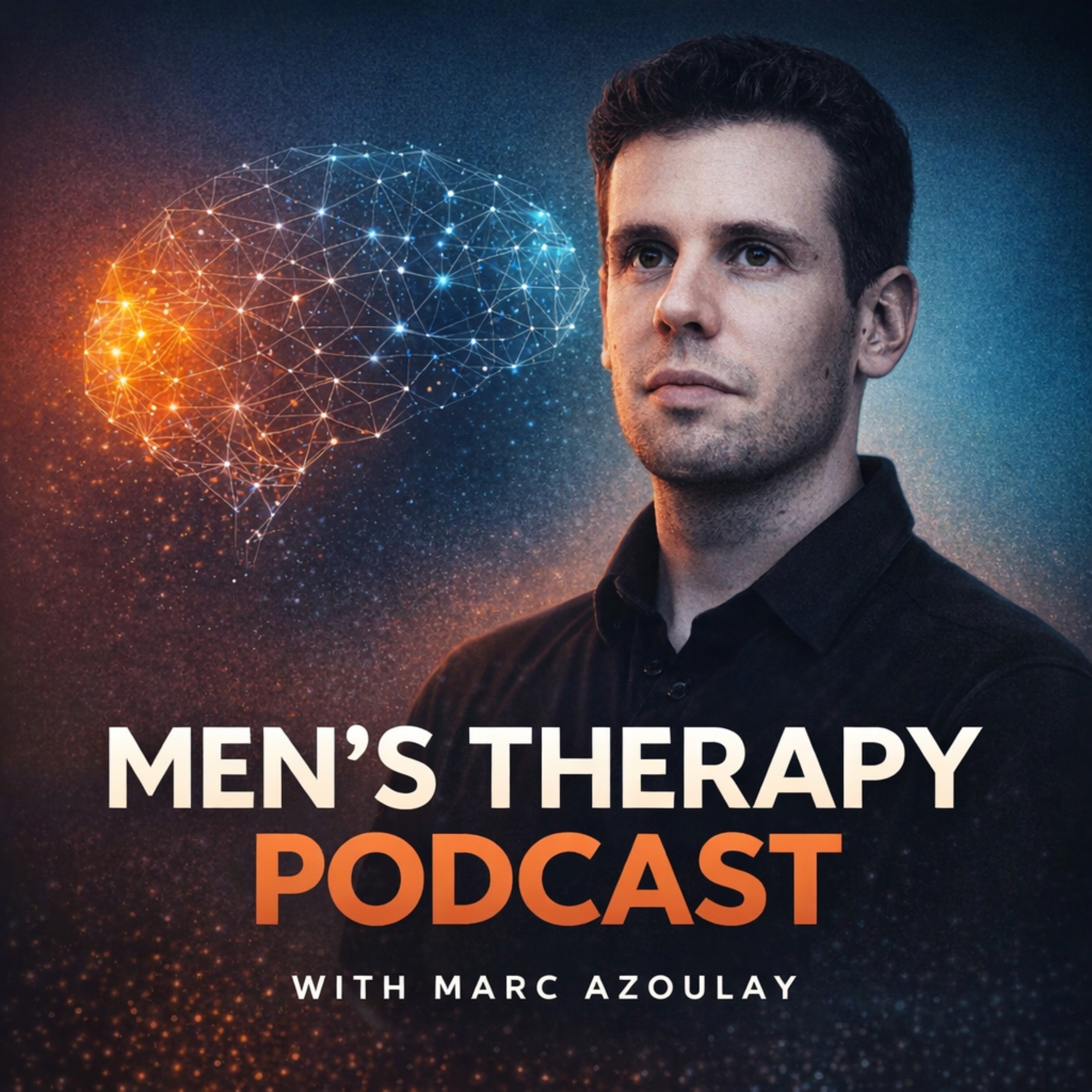
Men’s Therapy Podcast
Marc Azoulay
Blocks w/ Neal Brennan
Neal Brennan
Huberman Lab
Scicomm Media
The Daily Stoic
Daily Stoic | Backyard Ventures