
The Women Are Plotting
Do you know how to use a rotary phone?
Worry about how much Aquanet you inhaled as a teen?
Wonder about the creative worlds of writers?
Believe belly laughs make the best ab workouts?
Seek answers to the mysteries of menopause?
Then welcome to The Women Are Plotting -- a new podcast that allows a peek into the unfiltered minds of three Gen X writers. Give us a listen. And if you like what you hear, tell your friends.
If you have a story or an idea you'd like to share, we'd love to hear from you! Email us at info@thewomenareplotting.com
The Women Are Plotting
Why Most Writers Quit (And How You Don't)
Use Left/Right to seek, Home/End to jump to start or end. Hold shift to jump forward or backward.
Can you build a meaningful writing life while juggling a full-time job, family responsibilities, and the reality that most authors don't make a living from their books?
In this episode of The Women Are Plotting, Etienne Rose Olivier, Heidi Willis, and Jane Gari have an honest conversation about what it really takes to sustain a creative life. From the surprising writing habits of authors like Franz Kafka and John Boyne to the financial realities facing today's writers, they explore the balance between earning a living and protecting the time and energy needed to create.
The hosts share personal stories about career choices, burnout, editing massive manuscripts, finding accountability, attending writers' conferences, and why community can make all the difference. Along the way, there are plenty of laughs—from sleep-deprived writing marathons to legendary conference adventures—as they remind listeners that there is no single "right" path to becoming a writer.
Whether you're working on your first novel, revising your tenth manuscript, or simply trying to carve out an hour to write each week, this episode offers practical advice, encouragement, and a refreshing reminder that building a writing life is a marathon—not a sprint.
Topics include:
- The financial realities of being an author
- Finding time to write with a busy life
- Choosing a career that supports your creativity
- Building sustainable writing habits
- Editing, critique partners, and writing communities
- Writers' conferences and lifelong learning
- Why persistence matters more than perfection
Email us at info@thewomenareplotting.com, and find us on all the socials. Be safe and be excellent to each other.
[00:00:00] Etienne: I feel like after all these years, I'm kinda-- it's fun. It's something I'm good at in a way, or at least I think I'm good at it. I could be delusional, possibly. I'm gonna turn into a cockroach later. I don't know. Like... But, but yeah. No, I mean, when I look at again, you go pull out one of the first things you've ever written and you're like,
[00:00:21] Heidi: Oh yeah. Yeah
[00:00:23] Etienne: no." Like, I've so much expanded my, my writing process and my writing skill because holy shit, look at that. Um, yeah.
[00:00:31] Heidi: back then you thought it was brilliant, right?
[00:00:34] Etienne: I thought I was gonna be the next fucking Bridges of Madison County. I thought I-- The Notebook. I thought I was n- That's what I thought I was gonna d- that's what I thought I'd written.
[00:00:44] Heidi: Yeah. And, and you read it and you're like, "Ooh,
[00:00:47] Etienne: Somebody
[00:00:47] Heidi: younger self,
[00:00:49] Etienne: Oh my
[00:00:49] Heidi: were delusional."
[00:00:51] Etienne: So delusional. So delusional.
[00:00:55] Etienne: Welcome listeners. This is Women Are Plotting. I'm Etienne Rose Olivier, and I'm here with my friends and co-hosts, Heidi Willis and Jane Gari
[00:01:10] Etienne: On today's episode,
[00:01:19] Etienne: we're gonna be talking about cultivating the writing life, and because I'm super lazy, I put into a Google search which successful author had the least amount of time to write, and I was expecting it to give me somebody who had a really extensive job and family life, and maybe they only had 30 minutes in the morning at 4:00 in the morning to write.
[00:01:33] Etienne: That is not what I got, and I'm so excited about this answer. So it gave me an answer, all from Wikipedia, so I didn't go to see where they actually got the information from, but it sounds credible. Irish author John Boyne arguably had the least amount of time to write before rocketing to global fame.
[00:01:52] Etienne: He wrote the entire first draft of his massively successful Holocaust novel, "The Boy in the Striped Pajamas," in just two and a half days. Boyne famously stated that he began the manuscript on a Tuesday morning in April of 2004 and did not stop writing, barely sleeping or eating, until Friday at noon, producing what would become a worldwide literary
[00:02:13] Heidi: Whoa
[00:02:14] Etienne: Yeah, so it did go on to say, "While it took slightly longer from draft to bookshelf to hit the international bestseller lists and spawn an acclaimed film adaptation, the lightning-fast burst of creative execution makes it one of the quickest writing stints in modern publishing history."
[00:02:29] Heidi: Wow.
[00:02:30] Etienne: And I've seen the movie.
[00:02:31] Etienne: I did not read the book, but yeah, that-- I thought that movie-- I actually have thought about that movie a lot, so this is weird that it came up. I feel like I just thought about it the other day again. It comes up a lot when I think about the Holocaust.
[00:02:43] Heidi: Hmm
[00:02:44] Etienne: really weird. But Heidi, I think you're gonna go second for our fun facts.
[00:02:48] Heidi: So, I looked at the timing of things too. I guess Franz Kafka? Is that
[00:02:54] Jane: Yes, Franz
[00:02:55] Etienne: Franz, I think it
[00:02:56] Heidi: franz Kafka. Anyway, he was apparently working 12-hour shifts at his regular job, and so he would write from, like, 11:00 PM to 6:00 AM, plus put in 12-hour shifts. He was barely sleeping. So no wonder his works were
[00:03:12] Etienne: Holy shit, sounds like he was hallucinating, 'cause he fucking was because he didn't fucking sleep.
[00:03:18] Jane: So
[00:03:18] Heidi: He was not sleeping.
[00:03:19] Jane: that makes so much sense. I'm just thinking of "The Metamorphosis" specifically of like, you know
[00:03:24] Etienne: that's exactly what I
[00:03:25] Jane: like turning into a cockroach. He's probably so delirious from not sl- he's like, "What if he turns into a bug? He just wakes up one morning and he's a bug. I think I'm a bug."
[00:03:35] Jane: Like I could see like this... I- if you don't sleep, you're basically tripping out. So,
[00:03:40] Etienne: Yeah.
[00:03:41] Heidi: Yeah. Yeah.
[00:03:42] Jane: that tracks and
[00:03:44] Heidi: yeah.
[00:03:45] Jane: go
[00:03:45] Heidi: He was making it work though
[00:03:47] Jane: I mean, I loved "Amerika," his novel "Amerika," "Amerika" with a K, and "The Metamorphosis." But, my fun fact is not really that fun. It was actually kind of depressing.
[00:03:57] Jane: I don't know. It's like I looked it up, it's like this interesting fact. Well, because I'm getting i- in my own publishing journey, I'm trying to get an agent currently and having some fantasies of like, "Oh, when I get published," and you know, I've been published before, but, and so I know this to be true, that you could be published and people in my family are like, "Well, where's the money?"
[00:04:18] Jane: And I'm like, "Well, you know, you just... It doesn't happen like that. It's a very rare thing." And then I'm like, "Okay, what's the median book income," right? "Among full-time
[00:04:29] Etienne: no. Oh. Oh no, Jane, don't
[00:04:31] Jane: did. I did. So here we go. Fun fact
[00:04:34] Etienne: is it negative?
[00:04:35] Jane: it's,
[00:04:36] Heidi: Fun fact.
[00:04:37] Jane: fun fact, this is from
[00:04:39] Heidi: I've heard of screenwriters. The screenwriters one is really low
[00:04:42] Jane: it
[00:04:43] Etienne: Oh
[00:04:44] Jane: but they're working, but they're just...
[00:04:45] Jane: So, I got this from the Authors Guild, and this is the verified for median income for 2022. I don't have, they don't have the most recent one posted yet. So for 2022, which is pretty recent, among full-time authors, they think I'd be doing something else, you guys. But, the median book income was only $10,000
[00:05:05] Etienne: my God
[00:05:06] Jane: the year in 2022, and then their total writing related income was 20. So that would be like from their books, they got, you know, like 10, and
[00:05:15] Heidi: And then their side gigs
[00:05:17] Etienne: They got 10 and then their Uber life, because they're obviously Uber drivers or something.
[00:05:22] Jane: They gotta, you gotta keep the lights on. So,
[00:05:26] Etienne: Oh God
[00:05:27] Jane: I know. I know. But that, I mean,
[00:05:29] Etienne: so, so bad.
[00:05:31] Jane: now I was
[00:05:32] Etienne: it doesn't surprise me because look at when you walk into a Barnes & Noble or just see like a listing of all of the books that are published this year, there's so many, and so many you don't even know, like what, who are these people? You know? Like, yeah. There's no
[00:05:48] Heidi: there's many, many niche markets, so
[00:05:51] Etienne: That's true. But even still, probably, you know, you-- It's because of all those people who are publishing, you know? I wonder if that number's gone down because of self-publishing, Jane
[00:06:00] Jane: That is a good question, and I could dig a little deeper on that and just see. But it's like, man
[00:06:06] Etienne: 'Cause we understand, if you're self-publishing, it's all on you. Although it's probably, it's really all on you anyway to market or help market whenever anything is published via yourself or traditional, they expect you to do almost all of the work. So I think, I don't know if a lot of people who self-publish understand that when they publish. They probably just think, "I'm just gonna be found, and I'm just how, I'm just the best thing ever, and everybody's gonna know who I
[00:06:30] Jane: know. I, but I think you're right
[00:06:32] Etienne: if you tell them who you are. You gotta go out there. Yeah
[00:06:36] Jane: But, if you wanna know about--
[00:06:37] Etienne: used to think that way.
[00:06:38] Jane: I did too. I was just, like super naive. I'm like,
[00:06:42] Etienne: You're like, "I get published, I'm done," right? Yeah
[00:06:44] Jane: nope. But if you look at-- So the survey that I got this from was the Authors Guild conducted it. It was a total of 5,699. They couldn't get that last one to be-- But 5,699 published authors participated, and the survey sample was divided, that had representation from both traditionally published and self-published authors.
[00:07:07] Jane: So it was the most representative author income survey to date, right? So that was as of 2022. So, and, um, I haven't found one that's more, most recent. But it did have, so self-published and traditionally published, and that was a little bleak, you know?
[00:07:24] Etienne: Wait, does that then mean you said 5,600 and something? Wait, does that mean that's how many, all those people had to have a book that came out that year, right? For them to show income on that
[00:07:33] Jane: Yes
[00:07:33] Etienne: So that means there could possibly have been five... I mean, there are probably way more than that too. There's no saying that they actually ask these questions of every single person that published a book that year. So that's just for this survey. That's crazy to think of how many books. I mean, I didn't even think it was 5,000 in one year.
[00:07:50] Jane: No, and those were just the people that participated in the survey, yeah. And it'd be interested to see if I could go back and find an older survey before the self-publishing craze, right? And see if the glut of books in the industry, right, caused maybe it to go down. But I don't know. I feel, I buy a lot of books.
[00:08:09] Jane: I've heard at several of the writers conferences that I've gone to over the years, I've heard editors and agents say that people are still buying a lot of books. I don't know that more books on the market means less share of the pie for everybody, but what it does do, I think, to have that avenue towards self-publishing means that it is harder to get published and then stand out maybe. So maybe I'm actually just contradicting what I said. I think that, yeah, I think that, yeah, I think it is, it's true. I think it's true what you're saying, Etty. I don't know about traditionally published, but I think the self-published authors have a harder time standing out unless they happen to have marketing chops ahead of time. I was actually just having a conversation with a soon-to-be ex-colleague of mine, but by the time this is published, I will have quit my corporate writing job for a different job, so
[00:09:00] Etienne: Woo-hoo. Yeah, 'cause this
[00:09:01] Heidi: Yay, congrats.
[00:09:02] Etienne: three months down the road. Woo-hoo.
[00:09:03] Jane: my
[00:09:03] Heidi: No more corporate America. Back to academia.
[00:09:08] Jane: know, but my former colleague at the time of this airing is a marketing guru. She's a professional marketer, and she also is working on a book. And I'm like, "Oh my gosh, when you publish," 'cause she was thinking of maybe self-publishing. I'm like, "If anyone's gonna be able to do it and do it well, it would be you, because you have a degree in this.
[00:09:29] Jane: Like you're really going to be able to do all of the right things. Like you're gonna come up with a campaign plan and you're going to know what you're doing." And I feel, optimistic for her.
[00:09:39] Etienne: What did she say about that, about you saying that to her about?
[00:09:42] Jane: Oh, she got a little choked up 'cause she was like, "Oh, yeah." Because I guess it had occurred to her, but, I was being really specific about things that she could do, and you already, you know how to do this 'cause you're doing this for other people in a corporate setting. You could do it for yourself. You could
[00:09:57] Etienne: Could we hire her?
[00:09:58] Heidi: Yeah, can we hire
[00:10:01] Jane: Well, when she quits her day job, which she might be considering, 'cause she's very, very busy. The corporate environment that I am one foot out the door from is very demanding and very greedy of your time because the environment that I work in is like a consultancy and it's just super, super greedy.
[00:10:22] Jane: They just want all the time,. Which is actually relevant to our topic today of when you're trying to make a living as a writer,
[00:10:29] Jane: there's a couple of ways to do it, and one of the ways I am currently doing it is to write in a corporate environment.
[00:10:34] Jane: They pay me very well. Like, I'm giving up a six-figure salary because I don't like what they're making me write about. But I'm making a living. I'm writing and editing all day long, and, it does pay well. So if somebody's out there thinking, " I'm a really good writer, how do I make a living of doing this?"
[00:10:52] Jane: I would say you can look at corporate jobs, but, my advice would be don't do it for a big consultant firm because they are very greedy with your time, and then you will have no energy and time left over to write what you're passionate about. If anything, I have found that the people I know who do the kind of corporate writing that pays well, and then they also have the time and energy to dedicate to their passion projects that are what you write for love sometimes and you write for money at others.
[00:11:19] Jane: What they do is they freelance doing the same kind of writing that I would do, like ghostwriting for corporate executives, and you do it on a freelance basis so that you can say, "Okay, I can do this for 20 hours a week and keep the lights on in this house and pay the mortgage." But then in the other time, the other 20 hours a week, if we're talking about a traditional 40 schedule, then you can say, " that's gonna, what I'm gonna do my novel manuscript or my screenplay or my poems" or whatever it is that floats your personal boat.
[00:11:49] Jane: And I feel like that is the balance that I wish that I had struck and that I have now taken a different job where I'm going to be writing content marketing materials, but it's still a full-time job, but less intense environment and I will report back and let you know if I still feel at the end of the day that I have more energy and brain space to dedicate to passion projects. That's always the goal is to find the balance. I need to put food on the table and have time left over
[00:12:21] Heidi: Yeah
[00:12:21] Etienne: It's amazing to me that you've been able to do what you've done with your novel while at your job, seriously, because I don't know if I would've, I don't know if I would've had any energy left over for doing what you've done with your novel
[00:12:36] Heidi: I saw recently somebody was talking about... Or they saw a picture of Madonna with a bunch of people in New York City when she was up and coming. And she talked about she lived in a $300 apartment or something, something crazy cheap, and was working part-time and was able to go for her dreams 'cause it was doable back then.
[00:12:55] Heidi: You could attain that kind of, yes, I can be creative in my outside life because cost of living isn't that crazy yet. And now it's almost impossible. Creatives cannot
[00:13:07] Etienne: I can't imagine in New York City. I could not imagine trying to be an artist of any kind in New York City.
[00:13:12] Heidi: Right now? No.
[00:13:14] Etienne: no
[00:13:15] Heidi: So it's amazing that anybody's getting any work done 'cause the cost of living just being so high and everybody working two and three jobs and
[00:13:25] Etienne: Yeah.
[00:13:26] Heidi: yeah
[00:13:27] Etienne: So I had a parent that if you've listened to any of the podcast episodes in the past know that she was very crazy, and she wanted me to pursue screenwriting when I lived in Los Angeles because she wanted to be a screenwriter. So, she did not cultivate the, "Hey, why don't you get a really good paying career that you can do as a job, and then you do your writing on the side. Just make sure you have some mental capacity left over for your creative side that you need to fulfill." And she did not say that to me, so I did not become a nurse until I was in my late 30s. If I ever had had a child, I would've told that child if they were artistically inclined, " Please do something or go to school for something that you can stomach doing possibly for your whole life, because there's a very good chance that what you wanna do creatively with your life may not actually ever make you any money.
[00:14:20] Etienne: But you still do it because it's what fulfills you mentally." So yeah, I wish I had been a nurse and trying to be a writer my whole life, that would've been so fantastic. But that's what I would suggest to anybody who wants to be creative in any fashion, is you have to have a career that makes you money, but leaves mental space available for your art.
[00:14:46] Etienne: And, the best way to make your art is to work on it every day too, or at least as much of every day as you can to carve out even if it's just a half an hour. If you can carve out a half an hour every day for your art, that's amazing
[00:14:59] Heidi: Gertrude Stein would sneak in writing whenever and wherever she could. Like, writing while sitting in the car waiting for her partner to come out of the store. So take it from Gertrude Stein that if you got 10 minutes, you're waiting on somebody, just use it to write
[00:15:15] Etienne: Yeah. And I'm guilty of not working on my writing for a while now, so I have to start again and cut out 25% of my memoir. Totally doable. Not, not... It better be.
[00:15:29] Heidi: Yeah. Yeah
[00:15:30] Etienne: We'll find out. But yeah, I've got somebody who is trying to hold me accountable for that actually. And I do have the time, so there's somebody who works at least time and a half at their job that does not make a lot of money, but he does that while he's also pursuing...
[00:15:47] Etienne: He was trying to start a career as an English teacher. He wants to be a middle school English teacher. So he started that process. He's got his degree, but started the steps he has to take to actually become a teacher. But he paints these awesome paintings that look like it's Van Gogh.
[00:16:05] Etienne: I'm not even kidding. They all look in the vein of Van Gogh. He's taught himself how to paint. He's never taken a single formal lesson, and I think he could sell these for real. They're just so cool. So, he's trying to hold me accountable, like, "Have you been writing?" Like, no. I was like, " But I mowed the front lawn." That is not the same thing at all. I'm like, "Baby steps." You know?
[00:16:36] Heidi: Well, I don't know how you guys are. I'm constantly writing, like even when I'm in the shower. Like if I'm working on a story, I'm constantly in my brain writing. Like even if I'm not getting it down on paper, like I'm working out, "Oh, this could-- this would solve this plot hole," and yeah.
[00:16:53] Etienne: I think about it all the time actually, yeah. The things that I have, especially the things I haven't started writing, I think about those things constantly. They're, I feel like it's like Big Magic, like Elizabeth Gilbert says, like the muse is, it's just like, it's hovering over me. It's like, "will you fucking start that already? How many times do you have to keep thinking about this? Why have you not started this story?" Like, "This could take you like hours maybe. Just do something, first draft." You know?
[00:17:18] Heidi: Well, and based on what you told us about the book written in just three days, less than three
[00:17:25] Etienne: Oh, right, right. The Boy in the Striped Pajamas. Yeah.
[00:17:28] Heidi: know, take
[00:17:28] Etienne: no excuse.
[00:17:29] Heidi: just write a marathon.
[00:17:32] Etienne: I just make a pot of coffee. I don't actually drink coffee, so this would be perfect. It's gonna hit so fucking hard. I'm gonna be up for three days. And that shit that I write at the end, hallucinating
[00:17:44] Heidi: Mm-hmm.
[00:17:45] Etienne: on Franz Kafka, like...
[00:17:47] Jane: They're like, "There needs to be a giant insect." Oh my goodness
[00:17:53] Etienne: My skin feels really hard. I don't understand. Turning into a
[00:17:57] Jane: Exoskeleton. When I was younger, I used to do fits of all-night writing and it would just pour out of me. When I say this, I was a teenager still living under my parents' roof, so I'm not worried about, there's no mortgage taking up real estate in my brain to
[00:18:15] Heidi: Mm-hmm. Mm-hmm
[00:18:16] Jane: apt metaphor. But like I'm not doing that. I didn't have to worry about car insurance or bullshit. I wasn't even cutting the lawn. I had some chores to do, but, hmm?
[00:18:26] Etienne: Isn't that what it's called? The mental load that we all carry, especially as women. The mental load that we're always... Mm-hmm. It's not just the chores, it's the overall worrying about all of the chores, and worrying about all the things and planning for the worst, but hoping for the best all the time. Mm-hmm.
[00:18:43] Jane: And then if you have a kid in there, it's over. Now you're out. Now you're like, "Okay, when do they have a doctor's appointment? When do I have a doctor's appointment? When is the last time my dog had her rabies vaccination?" There's that constant cognitive checklist happening in the background.
[00:18:58] Jane: The cognitive labor, right? Is always running, just running, running in the background like a software update that's just always niggling and sapping your energy. So I feel like it's a miracle that I've gotten anything done. Yeah, it's like you need a reboot. You need a reboot.
[00:19:15] Jane: So I couldn't go all night now 'cause my body would just be like, " you have to sleep or this is going to turn into nonsense." It's not going to be a cool cockroach. It's just gonna be like, yeah, it's g- gonna be like something you wrote when you
[00:19:28] Etienne: but if it's a first draft, it'll be really good.
[00:19:30] Jane: I mean,
[00:19:31] Etienne: Hmm. But if it is a first draft, you know it's always gonna suck anyway. You need a first draft. Just bust it out, I guess. Maybe I should take my own advice. I'm gonna stay up all night.
[00:19:40] Jane: I just need sleep. I just
[00:19:42] Etienne: Sorry.
[00:19:42] Heidi: marathon writer. Like, I will go and once I'm in the flow and really focused, I will go for a day at least. When I was writing Black Sunday, it was like 20 hours straight or something like that. I think Chris was coming in going, "Have you eaten anything? Have you taken any breaks?"
[00:20:02] Etienne: Did he bring you your drinks? Like a whole tray of drinks? Like
[00:20:07] Jane: Oh.
[00:20:07] Etienne: "Heidi, I know you can't live without your five drinks. Let me bring these to you."
[00:20:10] Heidi: I know. Yes. Yeah. Yeah. Have you drank anything recently? Like yeah.
[00:20:17] Etienne: You guys are never gonna be dehydrated in your life
[00:20:20] Jane: So for the audience's benefit, Heidi always has at least three beverages going at one time. And, every once in a while I will channel... Oh, th- she's p- holding up two bottles right now. Oh, and a third. Yep, see, three. Oh Oh my gosh. Wow. Wait, are those
[00:20:38] Etienne: on.
[00:20:38] Jane: that you're holding up? That's like six things.
[00:20:41] Heidi: Yes
[00:20:42] Jane: Okay.
[00:20:42] Etienne: You have two empty bottles and then they're both mint. Wait, and you dr- I saw you drink a Vitamin Water earlier,
[00:20:48] Heidi: Yeah, Yeah, that, yeah, that was the fourth one that I finished that one off
[00:20:52] Etienne: drinks. I solely said five.
[00:20:56] Jane: Oh, that's amazing
[00:20:57] Etienne: guessed, almost
[00:20:58] Heidi: There was four. Four.
[00:20:59] Etienne: Four. Okay, I was off by
[00:21:01] Jane: literally getting
[00:21:02] Heidi: Yeah.
[00:21:02] Jane: juices flowing
[00:21:04] Etienne: because what will happen if you don't have four? I'm so
[00:21:08] Heidi: I I have, I have left the house without one before and almost had a panic attack.
[00:21:14] Etienne: I really want you to pee in a cup for me.
[00:21:16] Heidi: It's a phobia thing, like I can't be without a drink
[00:21:20] Etienne: I want you guys to pee in a cup for me at some point. Actually, yeah, Jane, you did pee in my Yeti once. I should have tested it.
[00:21:26] Jane: I
[00:21:27] Etienne: I should have tested it to see what your specific gravity is to see how hydrated you are.
[00:21:32] Jane: Oh, I was, I had to be very hydrated. I filled up her entire Yeti thermos. It was like 20 ounces, and I was like, "Thank God I was done," because it was nothing... So for context,
[00:21:41] Etienne: Cause you were saying, "Oh my God, I was like, I'm done and we're getting close
[00:21:45] Jane: I know. I was real, I was getting nervous I was gonna piss all over the backseat of my car. But, we were on our way home from a writer's conference, this is relevant, and on our way back we, we got stuck in traffic and I was just, after about an hour, I just said, 'cause I already had to pee, I had said, "The next exit that we can, I'm gonna get off.
[00:22:04] Jane: I have to go to the bathroom." And it was almost an hour later, we just hadn't moved much at all, and the exit was just ever looming. And I'm like, " I'm really sorry, Etty, but I'm going to jump out of the car and I'm gonna piss behind the median." The cement median, it wasn't even, it was a Jersey barrier, and there were people around. Like, we were still stuck in dead st- like, lots of people. I was like, "I don't fucking care. I feel like it's worth the ticket. I'm going to explode."
[00:22:29] Etienne: Oh my God. It's either that or piss your pants. No, but I came up with a
[00:22:32] Jane: Yes, and she was just like, "I will sacrifice my thermos for you and so I jumped out of the car and Etty got in the front seat, she had never driven my car before, but we were only going five miles an hour at most, and I just took her thermos and squatted in the back seat and filled that thermos up.
[00:22:49] Etienne: Oh, my face
[00:22:51] Jane: but we were on our way back from a writing conference, which I will say, Etty, to your question before of like, you don't know how I've been able to still work on my writing while working at a very demanding job that sometimes was 60-hour-a-week situation when it was really rough. Going to writers conferences twice a year, talking to you guys about writing, so I feel like I'm giving voice to it and it's not just like an idea in my head that's not going to go anywhere. Like having a gym accountability buddy. Yeah, like it lights a fire under me going to writers conferences, like
[00:23:22] Heidi: Mm-hmm.
[00:23:22] Jane: Jumpstarted my creative juices and just made me feel,
[00:23:25] Heidi: Keeps the engine running
[00:23:26] Jane: yeah, And just thinking like I'm, I'm being around other creative people and talking with creative people, it just would keep me going. And so even if I couldn't write long, like having this job, I haven't published a book. I've published like a of short things, like in literary journals, but that was years ago.
[00:23:43] Jane: I haven't even submitted anything in a long time. I published books like within the, a year of each other, and then I started the job that I literally just quit, I had for almost 10 years, then I didn't publish anything in the whole time I've had this job because it was just so demanding of my time.
[00:24:02] Jane: But I would write short. I've written poems, I've written short stories, I've written personal essays, had I finished a novel that was almost done when I started this job, and then I finished it, and then I edited the shit out of it, right? And then would ignore it for like a year and then read it again like a piece of something that somebody else wrote then, right, and became very objective.
[00:24:23] Jane: I will say this, for as greedy with my time as this job has been, because I was constantly writing and editing, it did create a discipline in me that now I get to to my creative passion projects, and it made me a better editor when I would spend, like, a weekend editing my manuscript. This job made me, like, a ruthless editor because I, like Etty mentioned that in her memoir she has to cut out, like, 25,000 words, and I had a you know, situation where I-- Well, not, not as many, but still a lot. Like, I had 103,000 words, and I was told, like, it has to be down to 85. And I was like, "Okay, some characters are going to die."
[00:25:06] Etienne: really cool. That's always funny, yeah. Yeah. Yeah. Yeah, people are gonna... Yeah, people are coming up in my memoir for sure. Like, cut.
[00:25:15] Jane: I, I mean, it's what you gotta do. It's like a game of Jenga of like, what can I pull out so this tower isn't going to collapse on itself? And I feel like that same approach to editing you can take to your life as a writer and trying to make a living. It's kind of like, okay, this is the tower of my creative being.
[00:25:32] Jane: Or this is the tower of my time, and what can I take out and everything still hangs together? What time sucks do I have that I can remove from my life and replace with something creative or something healthy that will at least feed a positive feedback loop that will give me more time?
[00:25:48] Jane: So I used to think like, "Oh, well, if I, quote-unquote, 'waste time,' at the gym, that's time I could write." Actually, the more I work out, the more I write, because then I'm feeling really good and I'm feeling really healthy, and then I'm not thinking the second that I have time that I don't have to do something for somebody else. Like if I don't work out and eat healthily and be mindful of all of those things and meditate and keep up yoga practice and the things I like to do for myself and my health, if I don't do those things, the second that I end up having free time, it doesn't go into something creative. It goes into crashing out and Netflix and naps and, and like,
[00:26:26] Heidi: Yeah
[00:26:27] Jane: I gotta go to bed because I'm freaking exhausted. But the more I'm practicing healthy behaviors, the more then when I have time that isn't being zapped for anything else, where I'm just like, "Ooh, I have an idea," and then I just give voice to it. So I got a lot of snippets that are becoming things, and I have actually pages and pages and pages and pages of comedy notes. 'Cause one of the things that I'm going to start doing is i'm gonna put together a five-minute set and I'm gonna do an open mic again. I found a place downtown that I
[00:26:59] Etienne: yay
[00:26:59] Heidi: That'd be
[00:27:00] Jane: that does that, and I'm like, it was fun. Like years ago, Heidi and some other folks dared me to do it,
[00:27:06] Heidi: Yeah.
[00:27:07] Jane: it, and it was fun. And
[00:27:08] Heidi: She was so good
[00:27:10] Jane: made me a tighter writer because they limit you, like lights go off after five minutes and they just turn your mic off. So you have to have it down. So there can be, there's zero fat, zero fat on that set.
[00:27:23] Etienne: Five minutes is a long time when you're standing up on a stage telling jokes, so that's, that five minutes
[00:27:27] Jane: It does seem like a long time, especially when you feel like you're about to shit your pants, literally and also because in that moment you're like, "If I'm not being funny right now, like I'm gonna know," 'cause crickets. You can pity clap for someone at an open mic who like sings a folk song and you're like, "Awesome. Wonderwall again." And they're just like, "All right, pity clap." But if you're trying to land a joke, you can't pity laugh. You know what I mean? Maybe they'll smile at you, but it's silence. And so you have to strip everything from that set that doesn't work and figure it out and then rehearse it and make sure that it's at five minutes exactly or just a little bit under.
[00:28:09] Jane: But so you have to have the storytelling that's enough to get to five minutes and short enough to hit the mark and be holistic, and then also build up to something where people are gonna actually freaking laugh, 'cause if they don't,
[00:28:22] Heidi: A payoff, yeah.
[00:28:23] Jane: Devastating. You're just standing there going, "Oh my God, there's just not enough tequila to solve this right now. I'm just here in silence." And, ugh. So I'm gonna try that again 'cause I think it'll also help me just write. So I have a lot of stuff to go through and edit. That's my next, that's my new passion project.
[00:28:38] Heidi: You should listen to The Moth, 'cause they have different themes. and it's a five-minute storytelling, and a lot of times they're funny and I think it... You would be perfect for The Moth. And they have different themes or d- yeah.
[00:28:52] Jane: Okay
[00:28:53] Heidi: And they'll have like, "Hey, this is our theme. This is our subject." Um.
[00:28:59] Etienne: of the moth. What is it?
[00:29:00] Heidi: Oh, what?
[00:29:01] Jane: Hour that's hosted on NPR. It's so good
[00:29:05] Heidi: You can submit your five-minute video, and if they select you, you go before their audience in a major city. So they're doing them in Atlanta all the time LA, New York City. So
[00:29:18] Etienne: Oh, Jane, get me an excuse to go to Atlanta for no reason
[00:29:23] Jane: All right. I am-- Thank you for that suggestion, Heidi. You are not the first person who has said this to me, and I feel like you've said it to me before, and I just...
[00:29:33] Etienne: Now that you've said, now you've heard this, yeah, now you need to do it 'cause you've heard it
[00:29:36] Heidi: I kind of was putting like a challenge for myself that I would find one that I have a story that lines up with their theme and challenged myself to come up with a five-minute storytelling thing.
[00:29:49] Jane: Let's challenge each other. Let's do it. Let's do it. Accountability buddies. I'll figure one out. You figure one out and
[00:29:56] Heidi: Maybe all three of us can do it.
[00:29:58] Jane: Etty?
[00:29:58] Heidi: Come up
[00:29:59] Etienne: I mean, I'll try. I could try. The moth? Yeah. Yes, please send me the
[00:30:07] Heidi: the websites. Yeah, they have the locations and what their theme is, so
[00:30:12] Etienne: Nice. Okay.
[00:30:13] Jane: And see, doing stuff
[00:30:14] Etienne: Oh, so it, there, it's tied to a location as well?
[00:30:17] Jane: Yes. And that you don't make money doing it
[00:30:20] Etienne: Totally the one for Atlanta.
[00:30:22] Heidi: No. But you get exposure.
[00:30:24] Etienne: Yeah, exposure's always great. Shit, I would take anything. Yeah. Literally don't have to pay me.
[00:30:31] Jane: Yeah.
[00:30:34] Etienne: I don't need to be paid. I just, yeah. I just wanna say you can hear me somewhere. I mean, we get heard on here. But not quite, you know, that popular yet, but hopefully one day. Hopefully one day we actually make money instead of giving money to do this.
[00:30:55] Jane: Would be so great
[00:30:56] Etienne: That's my goal
[00:30:57] Jane: mean, that's part of cultivating the writer's life is just knowing that sometimes you're not gonna get paid. Sometimes you are gonna write something just to pay the bills or have a day gig that you can live with that will pay the bills. But ideally, it's the goal, right? Is to use your talent to make the money. Ugh.
[00:31:17] Etienne: I do think if you keep trying, I'm not gonna say anybody's gonna make money at it. But if you never give up and you keep getting better with your art, then, maybe someday your art will be out in the world where people can buy it and see it, you know?
[00:31:33] Etienne: That's my goal.
[00:31:34] Etienne: I no longer want to be rich and famous from being a writer. I no longer... I, I mean, that would be awesome. I will fucking take it. Yes, I will take that. It's kind of th- me saying I will take it reminds me of my divorce mediation when I had such a wonderful experience, and I was like, "Wait, what are you giving me?"
[00:31:51] Etienne: And I'm like, "Okay, I'll take it." That's kinda like how I would feel if suddenly I got famous from something I wrote. I'd be like, "Fuck yeah. I was not expecting this. I was just doing my shit forever, and finally it paid off. Awesome." But I just want something out there that is published where I can say, when somebody asks me like, "Oh, what have you written?
[00:32:12] Etienne: Can I, can I buy it?" Like, "No. I can send it to you on a email." Like, like seriously, I don't... i just wanna be able to like, "Yeah, here, go to-- there's a link to Amazon," or, "Yeah, you can go in the Barnes & Noble. It's right there. It's in the window." Like, that would be so great. That would be the dream. But in the meantime, I do it because I have to, because my brain won't stop thinking about it. I have to do it or I go insane.
[00:32:38] Heidi: Mm-hmm.
[00:32:39] Etienne: So shit has to be done. And, I feel like after all these years, I'm kinda-- it's fun. It's something I'm good at in a way, or at least I think I'm good at it. I could be delusional, possibly. I'm gonna turn into a cockroach later. I don't know. Like... But, but yeah. No, I mean, when I look at again, you go pull out one of the first things you've ever written and you're like,
[00:33:03] Heidi: Oh yeah. Yeah
[00:33:05] Etienne: no." Like, I've so much expanded my, my writing process and my writing skill because holy shit, look at that. Um, yeah.
[00:33:14] Heidi: back then you thought it was brilliant, right?
[00:33:16] Etienne: I thought I was gonna be the next fucking Bridges of Madison County. I thought I-- The Notebook. I thought I was n- That's what I thought I was gonna d- that's what I thought I'd written.
[00:33:27] Heidi: Yeah. And, and you read it and you're like, "Ooh,
[00:33:29] Etienne: Somebody
[00:33:30] Heidi: younger self,
[00:33:31] Etienne: Oh my
[00:33:31] Heidi: were delusional."
[00:33:33] Etienne: So delusional. So delusional.
[00:33:37] Heidi: Yeah. It's kind of fun though to go back and see how far you've come. Yeah
[00:33:42] Etienne: Yeah. That's how you can at least tell you've progressed as an artist, you know? Go look at one of your first pieces. And hopefully you didn't throw it away or burn it. You still have it somewhere so you can pull it back up and go, "Oof, no."
[00:33:56] Jane: Just stay humble and be like, "Yeah, that was, there was room for improvement."
[00:34:00] Etienne: Stay humble please because Jesus God. That's called, that's what being 24 is. That I was 24 years old and I thought I was brilliant. You know? Like my brain wasn't fully developed. Of course I thought I was brilliant.
[00:34:15] Etienne: I also had a delusional mother, so she was feeding the fucking delusion. She was like, "Yes, it's awesome. It's awe-," it's like, "No, it's not awesome. It's really shitty. Like it's really bad."
[00:34:25] Jane: But she was like, "You are my daughter. Of course it's awesome." Out of the gate
[00:34:29] Etienne: Of course it's awesome. You can only write genius work. Oh my God. But no, you, maybe over time you can. You just have to rewrite and rewrite and rewrite and keep at it, and the more you work at it, the better it gets. And yeah, I mean, Stephen King says write every day, in his book On Writing, which is one of the best books about writing ever.
[00:34:51] Etienne: Yeah. But, you know, there was a time where I wrote at least six days a week, and I need to get back there. I mean, literally, if you just...
[00:35:00] Etienne: I'm gonna make a commitment to myself starting tomorrow, 'cause this is stupid. Why have I not started already? That I will at least do 30 minutes tomorrow, and then I will gradually every week go up by 15 minutes until I'm up to my hour a day that I was at before so that I can get to where...
[00:35:15] Etienne: Oh, you're, Heidi's showing me an alar- an old-timey alarm clock.
[00:35:19] Heidi: No.
[00:35:20] Etienne: shit looks like
[00:35:20] Heidi: a timer. It's a timer.
[00:35:22] Etienne: Oh, it's a time... Oh, wow, look at that. That's really cool. Oh, I love that.
[00:35:27] Heidi: it's for ADHD. Like, so i've been using it to like, "Okay, I got 45 minutes. I wanna do this." And yeah, I've been getting a ton done
[00:35:38] Etienne: Man
[00:35:38] Heidi: with it. So it's a handy ADHD tool, but also like, I don't know, beat the clock kind of thing for you. You know, if you've got only 45 minutes before a lover showing up, like I can, I can knock out 45 minutes of writing real quick.
[00:35:54] Etienne: Yeah, it's crazy what you can do in 45 minutes. Yeah. It's a lot that can be done.
[00:35:58] Heidi: And then 45 minutes a day times 352 days, you end up with
[00:36:04] Etienne: Yep. I literally say to anybody, if you wanna write a book, and I've heard so many people say they wanna write a book when they hear that I've written books that nobody's ever read, that anybody can write a book, you just need to spend an hour a day for every day, and in a year you'll have a first draft.
[00:36:21] Heidi: Mm-hmm.
[00:36:22] Etienne: For sure, you will have a first draft. It's gonna suck, but you're gonna have a first draft, and then you got at least something to go by to then start editing. But yeah, it's all about just dedication and a drive, and don't expect to be famous. Sorry. No, 'cause as Jane said, the median author makes $10,000 on their book in 2022. It's probably not that much better now. And then an extra 10,000 on the other ancillary writing that they do. So yeah, we're not gonna be rich, but maybe one day I'll break even. That would be nice. I've put out a lo- we haven't even talked about that, but I've put out a lot of money for editors. I added up for the memoir, I spent $3,500 for two different rounds with an editor.
[00:37:09] Jane: Did you feel it was worth
[00:37:11] Etienne: so it was 3,500 total. Oh, fuck yes. Yes, 100%. It saved me so much time. So she's gonna be like when I come back to her and say, "Hey, can I have a future appointment with you again? 'Cause I'm gonna be cutting 25,000 words out of my memoir. Now I need to have you look at it again and make sure everything is okay." Yeah
[00:37:30] Heidi: Yeah
[00:37:31] Etienne: But I'm hoping it will be, you know, it'll be good. Yeah
[00:37:34] Jane: I think having people who can have that critical eye, beta readers that you trust, like all of those kinds of things can help you once you have a manuscript and you want it to be like, all right. Cultivating the writer's life means, okay, if you're just writing for yourself, that's fine, that's a diary.
[00:37:50] Jane: But if you want it to be a work of art that somebody else interacts with in some way, 'cause that's the only thing that brings our work alive. Otherwise, you really are just writing a journal, aren't you? Like, you know what I mean? If you're wanting it to be a poem, a short story, an essay, a novel, whatever, like it needs to be coming to life in someone else's mind, not just your own.
[00:38:08] Jane: So to get it to that point, then you do have to hack away at it. And so part of cultivating that life means cultivating a group of people that you trust as critique partners, some of which could be paid and some of which might just be, you know, if you can't afford that, join a local critique group or, I was actually a part of an online group once, and then I ended up hitting it off with one person in the group, whose feedback I really valued.
[00:38:31] Jane: And we are now friends in real life and have met in real life and I've been to her home many times and we've been critique partners for each other's projects for 19 years now. 'Cause I was, mm, yeah, yeah, 19 years 'cause I met her online when my daughter was two months old, and she's about to turn 19 in a few days. Yeah. So the earliest, yeah. I know. Uh,
[00:38:56] Etienne: Aw.
[00:38:57] Jane: When I started writing, I will. But I, that's why I started writing the memoir when she was a baby 'cause after the first couple of months, she actually then was taking good naps, and so that's when I would write, when she was taking naps. 'Cause people are like, "You nap when the baby naps." I'm like, "I write when the baby naps." Otherwise, it'll never, yeah.
[00:39:14] Etienne: Yeah. Has to get done. Yeah
[00:39:17] Jane: And I did also
[00:39:17] Heidi: Yeah, you got a lot done that first year
[00:39:19] Jane: I really did, I
[00:39:21] Etienne: Because you probably weren't sleeping enough.
[00:39:23] Jane: I wa- I know I was, and I hallucinated hard in the first couple of months. Like I was sleep deprivation where like I looked in the mirror, I thought I was Yoda. I looked at my hands, they looked like baby hands. Like it was bad. So sleep is, uh... but see, I mean, it's full circle. I was pulling a Kafka. I needed to like, you know, just get
[00:39:40] Etienne: yeah.
[00:39:42] Jane: get, it down.
[00:39:43] Etienne: Exactly.
[00:39:44] Jane: Sometimes
[00:39:44] Heidi: Yeah
[00:39:45] Etienne: Sometimes the writing needs to come first
[00:39:48] Jane: And sometimes it, you have to figure out, yeah,
[00:39:52] Heidi: in your
[00:39:53] Jane: what are you gonna sacrifice?
[00:39:54] Etienne: sleep when we're dead. Exactly.
[00:39:55] Jane: Sometimes sleep is the thing that you sacrifice a little bit, but definitely have healthier habits elsewhere to like balance that out. You know, I found that the more I meditate, the less sleep I actually need, and there's science behind that, so don't go being stupid, folks. Like don't just, you know, every once in a while pulling an all-nighter because you're like super inspired is great, but if you do it long term, not everybody's gonna write a masterpiece about a cockroach. Sometimes it's just gonna be a big pile of hallucinated shit. So don't do that.
[00:40:23] Jane: Like take care of yourself and be balanced and seriously, good luck with whatever your day gig is and just figuring out how to stoke your creativity when you can snatch that time and guard that time, and just don't let it get sucked away by other people's demands on you. Like figure out how to put guardrails on it, and good luck out there, folks.
[00:40:45] Jane: If you're wanting to cultivate a creative life, a creative practice, it's worth it.
[00:40:50] Heidi: And that's our show. You've been listening to The Women Are Plotting. If you have a story you'd like to share or have any comments, we'd love to hear from you. Email us at info@thewomenareplotting.com. And of course, you can find us on all the socials. Thanks, and until next time, be safe and be excellent to each other.


Podcasts we love
Check out these other fine podcasts recommended by us, not an algorithm.

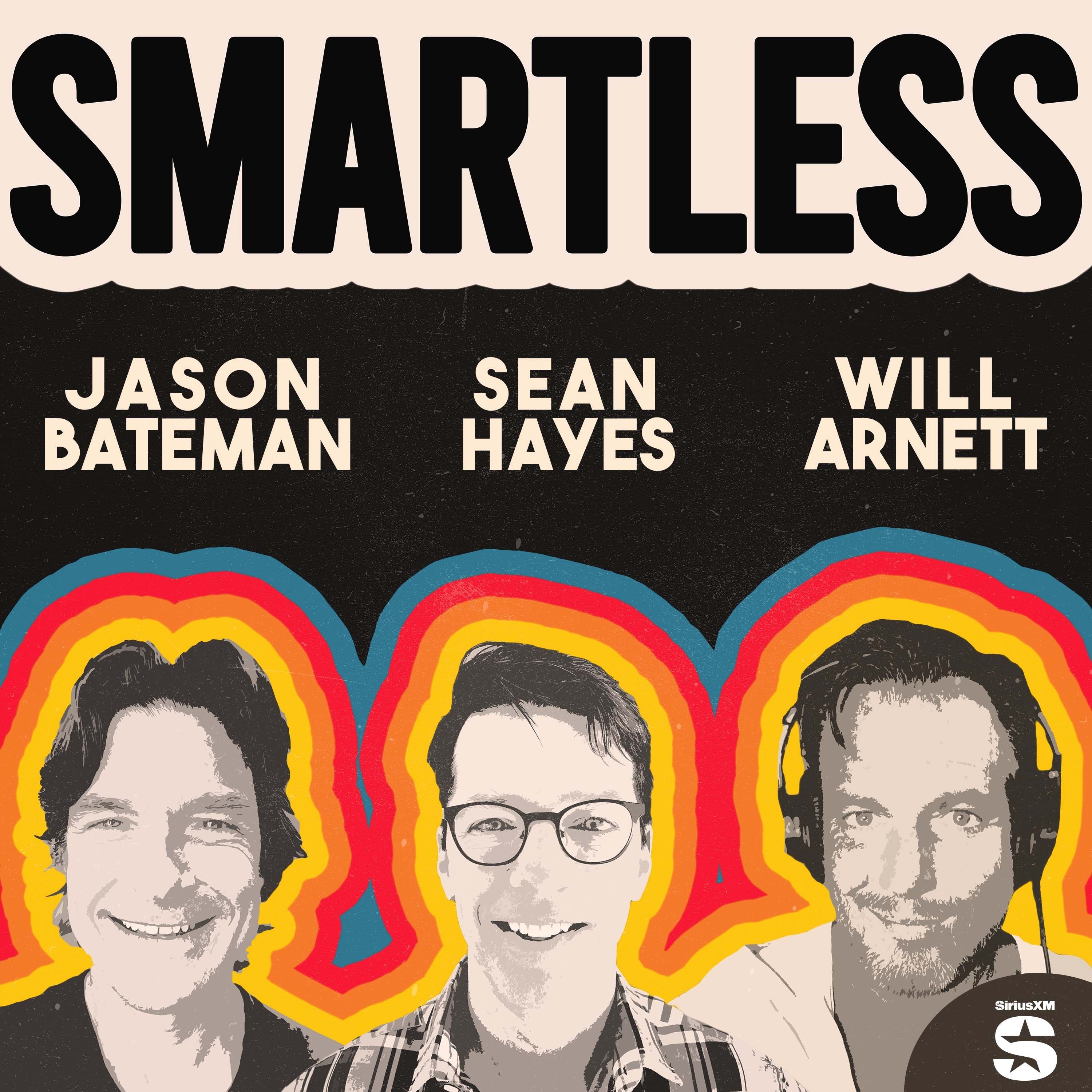
SmartLess
Jason Bateman, Sean Hayes, Will Arnett
Soul Boom
Rainn Wilson