
Journaling for Highly-Sensitive Introverts | HSP, Regulate Emotions, Journaling Prompts, Overstimulated, Nervous System
**TOP 2.5% GLOBALLY RANKED PODCAST FOR HSPs AND INTROVERTS**
☑️Do you find that the littlest things cause you to overreact and then feel guilty?
☑️Wish you knew how to feel your emotions without them taking over?
☑️Are you so used to hiding how you feel or checking out that it’s hard to even know what’s going on inside?
☑️Ever wonder if being “too emotional” is just who you are… and if that means you’re broken?
Take a deep breath. You’re not broken, you’re just a highly sensitive introvert trying to survive in a world that doesn’t make space for sensitivity. I got you!
This podcast will show you simple strategies to stop hiding your emotions, reset your nervous system to reduce emotional overwhelm, and embrace your sensitivity as a strength instead of something to hide.
You’ll learn practical tools to stop feeling emotionally drained, create self-care routines and space to rest and recharge during your day, and feel understood and seen for who you truly are.
Hey, I’m LaToya. A single mom of 4, Life and Emotional Resilience coach, and fellow highly sensitive introvert. I spent years believing my emotions were a problem to fix and that I just needed to be less sensitive.
I thought I had to push through the emotional exhaustion and burnout, stuff my emotions, and keep it together no matter what, even when I was falling apart inside.
But journaling changed everything. It helped me stop the emotional spiral and finally feel safe being myself.
I created simple journaling routines that support my nervous system, creativity, and need for deep rest and a slower pace. And now, I’m here to share it with you!
If you’re ready to stop stuffing your feelings, snapping under pressure, or feeling like your emotions are too much…
If you’re craving calm, clarity, and connection without losing who you are as an HSP and introvert…
And if you want to feel more grounded and less drained by daily life …
This podcast is for you.
Grab your weighted blanket and your favorite journal and pen, we’re doing this together, one page at a time!
Journaling for Highly-Sensitive Introverts | HSP, Regulate Emotions, Journaling Prompts, Overstimulated, Nervous System
6 | Struggling to Forgive? This Step-by-Step Process Helps HSPs Heal After Deep Hurt
Use Left/Right to seek, Home/End to jump to start or end. Hold shift to jump forward or backward.
Are you struggling to forgive someone who's hurt you? Forgiveness can be a tough topic. Especially when you've been pressured or shamed about it. Listen in as I share my struggles and journey with forgiveness plus take a look at what the bible actually says, and what forgiving someone looks like.
For a deeper dive into forgiveness, check out Forgiveness After Trauma: A Path to Finding Healing and Empowerment
Related Episodes:
- 62 | You've Named Your Emotions: The Step-by-Step Plan to Help You Actually Work Through Them as an HSP
- 61 | Identifying Emotions: The Step-by-Step Plan to Help You Overcome the Hardest Part
- 60 | Feeling Overwhelmed? My Method for Identifying Emotions So You Can Feel Peace as an HSP
____________________________________________________________
🎁 FREE 3-Step Emotion Check-in Journaling Guide: https://latoyaedwards.net/guide
✒️ FREE Journal Your Feelings workshop: I'll show you how to use journaling as a tool for emotional awareness and regulation. https://latoyaedwards.net/workshop
☕️ Work with Me: Ready to reduce your emotional overwhelm & exhaustion? The Manage Your HSP Emotions coaching program is your step-by-step plan to managing your emotions and embracing your sensitivity. Join today --> https://latoyaedwards.net/coaching
As someone who has walked through domestic violence, spiritual abuse, church hurt and just having relationships with other people, I have had to learn a lot about forgiving, and forgiveness is something that we talk a lot about, especially in the church, but sometimes we either get it flat out wrong or it's not very clear on what God is asking of us and what we're supposed to do. And so today on the podcast, I want to talk to you about how to forgive when somebody hurts you, and we're gonna look at what forgiveness means. You know, kind of a step-by-step guide to what to do. And also I'm gonna try to tackle, you know, this topic and this question of, well, what if I can't forgive and I'm struggling to forgive, or what if the person never asks for forgiveness? We're gonna talk about all of that today on the podcast. Are you looking to manage your emotions and calm your minds, that you don't feel overwhelmed by all the hard times going on right now? Would you like to find true rest and peace in God and a little joy in your weariness? What about understanding why you feel things so deeply, especially when you're stressed? If so, you're in the right place. Welcome to the Peacefield Mind Podcast, your go-to resource for practical tips, real talk and encouragement. I'm your host, latoya Edwards, life and mindset coach and, most of all, a woman who's walked through pain and suffering just like you. No matter what you're currently facing in life or how you've dealt with things in the past, I'm here to help you find peace, joy and hope again. Pop in those earbuds and let's get to it.
Speaker 1I remember, when I was going through my first divorce, that the question that it seemed like everybody asked me at church was well, are you praying for him? Right, you've got to forgive him, you've got to be praying for him. And here's the thing they were right. Right that I needed to forgive. I needed to forgive and, yes, I believe that we should pray for people. Right, god tells us to pray for our enemies and pray for those who spitely use us, but I was not in a place where that was something that was possible. Right, I was really struggling with grief and lost. I was in law school and single parenting and all of the things okay, and so I found it really really hard to forgive and I found it really really hard to pray, and so I tried to find something that was manageable for me, and so I started off and I would just say you know what, lord, can you make sure that he doesn't die on his way to work, because I really need him to be able to pay a child support payments? Yes, I know that sounds shallow, but that's where I was okay, and so I would pray that prayer for a really long time and months went by and then I was able to pray a little bit more, and then a little bit more, and eventually, like Within a year I would say, I was finally at a point where I was able to say, okay, god, I think I'm ready to start forgiving.
Speaker 1But I didn't know what to do. I really, really needed God's help to show me what forgiveness look like. Like, what was I supposed to do in the situation with a person that had hurt me so bad right that hurt my kids so bad that continue to do things that were hurtful? I struggled with that, and I had the same issue when I went through my second divorce, because, again, right, there was a person that had done horrible and awful things to me, horrible awful things to my kids, and I was like, lord, I don't know that I can, I don't know that it's fair that I should, and I don't understand this whole thing. Okay, and so, before we get started, I wanted to share that with you, to let you know that I understand if you're struggling with it. I understand when you're coming from it, because it's something that I struggled with for a very, very, very long time.
Speaker 1It is dang near impossible to forgive somebody that has really hurt or abused you or somebody close to you. It's a really, really, really hard to forgive, like the, the church right, or a church that has spiritually abused you, that has not been kind to you, that has wounded you in so many ways. It is so hard, it's not easy. But I want you to know a couple of things. One, it is possible.
Speaker 1Right on this end, years and years and years, like Decades or so later, I am in a place where I have been able to forgive all of those people, and it feels good to be in this place. But just know, as we're having this conversation today, that I have not always been in this place. I didn't start in this place. It is a journey. It has taken me a long time, a lot of prayer, a lot of counseling, a lot of coaching, a lot of digging in God's word A lot of wrestling and arguing with God about things to get to this point, or I have been able to forgive and I have been able to continually walk in forgiveness, you know, with all these things that have happened. So I want you to know that I'm not telling you this like beat you over the head, but I've been on this journey, I've been where you are, I understand and I know, okay.
Speaker 1So the second thing that I want to remind you of is I'm gonna say this right off the top, so, like, if you disagree with me, you can go ahead and turn off this episode and come back next week when I talk about forgiving somebody who hurt you and Praying for them and we're gonna talk about this here what I am not saying is that it is your responsibility To change this person. Okay, I am not saying at all in any way, shape or form, that, as the person that has been hurt and wounded, that it is now your burden and your responsibility To pray for this person to change, to find Jesus, to act right. But, like, that's not at all what I'm saying. I'm not putting any responsibility on you for the other person. So please know that, as we were having our conversation today. I am only talking about you, talking about you like the other person. It doesn't really matter for this conversation, okay, and if you want to hear more about why I don't, like, I don't believe that prayer is going to change every single person, right? If somebody is abusive and mean towards you and they want to stay abusive and mean towards you, all the prayer in the world is it going to change? That isn't going to fix that. So if you want to hear my more of my thoughts on that after this episode, go listen episode 53 the truth about why God won't change the person you're praying for. Because that is an important conversation and I don't have time to get into that right now. All right, deep breath, all right, so forgiveness.
Speaker 1So I want to talk about forgiveness today because it is. It's important, when you are walking through heart things, to understand this, and I see time and time again the woman in my community, my clients and even for myself. We get stuck here. This is Right. It causes bitterness, it causes frustration, it causes anger and it causes us to get stuck and we're not able to really move forward until we can learn to process this. You know this experience and this, this emotion and this feeling. Okay, so that's really what this is about.
Speaker 1So the first thing that I want to do Always is what am I? What does forgiveness actually mean? Okay, what does it mean? Because I like to start with definitions, that we're all on the same page, and so when I Look at forgiveness right in my study of scripture and looking at what forgiveness actually means, this is where I landed.
Speaker 1Okay, that forgiveness is Letting go of the right to get someone back. Right, you're gonna let it go. You're not gonna demand Repayment of debt. Okay, you are not gonna repay evil for evil. You're not gonna seek out vengeance. That's not at all what you're going to do. You are saying listen, right, you suck, you did something really bad, it wasn't okay, but I am not going to continue to seek retribution or restitution from you on this thing. I'm going to let it go, and what you're really doing is you're giving it over to God. You're letting God handle that person and that situation in the way that he sees best, because he knows what's best and he's actually the only person that can actually fix the situation. So that's what I'm talking about here Is letting go of the right to get someone back.
Speaker 1And when we look at scripture, there's a really good example of this. It's found in Matthew 18, verses 23 to 35. And I'm actually going to read the whole thing, so bear with me, but Jesus is teaching and talking and he tells this parable in the story. Okay, he says for this reason, the kingdom of heaven may be compared to a king who wished to settle accounts with his slaves. When he had begun to settle them, one who owed him 10,000 talents was brought to him. But since he didn't have the means to repay, his Lord commanded him to be sold, along with his wife and children and all that he had, and repayment to be made. So the slave fell to the ground and prostrated himself before him, saying have patience with me and I will repay you everything. And the Lord of that slave felt compassion and released him and forgave him the debt.
Speaker 1But that slave went out and found one of his fellow slaves who owed him 100 denarii and he seized him and began to choke him, saying pay back what you owe. So his fellow slave fell to the ground and began to plead with him, saying have patience with me and I will repay you. But he was unwilling and went and threw him in prison until he should pay back what was owed. So when his fellow slaves saw what had happened, they were deeply grieved and they came and reported to their Lord all that had happened. Then, summoning him, his Lord said to him you wicked slave, I forgave you all the debt because you pleaded with me. Should you not also have had mercy on your fellow slave in the same way that I had mercy on you? And his Lord moved with anger, handed him over to the torturers until he should repay all that he was owed. My heavenly Father will also do the same to you if each of you does not forgive his brother from your heart.
Speaker 1All right, so there was a lot going on there, but I wanted to read the whole thing because I wanted you to have the full account and the full picture. So, basically, what is happening here is that we're having examples of either forgiveness or a lack thereof. Okay, and this is where I found that. What was forgiveness in this story? When the first slave, right, goes to before his owner and asks for grace, right Asks for compassion, what does he say? He says I will repay you, like, I will repay you everything that I owe you and the Lord says well, you know what, don't worry about paying the debt. Okay, he forgives him and he says don't worry about repaying the debt. And then we get the second example. We'll say so.
Speaker 1That slave that then had his debt forgiven goes after another slave and refuses to forgive that debt. So when I say that, when we talking about forgiveness, I'm talking about letting go of the right to get somebody back. This is where I pulled this principle and this idea and definition from. All right Is that when we want to forgive someone, is that we are not going to force them to pay back. You know what they owe us, right? We're not gonna force them to do anything actually, because it is about us and our hearts and our journey and our growth and our healing, all right. So why does this matter? It matters because, no matter what somebody does to you, if you are stuck like bitter and angry and resentful, it's going to really continue to allow that person to hurt you. Right? Things that they did are gonna continue to have such power over you and you don't wanna be stuck to that person forever because you don't wanna let them go. All right. But here's what I wanna talk about.
Speaker 1Here's what forgiveness does not mean. Okay. It does not mean that you forget. You do not. God is not calling you to have amnesia when you forgive somebody. That is not at all the case. That would be unwise, okay. It is very unwise to forget that somebody has a pattern of being disrespectful, that they have a pattern of jumping over your boundaries, that they have a pattern of being untransworthy or they have a pattern of stealing right, or a pattern of lying right. God is not saying forget what this person has done, because that is unwise. We do not forgive and forget. That is not in scripture. All right.
Speaker 1It also does not mean that you have to reconcile with that person. Okay. Nowhere in scripture does God say you have to forgive and then go back into the same relationship that you have with that person before. That's not required. Okay, because reconciliation requires work on both sides. Right, that person has to own what they've done. They've got to apologize, they've got to make changes, they've got to repent.
Speaker 1There's a lot of stuff that goes on in reconciliation. And one that's not an instant thing. And two right, sometimes it's just not possible. Right, the damage is so bad, the hurt is so bad, that reconciliation is just not possible, all right. So the other thing that forgiveness does not mean is that it does not mean that we're changing the past, right, it doesn't mean that you're writing a new story. Oh, we're just gonna start with a clean slate, like that's not what forgiveness does, because the stuff has happened and it doesn't go away. And so I don't want you to think that when I'm saying that we should forgive, and the Bible calls us to forgive and God wants us to forgive, that I'm saying that God wants you to act like that never happened. Okay, he doesn't, you can't, right, it's not possible. So now I wanna look at a little bit. Oh, sorry, go back really quick.
Speaker 1And also, forgiveness also does not mean that that person is sorry, right, the person that has wronged you or hurt you. They don't have to come to you and repent or ask for forgiveness or be sorry or even acknowledge that they've done anything wrong in order for you to forgive, right? This also means that this person doesn't even have to be alive, right? Sometimes we have to forgive people that have already, you know, passed and gone on, like they don't have to be alive in order for you to forgive them. They don't have to still be in your life in order for you to forgive them. Okay, they don't have to know that you forgive them, for you to forgive them. Again, remember, this is about you and kind of your work and your journey and your healing. So I wanna talk a little bit about some of the benefits of forgiveness. Okay, so I've already kind of hinted at it.
Speaker 1So you get this sense of freedom right, because when I was listen when I was so hurt and I was angry no, I wasn't angry, I was pissed when I was pissed and just devastated and frustrated and all of the things right Because of what I had experienced in being in an abusive relationship and going through spiritual abuse. Like I was a slave to all of those feelings. Every thought that I have went through those feelings, every action that I had went through those feelings, like it was keeping me from living and enjoying my life. Okay, it was so bad that, like I could not. I had to find a whole new circle of people to be around because anybody from that church was triggering to me. I couldn't drive down the street because that the church was on, because it would trigger me. Okay, so I was so bound by that. It was like the life was literally being suffocated out of me and it was so bad Like it felt icky, it didn't feel good, and so when I was able to forgive, I got freedom from that and from that freedom, I had lower stress, I had lower anxiety okay, because I wasn't being so deeply affected by that situation and those people right and that place right that I had such less stress and I had so much less anxiety in my life, which was much needed and amazing. And it was so great to the point, that I saw somebody, one of the leaders from that church, a couple of years ago and I just walked by him Like I didn't have any emotion whatsoever, I was able to just go, oh that's that person, and I kept on going. It was really, it was really nice, I will tell you. It was so nice and so with this lower stress and less anxiety in your life, you're gonna have improved mental health.
Speaker 1So much of my at that time, my depression and my anxiety was from this the hurt and the experience and going through the process of forgiving like it really improved my mental health, right, my depression went away, right, because I was able to let that stuff go and process and work through that okay Healing. I just began really like I was healed, like forgiveness was important for me for my healing, for all of that, and along with that healing, it was tied to me then being able to have better relationships. Okay, because, like I was so wounded and I was so hurt that like I couldn't form new friendships, I couldn't connect to a church, like church didn't feel safe and people didn't feel safe, and so it really was key to my healing to get to a point where I could say, okay, I walked through that. It was hard, it was ugly, it was lucky and it was wrong. But once I was able to let that go and move past that right, I actually was able to fully heal from those experiences. And I will tell you now, on the other side of that right, a decade or two later, I have so much better relationships now than I did even before. That happened. Right, I mean because one right, I have lots of practice in forgiving and so I'm able to actually forgive the people in my life when they ask for it, like when they need it, I'm able to go to somebody else and ask for forgiveness. I am a better friend, I'm a better mom, I'm a better daughter, I'm a better everything because I've learned how to let things go, you know, on my healing journey and it has really, really strengthened my relationships and set me up to have better relationships in the future.
Speaker 1So now that we kind of know what forgiveness is, what it's not, and what some of the benefits are, I want to spend a couple of minutes just kind of walking through the steps to forgiveness. Like, what does it look like, practically speaking? All right, so the first thing when you are trying to forgive is that you've got to acknowledge the hurt and the pain. If you do not acknowledge your hurt and your pain, you cannot forgive, because what are you forgiving? You don't even know. Right these blankets? Okay, I forgive. No, no, no. You have to actually, like, acknowledge the hurt and the pain that was done to you. Okay, you've got to do that, eve, and I know it doesn't feel good, it's uncomfortable, it's painful, it's stressful, but you've got to do it. It's crucial to your healing, it's crucial to you being able to move forward. You've got to acknowledge what was done to you and the effect that it had on you.
Speaker 1Okay, once you've done that, step two is to process whatever emotions come up and I am not here to judge you or tell you what you should feel or should not feel. Whatever you feel, as you are acknowledging that hurt and that pain, that is what you feel, and there's nothing wrong with what you feel. But process the thing, identify what it is. What does it feel like? You know what is it? How is it showing up in your life? What kind of results are you seeing Like? What actions are you taking because of those feelings? Process all of those things. And this is where you might need counseling, coaching, a mentor, prayer, right, lots of support, because, again, this is not easy stuff. So, once you have a knowledge to hurt in the pain, process your emotions.
Speaker 1It's time to examine your thoughts. Okay, so I've talked before about how our thoughts and emotions are so incredibly linked, right, like what we think influences what we feel and a lot of times, what we feel will tell us what we think. So look at your thoughts and, specifically, what are you thinking about yourself? Okay, because for me, I, oh, I'm dumb, it was my fault, I'm solely responsible, right, I had a lot of thoughts about myself because of what I had been through, and none of those thoughts were serving me. I mean, they weren't true, most of them and they also weren't serving me well. So examine your thoughts. What are you thinking? What beliefs do you have about yourself, about God, about your situation, about that person? You know, all of that goes into being able to forgive. So, once you've acknowledged, you know the hurt and the wrong that was done, you've processed your emotions, you've examined your thoughts and your beliefs around all these things, now it's time to choose to forgive.
Speaker 1And yes, forgiveness is a choice and I'm going to be really honest with you here. It is not usually a one-time choice. Okay, like every single time my ex did something that was mean and hateful, I had to forgive, and every time that I thought about it, I had to forgive. And so there was a scene in my life where I felt like I was forgiving a million times a day, like every time it came to my mind I would have to stop and forgive. I would have to stop and remind myself that I choose to forgive, that I was choosing to let it go, that I was choosing to not repay evil for evil, that I was choosing to not like make him, like repay me a debt that he honestly couldn't pay, like there's literally nothing that he was going to do that was going to make what happened in the past better, like it just wasn't. And, truth be told, he wasn't even interested in acting for forgiveness because he didn't believe he had done anything wrong. But more on that later, okay, but you've got to just decide in your heart, deciding your mind, that you're going to forgive, and know that you might have to forgive a lot. Right, in the beginning of my forgiveness journey, I had to forgive all the time. I had to forgive constantly. That's okay. That's why I said in the beginning this is not like easy, like when I say decades, I mean decades, decades of learning to forgive, decades of processing this thing, decades of working this out. The bigger the hurt, the longer it may take for you to get to a point where you can forgive. So give yourself that time, okay.
Speaker 1And the fifth yes, the fifth piece to forgiveness is to implement boundaries if and when they are needed. So, like I said originally, reconciliation and forgiveness do not always go together. Sometimes it's not possible to reconcile with that person, and so you've got to figure out what boundaries need to be in place and be okay with the boundaries that you put in place. There's nothing wrong with putting boundaries in place, okay, jesus did it all the time. Boundaries are a good thing, they're necessary and they're helpful and people that love you and care about you and respect you right, they're going to respect your boundaries, okay. So if you need boundaries, put them in place, right. And you will need boundaries whether you choose to reconcile or not. If that person is going to be in your life, boundaries. If they're not going to be in your life, boundaries okay. So, acknowledge your hurt and your pain, process what you're feeling, examine your thoughts, choose to forgive and give yourself boundaries or put it in boundaries in place when you need them.
Speaker 1And hear me, hear me, hear me, hear me. Do not try to do this on your own. You will need all of the love, all the support, all the care, all the community that you can get during this process. Okay, go to counseling If you need it, go to counseling. I spent so much time in counseling and I'm still in counseling because it's needed. Okay, get that love, get that support. Okay, go to your community, right, find the safe people that are in your life and let them know what you're doing and ask them to pray for you, ask them to be there for you. Find those people that you can call when you're really struggling and just cry, or ask them to pray for you, or ask them to come sit with you. Do not try to do this on your own, okay, you need to be in community.
Speaker 1And then, before we wrap up our time, I want to look at, really quick, how to forgive someone who isn't sorry and what to do when you can't forgive someone. Okay. So, really quick, how to forgive somebody who isn't sorry or somebody who keeps hurting you the exact same steps that I just laid out for you. It doesn't change If this person is not alive, if this person doesn't think they did anything wrong, if they are continuing to act in a way that's causing you pain. The steps are exactly the same Because, as I told you before, it's not about them, it's about you, right. It's about your journey, it's about your healing, it's about your growth, right? So the steps are exactly the same. They might take longer, right. You might need to give yourself lots and lots and lots and lots of grace, but the steps don't change, right?
Speaker 1And for, if you're in a position where you're like I, just like it was so awful, it was so horrible, I can't forgive them. Listen, I hear you, I understand, and there's zero judgment here. There is no shame, there's no guilt, there's no nothing. If you are in a point where you're like I cannot forgive okay, this is where you are Take that to God. Go to God and tell Him I cannot forgive. This was so awful, it was so horrible, I can't let it. Go Go to Him with that and I promise you he will help you, because that was me for a really long time, with a lot of different people for a lot of different things, and I was like Lord. I know you'd say that I'm supposed to forgive and I know that's what the Bible says, but it ain't happening. And I wrestled with that for a really, really long time. Guess what? God still loved me, I was still saved, he was still listening to me, he was still there for me.
Speaker 1So if that's the point that you're at right now I know it's hard I feel for you, I am praying for you. Give yourself grace, give yourself time. It is a journey. It is a journey to heal and let go and walk this thing out, and so, however long it takes you to get there. That's your journey. It's okay, but know that you are loved, know that you are cared for, know that you can be supported Can be supported by so many different people in so many ways and I hope that something on this episode has really helped and encouraged you and blessed you. I hope you were blessed and encouraged by today's episode. I would love to hear from you. The best way to do that is to leave a five-star rating and review on your podcast player, sharing what you loved or found helpful about today's episode. This helps other women find the show and it's a huge blessing to me. Thank you so much for joining me today.

Podcasts we love
Check out these other fine podcasts recommended by us, not an algorithm.


Journal Gently: Healing with God through quiet reflection, honest conversations, and gentle journaling
Kari Bartkus, Spiritual Director for Christian Women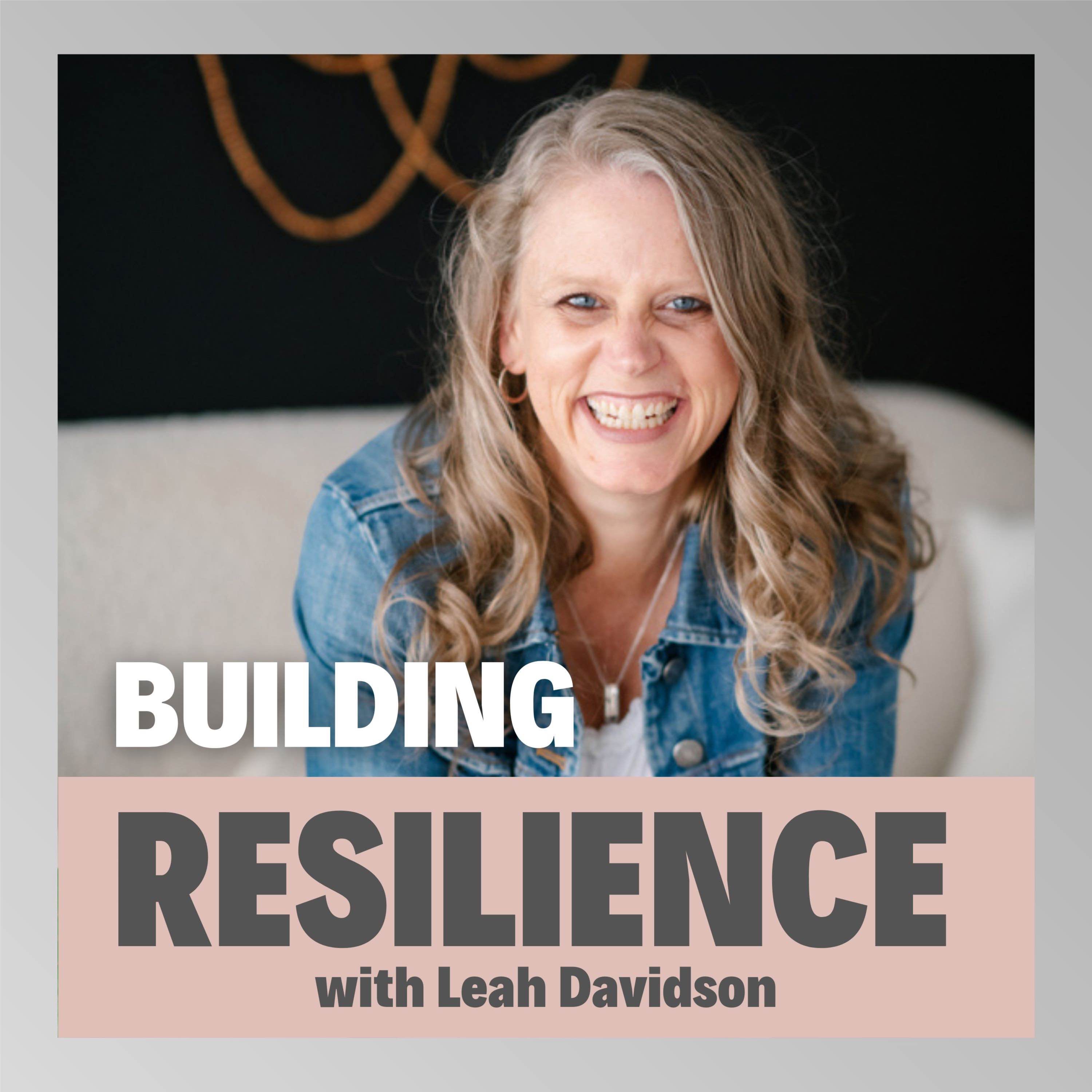
Building Resilience
Leah Davidson