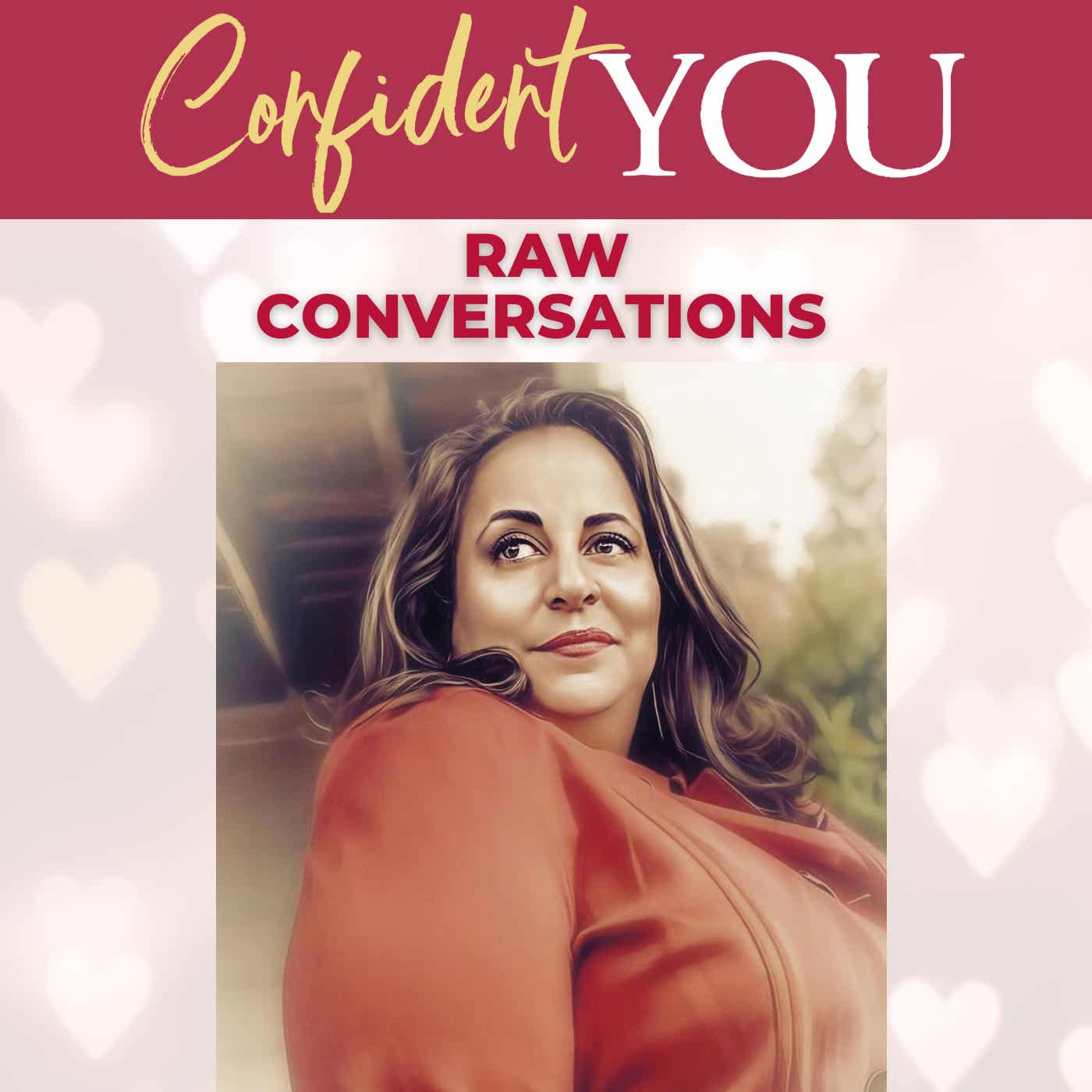
.png)
Brave Moves: Confidence, Mindset & Business Growth for Women Entrepreneurs
Brave Moves is a daily personal growth and confidence podcast for ambitious women, entrepreneurs, and leaders ready to build self-trust, overcome self-doubt, and take bold action in business and life.
Confidence isn’t something you’re born with. It’s something you build through mindset, habits, and small courageous decisions made consistently over time.
Each short, actionable episode delivers practical tools for personal development, leadership growth, mindset mastery, and habit formation. You’ll learn how to quiet negative self-talk, make aligned decisions, build momentum, and develop the confidence to pursue your goals with clarity and courage.
If you’re a woman in business, an aspiring entrepreneur, or someone navigating reinvention, Brave Moves will help you strengthen your mindset, increase resilience, and create real forward progress.
Because brave doesn’t mean fearless. It means choosing growth over comfort and action over hesitation.
Tune in daily for motivation, self-improvement strategies, leadership insights, and the confidence boost you need to make your next brave move.
Brave Moves: Confidence, Mindset & Business Growth for Women Entrepreneurs
Why Sharing Your Story Matters (Your Story Could Save Someone’s Life)
Use Left/Right to seek, Home/End to jump to start or end. Hold shift to jump forward or backward.
Can sharing your story help someone else heal, grow, or feel less alone?
In this episode of Brave Moves, Julie DeLucca-Collins explores the power of storytelling, vulnerability, and human connection. Julie shares why authentic stories matter, how honesty creates healing, and why your experiences may become someone else’s roadmap through difficult seasons of life.
If you’ve ever wondered whether your voice matters, struggled with being vulnerable, or felt afraid to share your journey, this episode will encourage you to see the impact your story can have on others.
💡 In This Episode, You’ll Learn:
- Why storytelling creates emotional connection
- How vulnerability helps people feel less alone
- The difference between sharing from wounds versus wisdom
- Why authenticity matters in leadership and life
- How your experiences can inspire and support others
- Why is human connection essential for healing and growth
Key Takeaway
Your story does not have to be perfect to matter.
Sometimes honesty is the very thing that helps someone keep going.
This Episode Is For You If:
- You struggle with vulnerability or visibility
- You feel afraid to share your story
- You want a deeper connection in life or business
- You’ve ever felt alone in your struggles
- You want to encourage and inspire others authentically
If you loved this episode, text me and let me know what you though.
Brave Moves is a daily confidence and personal growth podcast for ambitious women, women entrepreneurs, and leaders who are ready to overcome self-doubt, build resilience, and take bold action in business and life. Each short, practical episode blends mindset science, decision-making psychology, and real-life stories to help you strengthen your confidence, rewire negative thought patterns, and create meaningful forward momentum.
If you are navigating career pivots, burnout, reinvention, or leadership growth, Brave Moves gives you the tools to think differently, act bravely, and design a future aligned with your values and vision. Because confidence isn’t something you’re born with. It’s something you build, one brave move at a time.
Liked this episode? Share it with your midlife woman, entrepreneur friends!
Love this show? Let us know how we helped you increase your confidence by leaving a review.
For more about me and what I do, check out my website.
If you’re looking for support to grow your business faster, be positioned as an authority in your industry, and impact the masses, schedule a call to explore if you’d be a good fit for one of my coaching programs.
Fo...
I was having a conversation with my sister today, and this episode is definitely not dedicated to her because she would be really mad if she heard me say that this episode is dedicated to her, but it got me thinking. And I want to ask you the same thing. Have you ever noticed how your brain can convince you of things that aren't true? Okay, let me tell you what I mean. Kind of like I always mess things up, nobody likes me. Or if I fail once, I'm a failure. Or they didn't text me back. So I must be terrible and they're upset at me and they don't want to talk to me. And the wild thing is that when your brain says these thoughts with so much confidence because they're saying it like, I know they hate me because they didn't text me back. But confidence doesn't equal truth in this scenario, right? Today I want to talk about something that completely changed how I understand my own thinking. And cognitive distortions are the thing that kept me stuck for so long. I was programmed by my environment, right? To think with cognitive distortions. And this is why I want to talk about them because sometimes the problem is not the reality, it's the lens your brain is using to interpret reality, my friend. So stay with me because before we dive in, I want to remind you that if this episode has helped you in some way understand yourself a little more deeply, subscribe if you haven't already done so. It would mean the world to me. I love to hear that this is creating an impact. You know, when I think about what I'm creating here, I think about this is the type of things that 25-year-old Julie needed to hear. And although I am grateful for where I am today, I hope that these conversations and topics and thoughts and hopefully brave move inspiration brings you closer to the person that is living the life of their dreams. So make sure you don't miss an episode. And if you know someone whose brain might also be telling them stories that aren't fully true, and you know the people, send this episode to them. Okay. And stay with me till the end because I'm gonna give you one simple cognitive behavioral technique that is based on an exercise that can help you challenge negative thoughts instead of automatically believing them. So, first, what are cognitive distortions? I had to think about what I was gonna say. Cognitive distortions are basically mental shortcuts that your brain takes that distort reality. And honestly, well, we all do that. It's part of that thing that I was talking about yesterday. Our brain is created to run away from tigers, not to thrive in society. Now, this is all not about being broken, but it's that humanity that that connects all of us. But cognitive behavioral technique or CBT teaches us that our thoughts influence everything, right? Our emotions, our behaviors, and how we are experiencing life. Think about that. This is one of the reasons why I became certified as a cognitive behavioral techniques coach. And this is my first certification before I became a tiny habits coach. And the main reason I did it is because I wanted to be able to coach myself. And here are some of the cognitive distortions and the most common ones. And once I began to understand these, it helped me shift in ways that made a big difference. So first cognitive distortion is all or nothing thinking. Okay, so what does that look like? And this is when your brain sees things as an extreme. Boy, am I an all or nothing when I allow myself to be. Okay, if I'm not successful, I'm a failure. If I can't do it perfectly, why bother? That's all or nothing thinking. And that there's no gray area when we're in that. And you're thinking you're either a success or a failure, perfect or terrible, worthy or worthless. And honestly, no other thought keeps women, entrepreneurs and women leaders and incredible individuals that are gifted stuck before perfectionalism lives here. The second cognitive distortion is this is the second cognitive distortion is catastrophizing. All right, this is when your brain immediately jumps into the worst possible outcome. You know, your boss says, Can we talk tomorrow? And I laugh because Julia 34, this was her. Can we talk tomorrow? And suddenly my brain went into shit, I'm getting fired. And you make one mistake in your business and you think everything is ruined. Your brain treats discomfort like danger. Yesterday or the week, well, a couple days ago, I had a client that said, Hey, I I really need to talk to you because there's some things that are not going the direction that I wanted it to. And I had to take a breath, I took a beat, and wow, I've come a long way because I would have immediately gone into catastrophizing. She's gonna fire us, she hates us, she's gonna go tell the internet how awful it was. And you know what? That's not what the conversation was about at all. Yeah, there were some things that needed to be changed, but not because I'm terrible, not because the business is doing her wrong. No, it's because our processes don't necessarily fit the direction or some of the things that she needs to do, because she doesn't podcast full time, she is in a career full time. So again, I could have really messed up our meeting because I could have come in with that right already with my sword in hand, ready to battle, because I thought um maybe she was gonna fire us, but that's not what happened at all. And having that empty uh peace of mind and saying, okay, let me go in with curiosity and hear her and find out what is going on allowed me to have a very productive meeting and then create a solution that helps her and allows her to give her the highest quality work. And she still loves what we do. So now here's the other cognitive distortion: mind reading. Mind reading is exhausting. When you assume you know what people are thinking about you, you probably think I'm annoying. They didn't like what I said, or they must think I'm not smart enough. Meanwhile, nobody actually said any of that. I think that there's a lot of women, especially in business, that tend to do mind reading. Oh, she hated me, she doesn't want to work with me, or she thinks I'm very salsy. Do I identify with that? I hear that all the time. Now, here's your fourth cognitive distortion, and that is overgeneralizing or over-generalization. And this is when one negative experiences becomes the this always happens to me. And if you're related to me and you are listening and you're mad at me that I'm talking about this, I'm sorry, but things don't always happen to you. One rejection becomes nobody wants to work with me. One bad day becomes my life is falling apart. And our brain uses one data point to turn it into an identity. And that's not true. A lot of times, something may happen. Sure, it happens, but it doesn't mean that it needs to happen in the same way, right? Okay, number five, emotional reasoning. This one feels very real. I feel anxious, so something but I feel anxious, so something bad must be happening. I feel so insecure, so I must not be capable. But the feelings are not facts. Emotions, what are they doing is that they're carrying information, but they are not always accurate predictors of our reality. So think about this way, right? If you're feeling anxious or if you're feeling nervous, it doesn't necessarily mean that that's factual, that that is that the world is falling apart. Yes, we are gonna feel anxious, and a lot of time that's because of what we've been through. But emotional reasoning is not real. And I want you to question that. Number six, cognitive distortion is discounting the positive. This is where your brain ignores evidence that contradicts negative beliefs. And this is why I tell my clients find the one thing that you can celebrate. Every time that you're going to talk to me, I ask you to find the one thing that you can celebrate. And a lot of times when people are new to me, they'll say, Oh, I don't know. I don't know if I have any celebrations. My friend, we all have celebrations. Guess what my celebration is in the last hour? My coffee tastes perfect. I got the right combination of everything, right? My creamer, which I don't normally use, but creamer, and then it was the perfect temperature. It was the perfect temperature, and it just tasted delicious and it was perfect. And I was sitting outside with a breeze and the grass and the sun shining, and it was a perfect moment, and I want to celebrate that. But sometimes we're discounting the positive. Someone, for instance, compliments you and you're gonna immediately go to they're just being nice. You accomplish something and you discount it as thinking, oh, it's not that big of a deal. Everybody can do that. Now, you did that. You know, your brain minimizes success while it magnifies our flaws, and over time, you stop being able to see yourself clearly. So discounting the positive, you need to combat that. And the truth moment here, my friend, is here's what's important a thought is not automatically true. Just because you thought it, let me say that again. A thought is not true, it's a mental event. That's it. And once you realize that, you stop giving every thought complete authority over your life. Now, hey, my friend, I want to do take a quick minute to say I'm gonna tell you about today's sponsor. And today's sponsor, it's me, myself, and I. This podcast, I help women build confidence, visibility in businesses through coaching mindset work and intentional strategy. Inside the Confident You Co-op and my coaching programs, the Thought Leadership Visibility Accelerator, we work on habits, thinking patterns, and confidence shifts that help women stop playing small and start building the lives and businesses that they love. So if you're ready for support and growth, and I want you to know that we're not just doing the thought work, we're actually doing the strategic work that gets you seen, the back of the house processes that help your business run smoothly. So head over to my website, goconfidentlycoaching.com to find out more. But now let's get back to the episode. All right. So I told you all about the cognitive distortions. And now I want you to think about how you can rewrite your thinking. And this is a cognitive behavioral technique, and it's a tool, right? One of the simplest CBT tools is when you notice a painful thought, ask, what evidence do I actually have that this is true? And then ask, is there another possible explanation? A tiny pause. Interrupt the automatic thinking loop, my friend, because the your brain cannot rewire itself if you never challenge the story. So a lot of times for me, when I'm telling myself, oh my God, that client wants to fire me, I have to stop and say, What am I thinking again? What did I just say to myself? Or when I say, Oh my God, Julie, you know, you'll never get this right, or you're terrible at this. I stop. I notice it, and then I name it. Okay, we have done a lot of talking already. And I think that it's more important that you go and do your brave move for today. So here is your brave move. Next time you catch yourself spiraling into a negative thought, write it down. Put it on your phone. Maybe even better if you write it on a piece of paper, because we already talked about the importance of writing, right? And then ask, is this fact or fear? Am I catastrophizing? Am I assuming? Am I speaking in extremes? And most importantly, what would I tell a friend who said this about themselves? Because often we give others compassion, but we refuse to give that to ourselves. And you know, if you're listening, my friend, your brain is so powerful. And the powerful doesn't always mean accurate. And learning to question, right? Learning to question distorted thinking is not a weakness. It's an emotional strength, a superpower, because the goal is not to think positively all the time. That is not what we want, right? But the goal is to think more truthfully. And that is your brave move. Now, happy that you're here. I want you to kind of mull this over and think about it and maybe identify where where are the cognitive distortions in your life? Because as we start to do some of the work to go confidently in the direction of our dreams, this skill of being able to identify what we are doing is gonna make a big difference. I love you so much. I am so grateful that you're here, and I hope that you have a terrific Friday. Right. Yay!

Podcasts we love
Check out these other fine podcasts recommended by us, not an algorithm.

Casa De Confidence Podcast | Grow Your Business, Life and Confidence | with Julie DeLucca-Collins
Julie DeLucca-Collins - Business Strategist for Women in Midlife

Cash & Sass™
Lisa Marie Robinson
Binge Eating Breakthrough
Jane Pilger
Campus Chronicles
Casa De Confidence Productions
Beyond My Diagnosis with Michele Weston
Michele Weston
The Passionistas Project Podcast | Passionate Women Empowerment Hosts
Amy & Nancy Harrington | Women Inspiring Women
Don’t F*kn Shrink
Daffney Allwein
Control Your Career
Julia Toothacre