.jpg)
The Catholic Sobriety Podcast
Welcome to The Catholic Sobriety Podcast. I'm Christie Walker — Catholic sobriety coach, content creator, and woman who has lived alcohol free for nearly 30 years.
This podcast is for the Catholic woman who is disciplined, faithful, and quietly negotiating with a glass of wine every night. You don't think you're an alcoholic.
You're not sure there's even a "problem." But something in you knows this habit is costing you more than you're willing to admit — and that the gap between who you are in Christ and who you are at 9pm is getting harder to ignore.
We go deep here. Faith, neuroscience, identity, inner healing. Because what looks like a drinking habit is almost always something bigger — and God is usually in the middle of it, waiting.
Ready to find out who you are without it? Start listening.
The Catholic Sobriety Podcast
Ep 178: You're Not Weak. Your Foundation Is Compromised.
Use Left/Right to seek, Home/End to jump to start or end. Hold shift to jump forward or backward.
Anyone can stop drinking for a while. Willpower works — temporarily. But if the foundation underneath the habit is compromised, the craving comes back. In this episode Christie shares what happened over 50 days of working with a functional health practitioner — what shifted physically, what opened spiritually, and why she finally stopped relying on willpower. Plus: the neuroscience of why lasting change takes longer than 30 days, two practical recommendations that reduce alcohol intake by 75–80%, and what became possible when the fog finally lifted.
Topics covered: Why willpower isn't the problem — the foundation is | The searching phase: doing everything right and still feeling terrible | What full commitment actually looks like — and why the first two weeks don't count | The gut-brain-hormone connection and alcohol as lighter fluid | The HRT conversation — every woman's path is different | The strawberry moment and what healing actually feels like | Why Dry January can be a tool — if you're building, not just surviving | The 90-day neuroscience of habit rewiring | Two practical recommendations that actually move the needle | What became possible when the fog lifted
Scripture referenced: Romans 15:13 — "May the God of hope fill you with all joy and peace as you trust in him, so that you may overflow with hope by the power of the Holy Spirit."
I just rebuilt my Sacred Sobriety Kickstart — new content, new structure, all built on the four pillars I actually coach from. Five free days to get real clarity on your "why," your triggers, and the tools to stop white-knuckling it. Click the link to sign up!
👉🏻 Get started with my FREE 5-Day Sacred Sobriety Kick Start
https://www.thecatholicsobrietycoach.com/5-day-sacred-sobriety-kick-start
👉🏻 Book a Clarity Call
https://thecatholicsobrietycoach.mykajabi.com/clarity-call
Visit my Website: https://thecatholicsobrietycoach.com
Welcome to the Catholic Sobriety Podcast, the go-to resource for women seeking to have a deeper understanding of the role alcohol plays in their lives, women who are looking to drink less or not at all for any reason. I am your host, Kristy Walker. I'm a wife, mom, and a joy-filled Catholic, and I am the Catholic sobriety coach, and I am so glad you're here Anyone can stop drinking for a while. Seriously. Willpower works, white-knuckling works, dry January works for January, or dry July, since we're in July as I'm recording this. A bet with your husband, that can work, and sheer will and determination works as well, but only for a while. Here's what I keep watching happen-- Here's what I kept watching happen in my coaching work and eventually in my own life, but in a different context. The habit comes back or something else fills the gap because the foundation underneath was never addressed. This episode is about what I found when I finally stopped trying to muscle through what became... This episode is about what I found when I finally stopped trying to muscle through and what became possible when I did. So last week, I told you that we were going to talk about what happened when I stopped calling it willpower, and that's exactly what this is. But I want to warn you up front, the answer goes deeper than I originally planned, because what I discovered isn't just a mind shift. It's a foundation shift, and there is a difference. A mindset shift changes how you think about the habit, but a foundation shift changes the conditions underneath the habit, so the habit loses its grip naturally instead of you having to force it every single day. And that's what we're getting into today Now, for a long time, I thought I was doing everything right. I was researching supplements, reading about what women in perimenopause need, trying to eat well, taking supplements I'd read about, including way too much vitamin D because everyone in the Pacific Northwest is supposedly deficient. Except, as it turns out, I wasn't. I was just guessing, and the internet, the wellness influencers, the well-meaning articles, they're just guessing too, just with much more confidence. And even though I was doing all of these things, I still felt terrible. I had brain fog, low motivation, hot flashes that were waking me up five or six nights a week, sometimes five or six times a night. That heavy, sluggish feeling in the morning where getting out of bed feels like a negotiation, which is not me. That's not who I've been, and it was bothering me more than I even let on. And I kept thinking, "I'm doing everything right, or at least it seems that way. Why don't I feel better?" And here's the answer I eventually got. I wasn't eating healthy. I was eating what I thought was healthy. I wasn't taking the supplements I needed. I was taking what the internet recommended. I wasn't addressing my body's actual situation. I was managing symptoms based on guesses, and you cannot build lasting freedom on a foundation of guesses So as I'm recording this, I am... No. So about 50 days ago, I made a decision. I stopped researching and started investing. I signed up to work with a functional health practitioner, a real program, a real person guiding me based on what my body actually needed. Not a diet, not a cleanse, and a structured program built around understanding what was happening in my body and addressing it from the root. Now, it was a significant investment. Financially, yes, but also in time, in commitment, in trusting a process before I could even see results. And I wanna be very truthful with you here. The results did not come immediately. The first phase , of this program was focused on gut healing, which that is not glamorous. There was no dramatic transformation in one week, and honestly, the first couple of weeks were hard. There were things I wasn't ready to release yet. Sugar, for one. I did the bare minimum. I was doing enough to say I was in the program without fully committing. And then something shifted in me. I looked at what I had invested, the money, the time, and the hope I put into this, and I thought, "I have to give this everything. My husband is on board. I've made this commitment, and I am not going to half do this and wonder why it's not working." So I recommitted, and that's when things started to change So here's something I had to learn the hard way, even as someone who coaches women through change for a living. So here's something I had to learn the hard way, even as someone who coaches women through change for a living. It's much easier to see progress in your clients than in yourself. I can pull out wins all day for the women I work with. I notice everything, the shift in how they carry themselves, the energy that changes when they speak excitedly about something, The moment the shame cycle loses its grip, the week they stop negotiating and start choosing, I see it clearly in them. But seeing it in myself, that's harder, and I had to learn to be patient in a way that I don't always have to be when I'm coaching. And I had to learn to be patient in a way I don't have to be when I'm in the coaching seat. At two weeks, I wasn't seeing dramatic results. At a month, I was noticing small things, but nothing that would convince a skeptic. And if I had-- At two weeks, I wasn't seeing droma-dramatic results. At a month, I was noticing small things, but nothing that would convince me that things were really, really changing. And if I had quit at either of those two points, which was tempting, believe me, I would have missed everything that's happening since. Now, at day fifty, at the time of this recording, I'm eating foods that I haven't been able to tolerate in years, genuinely healthy foods with little to no side effects. That's proof of healing happening underneath the surface long before I could see it on the outside. And I think about my clients when I sit with that because this is exactly what happens with alcohol. Women give themselves two weeks, maybe thirty days, and then when sleep isn't perfect or the cravings haven't disappeared, they just conclude it's not working. But here's what the neuroscience actually tells us. Dopamine receptors and all those other neurotransmitters can take up to ninety days to fully reset. Habit loops that have run themselves thousands of times don't rewire in a month. You're asking your brain to build a new neural pathway while the old one is still the path of least resistance. That takes time. That takes consistency. That takes staying in it past the point where it starts to feel hard And here's the thing about Dry January or Dry, Dry July or any time-limited challenge. I'm not dismissing them Those can be real tools, but only if you're using that time to build something. If you're white-knuckling your way through thirty days with the finish line in your sights, that habit will be right there waiting for you on the other side of thirty days. But if you're using those thirty days to actually examine the foundation, to get curious about what the drinking is covering, to build new rhythms, to address what's underneath, then you're building something that carries you beyond the challenge. That's the difference between a dry month and actual freedom, and that's what I try to build with my clients, not a sprint, a foundation. So let me tell you about a moment that stopped me in my tracks. I was at my mom's house for my brother's fiftieth birthday. She made him banana bread, which is his favorite, and then she had strawberry shortcake with angel food cake, which I love, and whipped cream and sugared strawberries. But she also had a bowl of plain strawberries with nothing on them, and that's what I had, just strawberries. And I want to be honest about what I expected to feel. I thought I was gonna feel deprived, like I was sitting at the birthday celebration, watching everyone else enjoy something that I told myself I couldn't have, but I was really choosing not to have. And that's not what happened. Those strawberries were honestly so sweet and so genuinely good that I didn't look at the angel food cake. I didn't feel like I was missing anything. I was present, actually tasting what was in front of me, and actually satisfied. I thought, "This is exactly what I've been trying to explain to my women about alcohol for years." You're not giving something up. You're making space to actually experience what's already there. The brain that is hijacked by sugar or by alcohol cannot taste the strawberry. It's too busy chasing the next thing Now, sugar was genuinely hard for me to release. The first two weeks, I wasn't ready. I'll be honest about that. But once I fully committed, something changed, not just in my willpower, but my biology. My brain star-- my brain stopped being hijacked by sugar cravings and started actually registering what real food tastes like. Now I look at a kiwi on the counter, and I'm genuinely excited to have it. That is not the Christy of six months ago. Six months ago, that kiwi would have sat there while I looked for something with more sugar in it. That shift is both a mindset shift and a biological one, and it's the same shift that happens with my women when they address what's underneath the alcohol habit. The craving loses its grip, not because you're forcing it, but because what was driving it has started to heal So what does my functional health journey have to do with your evening glass of wine? More than you think. Here's what I know from twenty-nine years of sobriety and years of coaching women through this. Alcohol is rarely just alcohol. It's the thing that manages something else. Exhaustion, a nervous system that's been dysregulated for so long you've forgotten what calm actually feels like. Hormonal chaos that makes 5:00 PM feel like a cliff edge that you need something to pull you back from. And here's what almost nobody is saying clearly enough. Alcohol is making every single one of those things much, much worse. Alcohol disrupts your gut microbiome. It inflames it. It disrupts your hormones. It wrecks your sleep architecture even when you think it's helping you fall asleep Even when you think it's helping you fall asleep, it's robbing you of the restorative sleep that your body needs. For a woman already navigating perimenopause, alcohol is like adding lighter fluid to a flame that's already burning. Now, I wanna be clear here because I know some of you are navigating your own hormonal health in different ways, including hormone replacement therapy, and every woman's situation is different, and there's various paths to addressing hormonal health. What I was looking for was to understand what was actually happening in my body so that I could make informed decisions based on my specific situation, -- not a one-size-fits-all prescription. That's also exactly how I work with my clients. We figure out what your situation actually is, and we build from there. But here's what true ac-- But here's what's true across the board. Did you know that seventy percent of your serotonin, the neurotransmitter most associated with mood, motivation, and impulse control, is made in your gut? And when your gut is compromised, your serotonin is compromised. When your hormones are dysregulated, your stress response is dysregulated. When your sleep is wrecked, your willpower is delete-- Your willpower is depleted before you even get to five PM. That's not weakness. This is an interconnected biological system, and alcohol disrupts every single layer of it while temporarily masking those symptoms. And this is exactly why willpower was never the right tool. You can decide not to drink. You can be very disciplined about it. But if your gut is still inflamed, your hormones are still dysregulated, and your sleep is still wrecked, the craving is gonn-going to keep coming back every evening because your body is looking for relief, and it knows exactly where it found it before When I started addressing my physical foundation, healing my gut, getting actual blood work instead of guessing, eating for healing instead of eating what I thought was healthy, something shifted. The noise got quieter, and in that quiet, I could hear more clearly, which brings me to the part I didn't honestly expect. Before I started this program, I was struggling in ways I didn't even show on the outside or fully comprehend. I was showing up, do- doing the work, coaching women, but internally, I felt blocked. I was unmotivated in a way that didn't make sense given how much I care about this. I was distracted, like I was reaching for God's direction and getting static instead of a clear signal. There was content I knew I needed to create, a project I'd been circling for months, actually years, that I knew God was calling me into, and I just could not gain any traction. What I was producing felt forced, like I was hustling to get something out rather than receiving something worth saying. That's That's changed. The content I've pre- the content I've been creating lately is different. It's deeper. It's resonating in ways that feel less like me trying to be helpful and more like it was supposed to be here because God wanted it out into the world. People are telling me it's landing differently, and it is different because I'm different. I finally reached out to the right person about a project that I've been blocked on, and the moment I did, the floodgates just opened up. Ideas, direction, clarity that had felt-- clarity that had felt stuck for months just started moving, and that is always an indicator that I am on the right path, the path that God is laying out for me. The fog lifted physically and spiritually. When my body was inflamed and depleted, when I had all that chatter in my brain about what I could eat or what I should eat or can I have a snack? What am I gonna have? You know, once all that was gone and the physical... No. When my body was inflamed and depleted, I didn't have the capacity to hear clearly. The noise of the physical exhaustion was louder than the signal The noise of the physical exhaustion was louder than that quiet whisper of the Lord. But when my body started healing, I got quieter inside. -- And in that quiet, I could actually receive what God had been trying to say Romans 15:13 says, "May the God of hope fill you with all joy and peace as you trust in Him, so that you may overflow with hope by the power of the Holy Spirit." Overflowing requires capacity. You cannot overflow when you are depleted. That is not just a spiritual metaphor, it's a physical reality. A body running on a compromised foundation doesn't have the capacity to overflow. It's using every available resource just to keep going. When you address the foundation physically, spiritually, emotionally, then you get your capacity back, and what God can do with that capacity is something willpower could never produce Okay, I wanna give you two practical things before I wrap up because I've been talking about foundation and biology and spiritual capacity, and I also want to give you something concrete that you can do today. These are two recommendations that I make to every woman I work with who is serious about reducing her alcohol intake. They're not always well-received. People resist them, and I completely understand why. But I've seen what happens when women actually implement both of these, and I'll tell you, it can reduce alcohol consumption by 75 to 80% consistently. The first thing, and this isn't gonna surprise you because I've talked about this on the podcast , so if you're a regular listener, you'll say, "Oh yeah, she's said this before." But the first thing is to remove alcohol from your home, or at the very least, remove the alcohol that you actually like. If your husband drinks beer and you don't like beer, that might be fine. But if you're a red wine drinker, the red wine cannot live in your house right now because that evening craving doesn't have to fight very hard when the thing it wants is 10 steps away in your kitchen. This isn't about forever. This is not about making an already hard moment harder. Oh. This is about not making an already hard moment harder by giving the habit easy access. And number two, commit that you, you personally will not buy alcohol. Not that alcohol will never enter your home. Your husband might bring it, guests might bring wine, life happens, but you personally are not purchasing it. That one decision removes you from the transaction, and it creates a moment of choice that right now isn't always there I know that both of these things probably feel big as I say them. Most people aren't ready to do them immediately, and that's okay. The first two weeks of my own health program wasn't ready to fully release sugar either. In fact, I went to Target and I bought fruit leather because, you know, fruit. I ended up eating six of them, which I found out later is the equivalent of drinking two Cokes. So I get it. But I want you to know that those two boundaries, those two things are available to you, and when you are ready to go all in, they will change your experience faster than almost anything else Now, I'm sharing all of this because I think you might be the woman in this episode, The one who has it together in almost every other area, disciplined, faithful, showing up for everyone, but also exhausted in a way that she can't quite figure out, with a habit that she keeps meaning to address and it keeps coming back, wondering if the way she feels physically and... Okay, wait. The one who has it together in almost oth- The one who has it together in almost every other area, disciplined, faithful, showing up for everyone, but also exhausted in a way that she can't quite put her finger on, with a habit she keeps meaning to address that keeps coming back, wondering sometimes if the way she feels physically and the habit she can't shake are actually connected. They are, and you're not broken, you're just depleted, running on a compromised foundation, and that can change. If you're ready to start and you want community and structure around you, the Soberish Summer Reset is open right now, and the doors are gonna be open all summer, so you can jump in whenever you're ready. The link is in the show notes. And if you're not sure where to start or what might be the right path for you, if you are listening to this and thinking, "I don't even know if this applies to me," I want to invite you to a clarity call. It's just a conversation. You will leave with a direction and next steps, whether you decide to work with me or not. You don't have to have it figured out before you reach out. That's what the call is for. Again, both links are in the show notes. So here's what I want you to carry with you from this episode. Anyone can night-- Anyone can white-knuckle through a dry month. What- Here's what I want to take with you today. Anyone can white-knuckle through a dry month. What I wanted for myself and what I want for you is not What I wanted for myself and what I want for you is to not want it anymore, to get to the place where the craving loses its grip, not because you're forcing it, but because you've addressed what's underneath it. That gets you to a place where you can choose to take alcohol or leave it from a place of peace That is going to require going deeper than willpower. And for me, it required patience I didn't know I needed. It required staying in the process past the point where I start-- It required staying in the process past the point where it started to feel hard. And what I found on the other side wasn't just physical healing, it was quiet. No more chatter and negotiating with myself. It's real quiet, the kind where you can actually hear God again. I thought I was just trying to feel better, but it turns out I was making room for something that God had been trying to give me for a long time, and that's available to you, too. Not someday, but this summer. Next week, we are going to address the question I hear from women at the very beginning of this work, one that they're almost afraid to ask out loud, and it's this: Can I even do this? That episode is for the woman who is starting this work already convinced that she might be the one that it doesn't work for. She's not, and I'm going to tell you why. I'll talk to you again next week Well, that does it for this episode of the Catholic Sobriety Podcast. I hope you enjoyed this episode, and I would invite you to share it with a friend who might also get value from it as well. And make sure you subscribe so you don't miss a thing. I am the Catholic Sobriety Coach, and if you would like to learn how to work with me or learn more about the coaching that I offer, visit my website, thecatholicsobrietycoach.com. Follow me on Instagram @thecatholicsobrietycoach. I look forward to speaking to you next time. And remember, I am here for you. I am praying for you. You are not alone.
Podcasts we love
Check out these other fine podcasts recommended by us, not an algorithm.

Veil + Armour: Holiness in Motherhood and Daily Life
Sheila Nonato

Persistence in Prayer with Kylie Hein
Kylie Hein
Catholic Moms Made For Business
Sterling Jaquith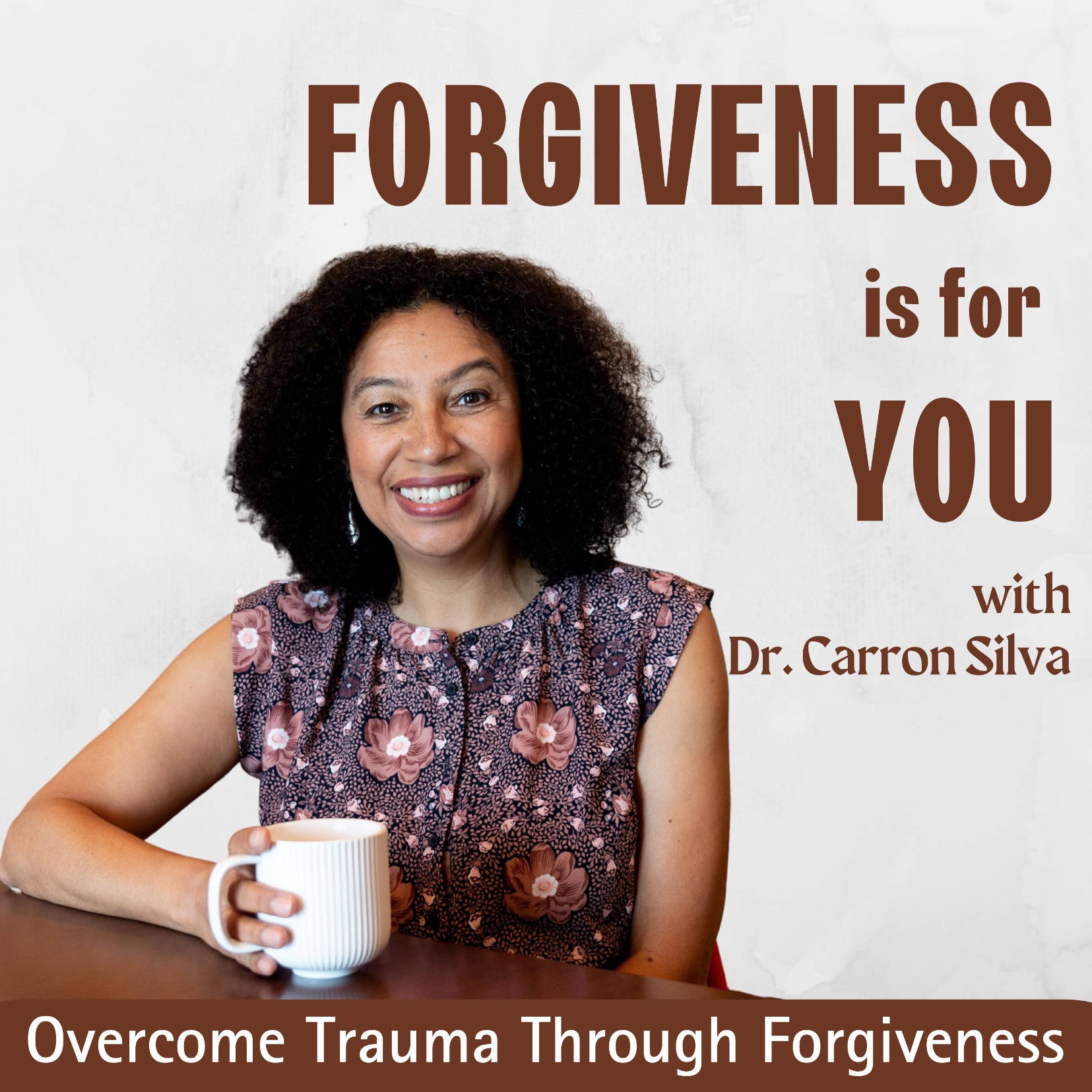
Forgiveness Is For YOU - Overcome Trauma Through Forgiveness
Dr. Carron Silva: Forgiveness Guide, Christian Trauma Coach
The Exorcist Files
Ryan Bethea, Fr. Carlos Martins