
The Anne Jones Show
The Anne Jones Show podcast is for the high-achieving woman who has the knowledge, the drive, and the desire — and still finds herself abandoning her own needs the moment life gets busy or full.
If you've caught yourself thinking:
"Why can't I just stay consistent?"
"I know better, so why do I keep doing this?"
"I'll start again Monday…"
You're in the right place.
Hosted by Anne Jones — nervous system coach, former fitness coach of 16+ years, and creator of Back to You — this show goes beneath the surface of burnout, self-sabotage, emotional eating, overthinking, and starting over. Because the real issue usually isn't discipline. It's safety. Specifically, what happens in your body when life stops feeling manageable.
Each week, Anne brings you honest conversations, nervous system education, and practical tools to help you stop abandoning yourself under pressure — and start building the self-trust and emotional resilience that actually stick.
This isn't about becoming a perfect woman.
It's about becoming a woman who stays with herself.
Topics include nervous system regulation, people-pleasing and boundaries, sustainable health and body image, hustle and hiding patterns, motherhood and ambition, food and movement without obsession, and building a calmer, ease-filled, more grounded life.
You don't need more pressure. You need a better way back to yourself.
The Anne Jones Show
Why Motivation Isn’t the Problem (and What Actually Helps You Stay Consistent When Life Gets Loud)
Use Left/Right to seek, Home/End to jump to start or end. Hold shift to jump forward or backward.
Why do you fall off track when life gets busy — even though you know exactly what to do?
In this episode of The Muscles & Mindset Revolution, Anne Jones breaks down one of the biggest myths in personal growth: that motivation is a character trait you either have or don’t.
Anne explains why motivation fluctuates with stress, sleep, hormones, and nervous system capacity — and why high-achieving women don’t fail because they lack discipline, but because they’re trying to do everything alone.
This conversation reframes support as a strategy, not a weakness, and explores how reducing cognitive load, increasing containment, and designing the right kind of support allows consistency to feel steadier and less exhausting.
You’ll learn:
- Why motivation disappears under stress (and why that’s not your fault)
- How discipline without support turns into self-abandonment
- What “containment” actually means for a busy, overthinking mind
- Why capacity — not willpower — determines follow-through
- How support helps your nervous system stay online when life gets loud
If you’re tired of starting over and want a more sustainable way to stay with yourself through real life, this episode is for you.
🎧 Listen now and let this episode be enough for today.
⏱️ TIMESTAMPS:
00:33 Why Motivation Isn’t a Personality Trait
01:35 Discipline Without Support Backfires
02:38 Self-Leadership vs Doing Everything Alone
03:47 What Support Really Looks Like
08:24 Capacity, Stress, and the Nervous System
12:05 Final Reflections + Where to Go Deeper
You know what to do. You're not confused about the plan. You're just not there when life gets loud.
This show is for the high-achieving woman who can still function, still perform, still hold everything together — and still feel like she's quietly disappearing on herself in the process.
Here, we talk about the real reason you fall off (it's not discipline), what's actually happening in your body when you override, override, override, and how to stop starting over every Monday.
You don't have a discipline problem. You're disappearing on yourself. And that's a nervous system problem — one you can actually change.
I'm Anne Jones — nervous system coach, former RMT, and certified fitness coach of 16+ years. I'll help you build the kind of steady, grounded capacity that holds when life stops cooperating.
No hustle. No perfect conditions. No performing your way through another week.
Just honest conversation, practical tools, and a way back to yourself.
Start here:
• Free Guide: The High-Achiever's Guide to Losing Fat Without Obsessing Over Food or Workouts: [https://www.annejonescoaching.ca/free-guide-your-body-your-way]
• Deeper support + essays: Join my Substack: [https://annejonesfit.substack.com/]
Work with me:
• Website: [https://www.annejonescoaching.ca/]
Connect With Me:
• Instagram: [@an...
Welcome to the Muscles and Mindset Revolution podcast. The podcast for women who are capable, driven, and used to holding a lot women who know what to do, but still find themselves falling off when life gets loud. I'm your host, Anne Jones. I'm a certified life coach and mentor and personal trainer, and for the past 15 years I've worked with high achieving women who don't need more information but do need a different way of staying consistent when stress, fatigue and real life show up. This is not a podcast about pushing harder or fixing yourself. It is about building the kind of support and self-trust that actually holds under pressure. Let's get into it. Somewhere along the way, motivation became this thing that we think we are supposed to have, like it's a personality trait, something that we were born with. Some people are motivated and some people just aren't, so it's going to be harder for them. And if you're not staying consistent, the assumption is that there is something wrong with you. But motivation is actually. Not a character trait. It is a practice and a state, just like calm, just like confidence, motivation, fluctuates with sleep, stress, hormones, emotional load decision fatigue, thoughts, and nervous system capacity. So when women tell me. I just need more motivation. What I hear is I'm blaming myself for having a biological response and not addressing the root issue. Motivation works when your system is taken care of and feels safe. Motivation collapses when your base needs are not being met and or your system feels overwhelmed. That's not a personal failure. That is biology and psychology. So here's why trying harder tends to backfire high achieving women, high performers do not lack discipline. My ladies can be disciplined, they can work their booties off. If anything. Discipline is usually the thing that got you this far. There is such a gift in how you learned to hustle and valued working hard. I can relate to that as well, but discipline without support eventually turns into self abandonment because when capacity drops or stress bucket fills, your effort doesn't magically increase to, support it. We can try. We'll try, and I talked a couple weeks ago about why just continuing to try harder is not the ticket. But the body does not respond to pressure with productivity. It responds with protection. So when your stress bucket fills, your nervous system prioritizes survival, not self-improvement and not vanity. So asking yourself to push through to try harder during those moments actually doesn't build resilience. It teaches your nervous system that care only happens when you're high performing and that's when your consistency begins to feel fragile. Here's the part that women. In our demographic, never get taught. Self-leadership has quietly been rebranded as doing everything alone. Boss babe, culture, hustle, culture, independence. I'm a strong feminist, but, self-leadership has been like glorified and rebranded as doing it without help, without containment, and without external support. Just you, your willpower and like an excellent day planner, but isolation is actually not strength at all. It is exposure. So let's reframe support. Support is not always someone doing it for you, although that certainly can be one form of support. But support is what reduces the load on your nervous system so that you can actually follow through. Look like a structure given to you. You know I love a structure. It can look like external accountability. It can look like teaching you how to create internal accountability, which comes after external accountability. It can look like very clear expectations, clarity and direction is usually what women are missing almost every time I have a consultation with a new client, support can look like having to make fewer decisions. One of my favourite parts of having a coach, honestly, is not the strategy or the plan that they give me. It is containment, being in container with them. I have a very busy mind always going. I am an overthinker. I see possibility everywhere. I'm like constantly inspired by things, and sometimes the most supportive thing in the world is hiring someone to bring me back to focus. My team does this for me. Shout out to Laura. If you guys know Laura, my right hand lady, I'll constantly be like, I have this new idea. And she'll be like, but we're doing this this month. I'm like, okay. Okay. And that has been the best part of ever having a coach for me, is to bring me back to focus, to clarity, to what are we actually supposed to be doing today? Because sometimes when you're left alone with a busy brain, everything can start to feel urgent and important at the same time. Right? And we get pulled into this with things like comparison, scrolling, consuming content, and that's overwhelming. So having someone outside of you who knows you, who can calmly say, we don't actually need anything new. We don't need to fix anything, we don't need to pivot, we're just coming back to the plan. That to me is one of the most underrated forms of support. Not having someone to hype you or motivate you or pressure you just orient you. Someone helping your nervous system to remember you are okay. You're not behind. This is the next right step, like confirmation. I do this with my clients all the time because I know how freeing this is. I just had a conversation with a client this afternoon about this exact thing. She's working with me in a one-on-one mindset coaching capacity. And she's like, I'm really diving into like your curriculum and that's great, but I actually would like you to just focus on what we're talking about because my over doers, my overachievers, my over workers can use self-improvement as just another sneaky thing to do, another thing to do, another box to tick more, more, more, more, more. When really the focus could be completely different or doing less, or sitting with something or reading a book or whatever. Whatever it is, it's freeing how stabilizing it is to be given permission, quite honestly, not that you need by permission, but to be given permission to do one thing at a time. When someone else is reading the map, so you don't have to, it's not about outsourcing responsibility, it's about reducing cognitive load so you can actually move forward without spinning. For a busy mind, one of the most powerful forms of support is actually enlisting someone to bring you back to clarity and direction instead of letting your busy mind run the show... your monkey mind run the show. The women who look disciplined from the outside are rarely relying on motivation. They have support. One of my favourite coaches who I've done courses with her before, is Lindsey Mango. And one thing I love about Lindsey Mango is she has this beautiful life, which she shares online and she shares the realness of it, and she shares the support that she enlists consistently, like when she has a nanny, she has a supportive husband. She hires a house cleaner. She orders meal prep because those things are within her ability. What I don't love is when influencers just share the result without sharing the support that's required to get there. So again, I'll come back to the women who look really disciplined from the outside are rarely relying on motivation alone. They are relying on systems and support that were designed on purpose or that they have access to. And this will look different for everyone given your resources. Support is not about copying someone else's lifestyle or comparing resources. It is about using the support within your means to reduce unnecessary strain on your nervous. System. What disregulates us is not just effort, it's carrying things that don't actually need to be carried alone. And here's the part I want to be really clear about. Support is not moral. It's not about deserving it. It's not about fairness. Your nervous system doesn't care whether something is fair. It cares whether it feels safe. For some women, that support looks like childcare, cleaning help, meal prep, administrative support. For others, it looks like clearer boundaries, saying no sooner asking for help emotionally or letting go of expectations and responsibility that are self-imposed. The form changes. What matters is not the form of support. What matters is that your nervous system is no longer being asked to hold everything by itself. what I do find to be a trend is that support is almost always there and usually it's us who are not asking for it or receiving it. One of the reasons that support is required is because your capacity is bottlenecked. I had to experience this myself. I've coached clients through this. Capacity is not just your time. You can have an open calendar and still feel completely overwhelmed. In fact, I would say in my experience and my clients, an open calendar is almost a blessing and a curse because my clients whose coping strategies to overdo, caretake overwork will just fill the white space. Then it's overwhelming. Or they have white space and they have no structure and they don't know how to deal with that. I can relate to that. And so it feels overwhelming. So capacity is not just based on time, and it's not just based on calendar. Capacity is how much your system can hold before something has to give. When your capacity lowers, your habits don't disappear because you stopped caring. They disappear because your stress bucket is full. Your system is overloaded. This is why adding more efforting usually just makes things worse. The goal is not to become more motivated. The goal is to reduce the load so that consistency becomes possible again. And this is where I want us to slow down for a minute because a lot of women here reduce the load and their brain immediately goes into logistics. I can't possibly time management, productivity hacks, who's gonna do it? Clearing their calendar. But reducing load is not just about what's on your plate, it's about how safe your system feels while you're carrying it. You can be doing objectively less. If you're listening to this, I'm putting less in air quotes and still feel completely overwhelmed. If your nervous system is bracing all the time, and you can be doing a lot, but feel surprisingly steady if you're supported in the right ways. In working on my nervous system in the past three, four years, I have learned this firsthand. I have been able to do bigger things. Not with more time. In fact, with less time, I've been able to do more, make more money, do more socially, put more on my calendar with less time because my resilience and my capacity increased because my nervous system felt safe to support I'm able to take bigger risks, which includes, you know, investing in myself, taking time off, making changes in my business and my personal life. Because my nervous system can support it, not because something magical external changed. This is why two women can have almost identical lives on paper, and one feels calm and consistent while the other feels like she's barely holding it together. When capacity is low, the body doesn't ask, what are my goals? It asks, am I safe? Can I rest? Is there any margin here? And if the answer is no, your system will start pulling energy away from things like discipline, follow through, and future planning. Not because those things don't matter, but because survival comes first. This is where I think a lot of high achieving women get confused. They think, oh, if I had more motivation, if I cared more, I would do it. But caring is not the issue. Your system might already be maxed out. White knuckling through low capacity doesn't build strength. It builds fragility because every time you override your system, instead of supporting it, you teach yourself that consistency requires suffering and eventually something in you opt out. Support is what interrupts that cycle. Now, because it makes things easy, you may still have to work hard, but because it makes things possible, support creates margin. Margin is what allows your nervous system to stay online long enough for habits to stick. So if you've been wondering why you can start things, but you can't sustain them, I want you to hear this clearly. It may not actually be that you're bad at follow through. It may be that you've been asking yourself to do it without enough containment. I wanna pause here for a second. Say this clearly. You do not need to do anything after you listen to this episode. But if what I'm talking about is landing and you are someone who finds it grounding to see how this works, instead of just hearing it, i've shared two resources privately that go deeper into capacity and nervous system load. They're not checklists. They're not action plans. They are context. One is a worksheet that walks you specifically through what nervous system capacity actually is and how stress moves through the nervous system. The other explains why more effort, particularly in a fitness context, stops working when your recovery is low. I've shared them inside my substack for my Substack members because that space is intentionally slower and more contained. Containment, right? So if you're someone who values having the right support at the right moment, you'll probably feel very at home there. I will include the link to that Substack post in the show notes. And if not, let this episode be enough for today. So instead of asking, how can I get more motivation, why can't I stay motivated? Try asking what kind of support. Would make this easier to stay with if you're having trouble staying with yourself, the plan, the structure, you've heard me say this before, it's possible the plan is not for you, but also, do you have the support required? Are you asking yourself to do it on your own when you have never been taught the skills to do so? And by doing it on your own, I mean, changing a habit or, creating a new habit or literally it can mean like learning how to meditate or work out or finesse your nutrition. Like are you trying to do those things on your own and be held adherent and accountable and be a changing, evolving human all the time by yourself? So what kind of support would make it easier to stay with? What decisions are you remaking every day that could be decided once if you had clarity and direction could be decided once? Where are you relying on pressure instead of containment? Like where you bleeding outside of the container? And what would it look like to stop proving that you can do this alone? Support does not make you weak. Asking for help does not make you weak or under-resourced. In fact, the most productive women I know are excellent at delegating and asking for help. When I am most productive, it's 'cause I'm delegating, asking for help, saying no to things I probably would like to do and could do, but they're not in line with the direction that I'm going or they're not within my zone of genius. Support does not make you weak. It makes you consistent, and consistency is what builds self-trust. It feels like showing up for yourself. If this episode resonated, let it be information, not something that you need to fix. You're not broken. There's nothing wrong with you. You've just been carrying too much without any or enough support, and that is not a personal failure. It's a design flaw. You don't need more motivation. You need a system that holds you when life gets loud and messy. If you enjoyed this episode, I would so appreciate it if you gave it a five star review and shared it with a friend, DM me on Instagram at @annejonesfit, and tell me your top takeaway. Thank you so much for being here. I will talk to you next time.
Podcasts we love
Check out these other fine podcasts recommended by us, not an algorithm.
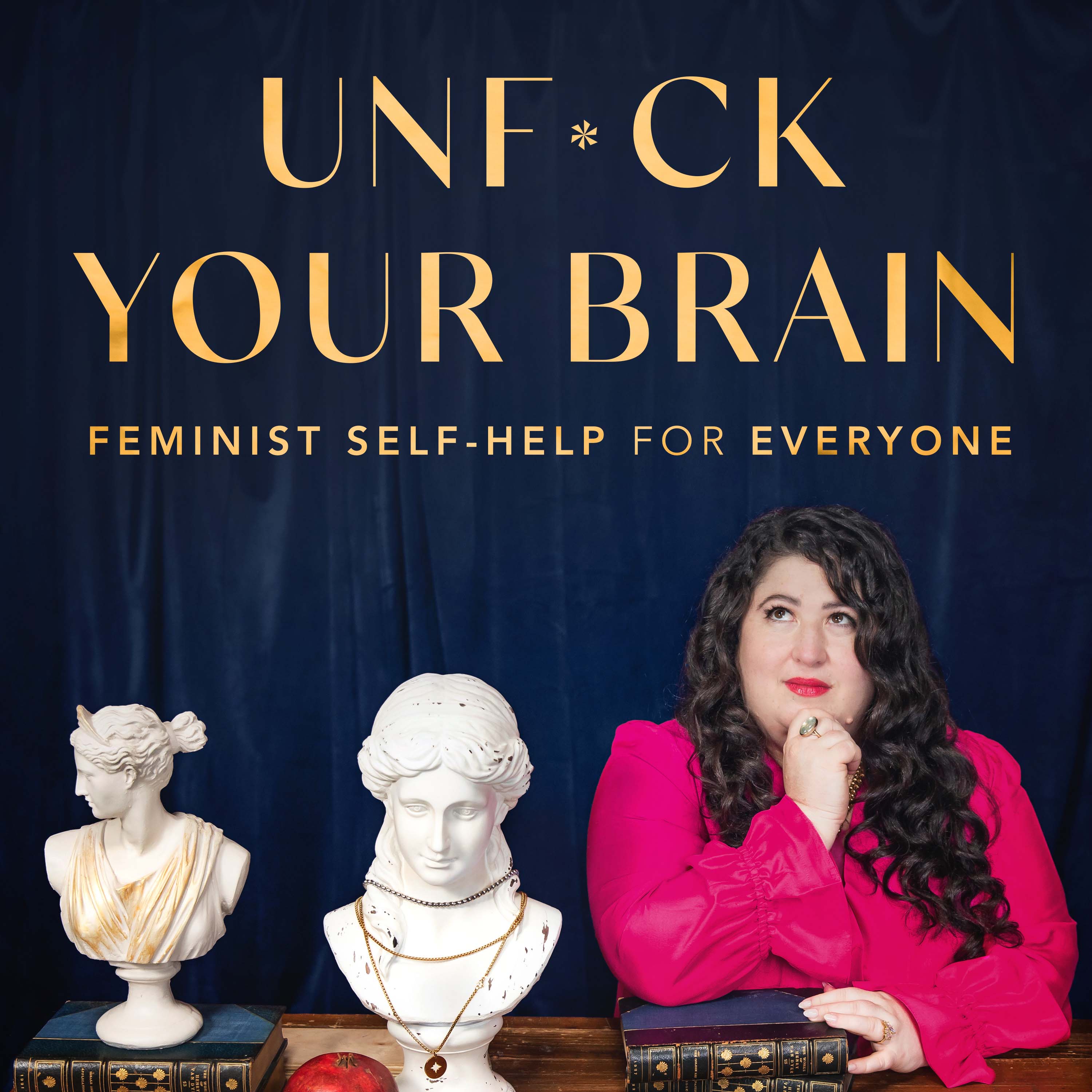
UnF*ck Your Brain: Feminist Self-Help for Everyone
Kara Loewentheil
On Purpose with Jay Shetty
Perfect Strangers
The Terri Cole Show
Terri Cole
Fit Biz U
Jill Lockwood