.png)
Graced Health: Perimenopause and Menopause Wellness for Christian Women
Want to feel strong and well in your body — without the diet culture pressure? The Graced Health podcast is for Christ-centered women in perimenopause and menopause who want to feel capable, grounded, and at peace in their bodies — without all the noise.
Here you'll find practical, grace-filled guidance on strength training, nutrition, body image, and wellness — all rooted in faith and free from diet culture. No shame. No comparison. Just clarity, encouragement, and a voice of reason.
I'm Amy Connell, a NASM Certified Personal Trainer and Nutrition Coach who grew up in diet culture doing step aerobics in a thong leotard.
God called me into Graced Health after showing me there's a more peaceful, less obsessive way to care for my body — so I can do what He's called me to do.
New episodes drop every week, covering everything from strength training and menopause to intuitive eating and body stewardship — all through a grace-centered lens.
Ready to get started? Download my free guide: 30+ Non-Gym Ways to Improve Your Health for Women in Perimenopause and Menopause at https://www.gracedhealth.com/health
Graced Health: Perimenopause and Menopause Wellness for Christian Women
When Life Interrupts: The Smallest Yes That Still Counts
Use Left/Right to seek, Home/End to jump to start or end. Hold shift to jump forward or backward.
Click to Text Thoughts on Today's Episode
Please tell me I'm not the only one this has happened to. You make a plan — a good one. And then life shows up, and the plan is gone.
Whether it's an injury, grief, travel, or just a random Thursday that derailed everything — life will interrupt your plan. The question isn't whether it will happen. It's what you'll do when it does.
In this episode, I'm sharing a concept I call the Alternative Minimum Yes — and yes, the acronym spells AMY. It's the smallest, most doable version of movement or care that keeps you connected to yourself when your original plan isn't possible. Not pushing through. Not white-knuckling it. Just staying in relationship with your body instead of abandoning it — even when the yes looks different than you planned.
Main Points Covered:
- Why consistency is about never fully stopping — not never missing
- The difference between alternative and lesser
- Why your AMY can be physical, emotional, mental, or spiritual
- How to identify your Alternative Minimum Yes before the crisis hits
- Why rest absolutely counts as a yes
- The all-or-nothing cycle — and how to break it
Episodes Discussed
Changing Movement: Honest Conversations from Two Fitness Pros with Kerry Ann Madden
Try This Snack for Better Health
My latest recommended ways to nourish and move your body, mind and spirit: Nourished Notes Bi-Weekly Newsletter
30+ Non-Gym Ways to Improve Your Health (free download)
Connect with Amy:
GracedHealth.com
Instagram: @GracedHealth
YouTube: @AmyConnell
When Life Interrupts: The Smallest Yes That Still Counts
Graced Health Podcast
Host, Amy Connell
Please tell me I am not the only one that this has ever happened to. You get a plan — probably a workout plan, but maybe a food plan. And it's a good one. You've thought a lot about it. You have maybe put things on your calendar, maybe you have laid out your workout clothes, maybe you've gone to the grocery store. I mean, whatever you need to do to get your plan going. And then life showed up and the plan was gone.
Has that happened to you? I hope so, because it's definitely happened to me. If you listened to my 500th episode, you know that my dad passed away recently, and if I'm honest, that has rocked my world in so many ways. I have had a very hard time getting my legs under me over the past two months. And I'm going to talk about that here in a little bit — that's kind of a bigger event, a longer one.
But you know, we also make other plans, and sometimes they're just plans of, "This is what my schedule's going to be," and then something happens — like what happened to one of my dear, dear friends. She went skiing with her family, was on her last run of the last day, started to fall, tried to catch herself, and hurt her knee. ACL, MCL — the whole thing. That's more of an acute one. Mine is a little bit longer. But regardless, both of those are kind of a plan gone bad.
Today we're talking about what to do when that plan falls apart, and why having a backup plan isn't giving up — it might actually be the best thing you can do for yourself to move forward.
Life can hit us in a lot of different ways. Sometimes it's an injury, like my friend. Sometimes we get sick. Sometimes people we love get sick and we need to care for them. Maybe it's something like what I've been going through — grief or emotional weight. There just seems to be so much heaviness in the world right now, and especially when hard things happen to those we love, that can affect us so deeply.
Maybe you're dealing with a lot of travel, either personally or professionally. Maybe you just have scheduled chaos. This episode is hitting at the beginning of April, which is when the school year starts to wind down — which is really like a winding up, if you think about it. If you have school-aged children or grandchildren, May is bonkers. Everybody knows that. And maybe it's just a season that got away from you.
Maybe it's also a mental health issue. Maybe things are going along fine, and then we just kind of reach that tipping point for whatever reason. And I don't want to negate the heaviness and the hardness of that either.
All of these things are life. They're not excuses. It's not like, "Well, this happened and this happened and this happened, so I can't do this and this didn't work out." It's just life. Life happens, and it happens to all of us — including yours truly, for sure.
The question isn't whether life will interrupt your plan. It's what you will do when it does. And that's what I want to talk about today.
Because what can happen is we tend to have an all-or-nothing mentality. We say, "I am doing everything exactly like I planned." And then if it doesn't go well, we stop. And then we feel badly about stopping, and then we continue stopping because we don't want to have to go back — restarting feels even harder than it did before. This is the cycle I want to talk about breaking today.
Consistency in taking care of yourself — whether that's nutritionally, from an exercise standpoint, or maybe doing mindfulness work like meditating or journaling — consistency is not about never missing. We are going to miss things. It's about never fully stopping. And there is a very big difference in that.
Because what we want to do is claim ourselves as someone who moves, someone who eats nutritionally dense foods that fuel us well, someone who cares for their mental health through eating, exercising, journaling, meditating, et cetera. We want to stay connected to that identity as a person.
And I know for all of you Jesus followers, you're thinking, "But my identity is in Jesus." And yes — obviously that. I'm just talking a layer down, so give me a little bit of grace with that. On a day-to-day basis, yes, our identity is in Christ, but it's also as Christ followers who care for the temple God gave us. And that will look different often.
If you listened to my episode with Carrie Ann Madden a couple of weeks ago, we talked about this. She's a fellow trainer — a master trainer, actually, a level above me — and she shared how caregiving for her mom has turned into a season where she misses a lot of workouts, and she is okay with that. Because she knows her trend is that she moves. She is staying connected to the identity of, "I am someone who moves, even if it looks a little different right now."
I have mentioned this concept before on a few episodes, but I've never taken it and crafted it into a full episode — until today. I can't remember where it first came from; I wish I could tell you. But I wanted to challenge the groups I was talking to think about what happens when life happens and we can't do the thing we wanted to do.
So I came up with this phrase: Alternative Minimum Yes.
When life happens, what is your alternative minimum? And at the risk of sounding self-serving — and I really hope it's not — I want you to receive this with love and with humility. The acronym for that is AMY. My name. Because I want you to get me in your ear in a loving, kind way. Like, "What would Amy tell me to do?"
The Alternative Minimum Yes is the smallest, most doable version of movement, nutrition, or care that keeps you connected to yourself when your original plan isn't possible.
Let me unpack this a little. Alternative means it's different. When I am coaching clients and they are unable to do something — say, a squat, because their knees are cranky — then we choose something different. It's not lesser. It is a different way of moving so that we can strengthen their muscles without hurting their knees. That's an alternate movement. Alternative means it is different, but it is not worse. It is not lesser. It's just different.
Minimum is about going for the easiest win — what is the smallest thing I can do to go, "Okay. All right. Check. I did that. I feel better. I have cared for myself"? The easiest win is your minimum.
And Yes means you are still saying yes to yourself. Just in a different way. That alternative way is what you are saying yes to.
So yes — that acronym is AMY, and I want you thinking, "What would Amy have me do?"
What's fun is that sometimes I hear from you. You'll respond to emails or reach out in other ways and say, "I was dealing with this issue, and then I thought, 'Well, what would Amy want me to do?' So I did this." And those moments — when you all share those with me — I can't even tell you how much they mean to me. Because it means it's not just me and the mic, talking into a screen. It means things are resonating. We're starting to shift how we think about caring for ourselves — away from diet culture, away from stringency, and into honoring our body and our season.
I also want to add this: sometimes your Alternative Minimum Yes — your AMY — is rest. That's okay. Can you, or do you need to, say yes to rest? That counts.
I want you to hear me loud and clear: the AMY is not some sneaky way to say, "You still have to do something, sweat every day, keep going." It's not saying do walking lunges from your bed to go brush your teeth so you can get some movement in. It's a way to stay in relationship with your body, instead of abandoning it and not paying attention to it.
We are all coming into this space and to this conversation with a lot of different foundations and rhythms. I know some of you swim a lot, some of you walk a lot, some of you lift really heavy weights — and so it's difficult for me to give specific examples. But let's think about different ways we can have an Alternative Minimum Yes.
I'm going to take this more from the movement perspective, because that is the air I breathe. But start thinking about what yours might be — because I have a challenge for you in a second.
Maybe you're like my friend and you've hurt your lower body, your knees. You're not able to walk, not able to go to the gym and do your workouts with your favorite group of fitness-minded people. So what can you do instead? Maybe you just do upper body work. Maybe you focus on some of those smaller muscles around the glutes and the hip musculature — the gluteus medius, the gluteus minimus — something to strengthen the muscles and joints that are supporting the affected area.
Maybe you hurt your upper body. I have been dealing with a shoulder issue that, if I'm honest, has been going on for way too long because I have not been great at doing my exercise therapy movements. I've had such a crazy year — and honestly, that's really just telling on myself. Because what I did was shift my minimum yes to more lower body work and more walking, which is a wonderful thing to do if you've hurt your upper body. But I do recommend you also do your exercise therapy. I've just gotten back into it and woke up thinking, "I didn't have a hurt shoulder last night." It was awesome.
If you've injured a major muscle group, it might be time to see a physical therapist or exercise therapist. Depending on your state, you may or may not need a doctor's prescription for that. Here in Texas — and I know a lot of you live in Texas — you actually do not need a doctor's prescription to see a physical therapist for an initial period. And if you follow the directions they give you, they'll likely provide a printout or email you the exercises, and you can do them at home.
You can also do mobility work, gentle stretching — but obviously, if you're hurt, please make sure you have your doctor's clearance before doing anything. It is very important to me that we do not hurt your body more by trying to help it.
It may also be that you don't have an injury at all. You just have a life situation that is normal — but that doesn't make it any less difficult.
As I'm recording this, it's the very beginning of April, and I think I have been traveling more in 2025 than I have been home. All of it has been due to family. I helped my mom when she was recovering from her knee surgery. Eleven days after I got home from those initial few days with her, my dad passed away. And it's been back and forth for several weeks now. I'm not complaining — there is nowhere I would rather be right now than with my mom, supporting her in this very challenging season. But it does mean my rhythm is off.
And especially in those first few weeks of deep grief and shock — because his passing was such a surprise — my Alternative Minimum Yes was this: I got outside. I tried to get some fresh air for a few minutes a day. And if I could, I took a gentle walk. I know I shared this on my 500th episode, but one of my dear, dear friends drove about an hour and a half to take me for a gentle walk. We were in our street shoes, just moving around. This was not exercise at all — but it was a yes. A yes to fresh air. A yes to sunshine. A yes to connection with my friend, and having the space to laugh and cry and just be.
My friend who hurt herself skiing scheduled extra time with her personal trainer and then a physical therapist to help strengthen her supporting muscles — kind of like what we were talking about earlier. She got on the bike, because she could do the bike. She's been rehabbing her knee and working her way back to most of what she loves to do, until she has surgery later this year.
And sometimes your Alternative Minimum Yes is simply taking whatever you were going to do and scaling it down. If you normally go for a 30-minute walk, maybe it's a five-minute walk down a few houses or around the block. Maybe all you can say yes to is a few minutes.
I want to point you back to my December episode on the fitness snack concept — exercise snacking. Research is showing us that 10 minutes has very real, documented benefits. Short movement absolutely counts and can be beneficial to your body and your brain. And this is what we are caring about: the whole body. Not just the physicality of it, but also your soul, your brain, your head, your emotions. All of that is what we are caring for — not just our muscles and our heart. Yes, of course that's important, but what I am encouraging you to do is consider the entirety of how God made you: body, soul, and mind.
The problem with figuring out your Alternative Minimum Yes in the moment — when you're tired, overwhelmed, maybe hurting physically or emotionally or mentally — is that is the toughest time to make a good decision. We're probably also experiencing some serious decision fatigue, or just regular fatigue in general.
If you wait until the crisis to figure out your backup plan, the backup plan is usually nothing.
So what I encourage you to do is think through this now, while things are hopefully stable. A few questions to ask yourself ahead of time:
If I couldn't do my normal workout or follow my normal meal rhythm this week, what is one thing I could do instead that would still feel like caring for myself? Maybe that's walking, going for a bike ride, foam rolling and taking care of your connective tissue, meditating, or some mindful breathing.
If you had no time and no energy, what's the shortest version of movement that would still feel like a yes? Still feel like, "Okay. I did something for me." For many people, that's about 10 minutes — but that's just me. Maybe for you it's three minutes. Maybe it's closer to 20. I would encourage you not to set it too long, because in a season of crisis, that 20 minutes can still feel like too much. Go shorter. Can you go even shorter? And when you get to the point where you think, "If it's any less, why bother?" — that's probably where you stop. Frame it as being wise for your body and for the consistency you are offering yourself.
And I really want to remind you that your Alternative Minimum Yes can absolutely be physical — but it can also be mental, emotional, or spiritual. Maybe instead of doing what you normally do, you sit down and read the Bible. Maybe you spend a little extra time in prayer. Maybe you get outside and have it be a "be still" time — just being with God, being still, knowing that God is God. Maybe you don't even come to Him with a bunch of praises or requests. Maybe you just come to Him with your presence, and rest in His as well. Maybe that is your best yes today.
The intensity of your Alternative Minimum Yes does not need to match the intensity you normally bring. This does not mean that if you typically go to a 45-minute HIIT class, you have to figure out a shortened HIIT version. The intensity does not need to match. What needs to match is your consistency — and the knowledge that you will receive some kind of benefit. And you can trade benefits. Maybe it's not a physical benefit, but an emotional or spiritual one.
Because as you care for your body — even imperfectly — you are still honoring the God who created it.
If you've been in one of those seasons where life showed up like it does on a random Thursday, and you're thinking, "Oh gosh, this is really messing with my plans" — I invite you to identify what your Alternative Minimum Yes is. I know it can be hard to know ahead of time, but what would happen if you said, "No matter what, I am going to get outside and get some fresh air for five minutes a day"? Or, "I am going to walk for five minutes"?
What came to mind just now? That's what I want you to text me. If you're watching on YouTube, type it in the comments. If you're listening to the podcast, go to the episode description — right at the top, it's the very first thing — and click to text me your thoughts on today's episode. No commitment, no emails, no strings. It just comes to me, and I want to hear what your Alternative Minimum Yes is.
These are so important to identify now — because when life hits you, you'll already know. Decide while things are moving along relatively smoothly. Write it down. Type it in the comments. Text me. Because life will ask you eventually, and you'll want to have an answer ready.
You don't have to do everything. You just have to keep saying yes — even when the yes looks different from what you planned.
Okay. That is all for today. Go out there and have a Graced day.

Podcasts we love
Check out these other fine podcasts recommended by us, not an algorithm.
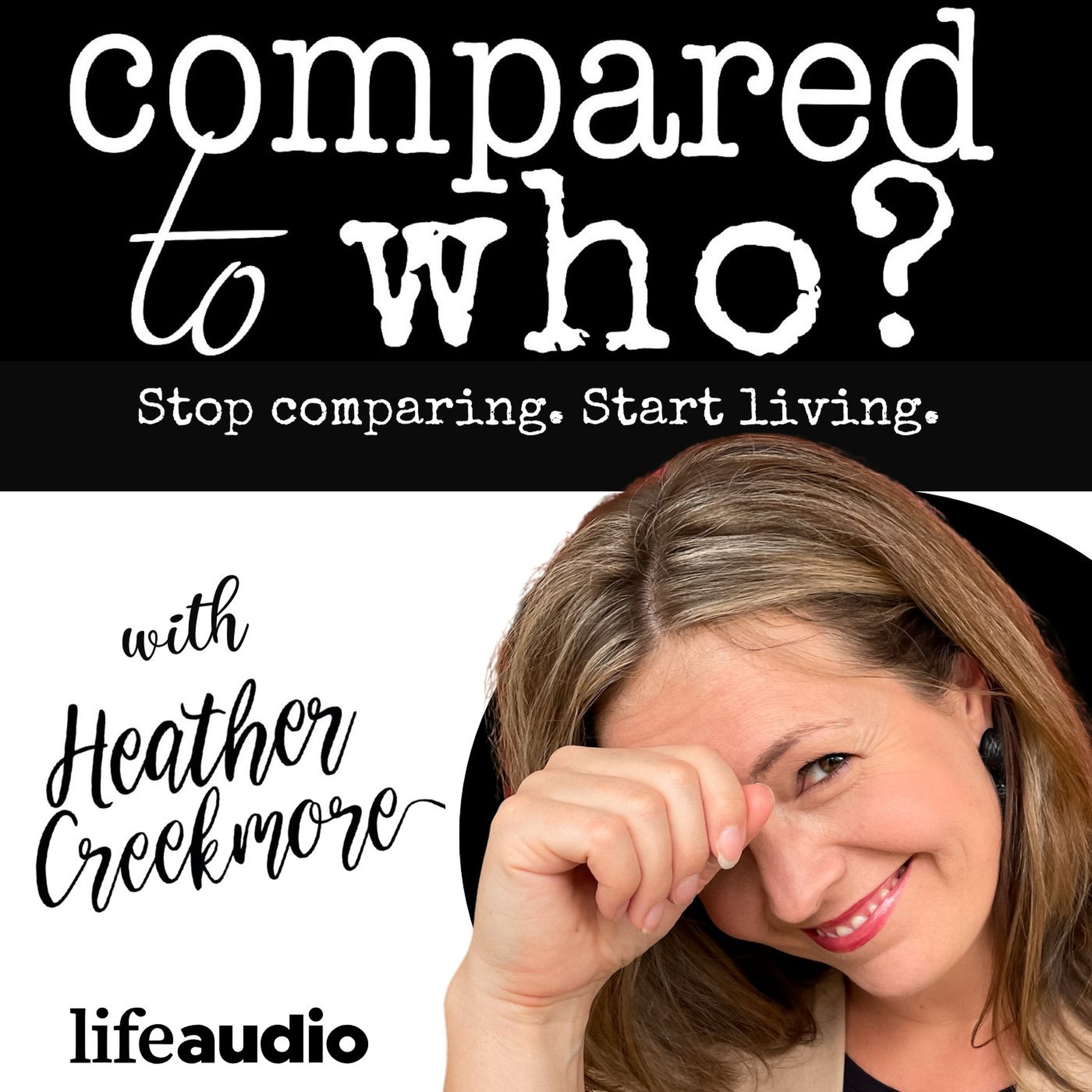
Compared to Who? Body Image for Christian Women
Heather Creekmore - Christian Body Image Author and Speaker
Faith-Filled Food Freedom | Disordered Eating, Body Image, Weight Loss Obsession, Anxiety, Nutrition
Brittany Braswell - Non-Diet Registered Dietitian for Christian Women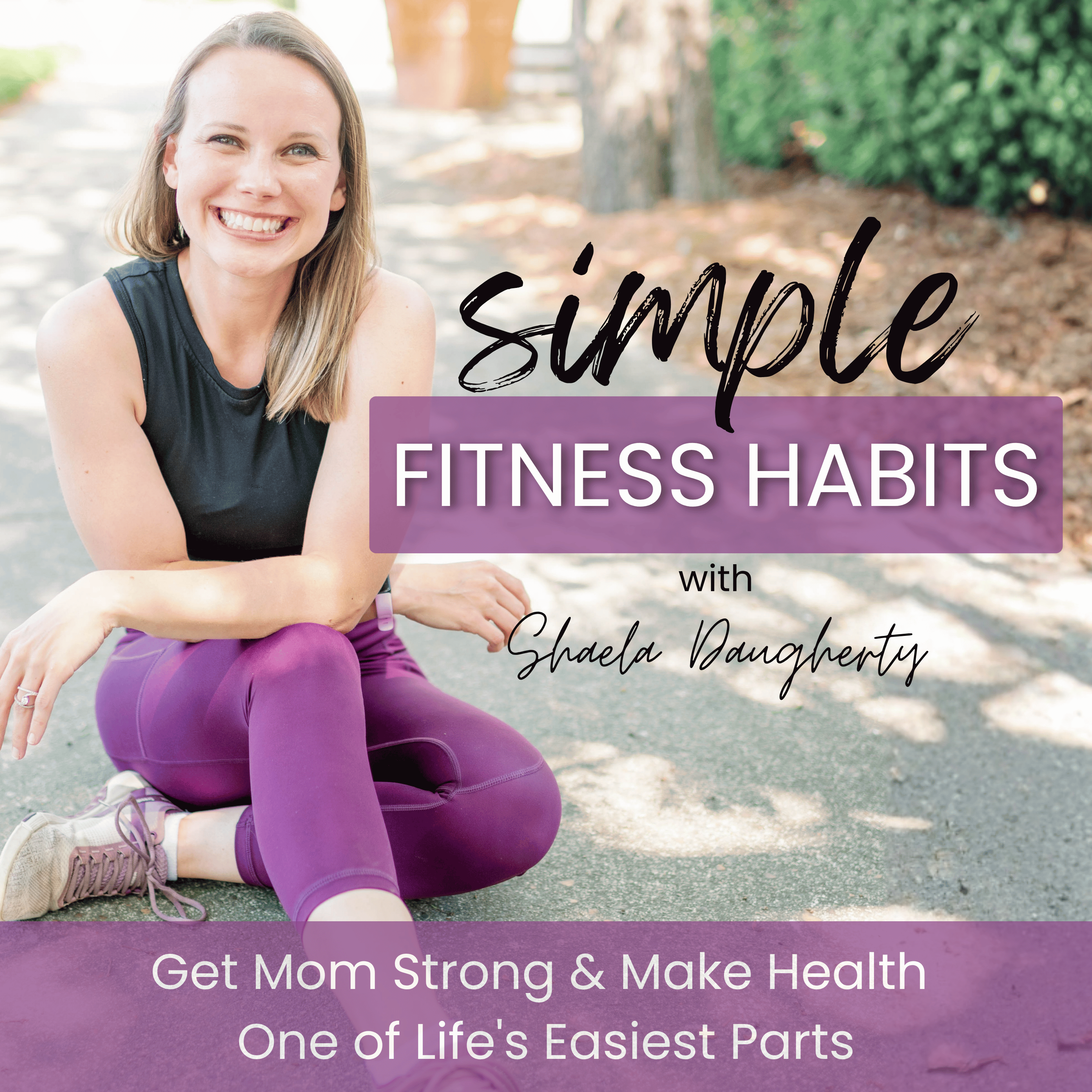
Simple Fitness Habits | Workout Plans, Health Habits, Functional Movement, Holistic Health, Home Detox
Shaela Daugherty | Personal Trainer, Christian Fitness Coach, Christian Nutrition, Homeschool Mom